Serving Westminster, CA & west Orange County Open 24 hours · same-day and after-hours calls 24/7 dispatch · (657) 337-7905
Westminster CA Plumbing (657) 337-7905

Westminster, CA · commercial kitchen density

Plumbing in Little Saigon: grease lines, shared laterals, after-close work

The densest concentration of food business in the city, much of it on shared sewer laterals in older buildings. Jetting, interceptor service and camera documentation, scheduled around your covers.

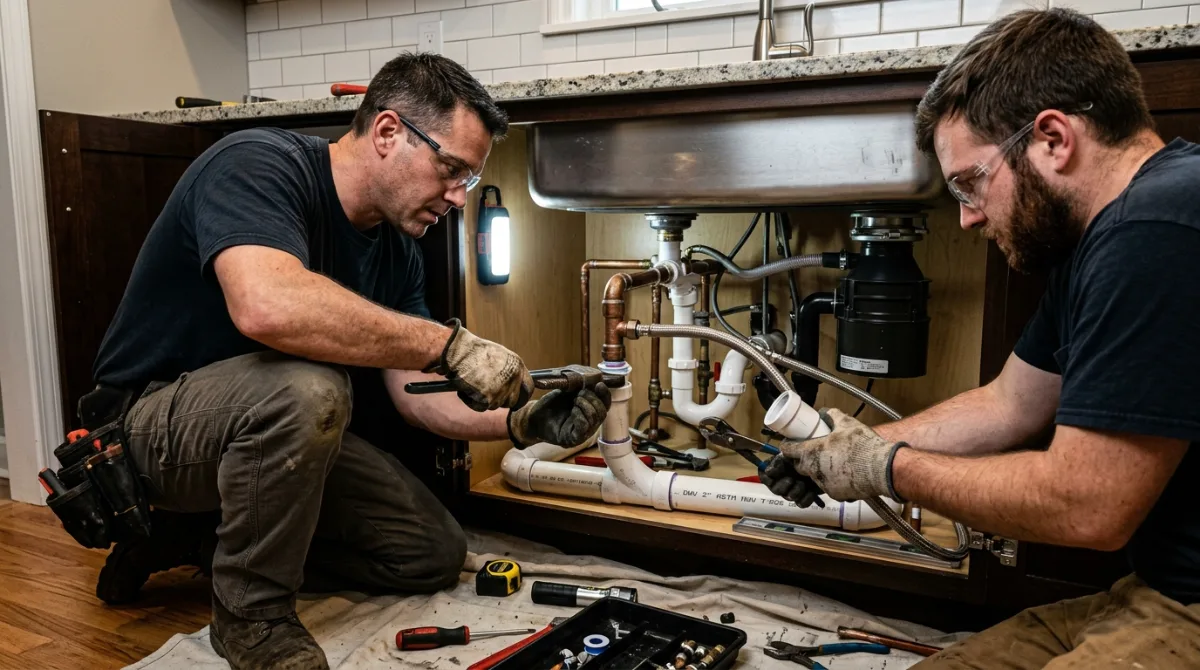
Two plumbers reworking the drain piping under a kitchen sink

What makes this district different

Hundreds of kitchens, and not nearly as many sewer laterals

Little Saigon is the largest Vietnamese commercial district in the country, and from a plumbing standpoint that translates into something very specific: an extraordinary density of restaurants, markets, bakeries, delis and food producers packed into multi-tenant buildings that were mostly not designed around that tenancy.

Two consequences follow. The first is grease volume. Every one of those kitchens sends warm fats and oils into a drain line where they cool, harden and adhere, and in buildings old enough to have cast iron with a rough internal wall, they adhere readily. That is why jetting rather than cabling is the correct tool here, and why the interval matters more than in almost any other kind of property.

The second is sharing. One lateral commonly serves several units, so a failure affects everyone regardless of whose kitchen caused it, and the resulting dispute has real money attached. The only thing that settles it is documentation. Routine camera work in a shared-lateral building builds a record of which branch contributes what, and that record is worth more the longer it runs.

So the work here is organised around trading rather than convenience. Jetting and interceptor service after close or before opening, coordinated so the two are not working against each other, and every visit documented, because in a food business the paperwork is part of the job rather than an afterthought.
Discuss a Kitchen Schedule

Kitchen type, rough covers, and when you close. The schedule builds from those three answers.

The recurring calls

What actually fails along this frontage

Six patterns that repeat across the district, and what each one needs.

Grease line closing

Jet, do not cable

A line narrowing steadily until service slows and then stops. Cabling punches a channel and leaves the coating; jetting scours back to the pipe wall. The interval should be set from camera evidence rather than guessed, because kitchens here vary enormously in output.

Shared lateral blockage

Everyone affected, one cause

One line serving several units means a single tenant’s accumulation closes the building. Clearing it is straightforward; establishing responsibility is not, unless there is footage. That is the argument for routine camera runs before a dispute rather than after.

Interceptor neglect

Sized wrong or serviced late

An interceptor too small for actual output, or serviced on a schedule that ignores how the kitchen really runs, passes grease straight into the line downstream. Servicing the trap while the line stays coated is half a job at full price.

Floor sink and drain backups

More entry points than a house

Commercial kitchens have many more drainage points than residential property, and each floor sink, compartment sink and mop basin is a route for grease and solids. Service that covers only the fixture that complained is why the same blockage returns through a different route.

Cast iron scale

Rough pipe holds more

Older frontage here often runs cast iron with heavy internal tuberculation, which gives grease something to grab. It does not automatically need replacing, but it does mean a shorter jetting interval and a camera baseline worth having on file.

Mid-service failure

The expensive version

A line that fails at half past seven on a Friday costs lost covers, emergency labour, possible closure and a cleanup in a food preparation area. Every scheduled visit is an attempt to avoid this one, and it is why the interval conversation is worth having properly.

How a site gets set up

Survey after close, baseline, then a real interval

Nothing about this needs to touch a service period.

1

Survey the drainage and the trade pattern

Every fixture and drainage point mapped, the interceptor sized against actual output, the shared-line arrangement understood, and your closure windows recorded so the schedule is built around your trading.

2

Baseline with a camera

Lines filmed and documented before any interval is proposed. In a shared building that footage is also the beginning of the record that matters when a blockage becomes a question of who pays.

3

Jet, document, adjust

Jetting and interceptor service scheduled together after close, each visit recorded with footage and a written summary, and the interval tightened or relaxed after two or three cycles once the real accumulation rate is known.

Book an After-Close Survey

Trading right now and backing up? That is an emergency: call and say you are open.

Straight answers

Little Saigon plumbing questions

Can you work after we close?

That is how kitchen work here is scheduled by default. Jetting and interceptor service happen after close or before opening, because a hose running across a service area and an open cleanout do not belong anywhere near food preparation or customers. The only work that happens during trading is a failure that has already stopped you trading.

Our building shares a sewer line with four other units. Who pays when it blocks?

Whoever has documentation tends to win that argument, which is why routine camera work in a shared-lateral building is a commercial instrument rather than a technical luxury. Footage from each visit builds a history of which branch contributes what, and a blockage that repeatedly originates from one tenant’s line stops being a matter of opinion. Building that record before a dispute starts costs a fraction of establishing it afterwards.

How often should a busy restaurant kitchen line be jetted?

Set it from evidence rather than a calendar. Jet the line, then camera it at the next visit and see how much has returned: two or three cycles establishes the real accumulation rate for your kitchen. High-volume operations with a lot of wok and fryer work often need it quarterly; a smaller cafe may be fine annually. Guessing in either direction costs money.

Is cabling good enough for a grease line?

No, and this is the most common false economy in commercial kitchen plumbing. A cable bores a channel through the coating and leaves the coating on the pipe wall, so flow returns briefly and the line closes again on its own schedule. Jetting scours back to the wall. On a greased commercial line, cabling buys weeks and jetting buys months. See hydro jetting.

We are in an older building. Is the pipe itself a problem?

Often it is a contributing one. Much of the commercial frontage along here is old enough to have cast iron with a rough, scaled internal wall, and rough pipe holds grease far more readily than smooth pipe does. That does not mean it needs replacing, but it does mean the jetting interval should be shorter than a modern building’s and that a camera baseline is worth having.

Do you handle grease interceptor sizing and compliance records?

Yes, and the records are the part people underestimate. An interceptor sized correctly for actual output, serviced on a real interval, with documentation of every visit. That is what turns an inspector’s question into a file rather than a conversation. See grease trap and grease line service.

A line failed mid-service. How fast can you get here?

Emergency dispatch runs around the clock and a business that has stopped trading goes to the front of the queue. Say on the call that you are open and affected. That single detail determines priority. Sites on a maintenance schedule get priority dispatch as part of the arrangement.

Do you work on residential property in this district too?

Yes. Little Saigon is not only commercial: the streets behind the frontage are the same sixties tracts as the rest of the city, with the same clay laterals, galvanized supply and slab foundations. The residential call mix here looks like the rest of Westminster; it is the commercial density that makes the district distinctive.

Ask About a Site

Kitchen type, covers, whether the lateral is shared, and your closure window.

After close, documented, dispatched fast

Keep the kitchen open. Schedule the line instead of the failure.

Grease jetting, interceptor service and camera records on your trading calendar.

Call for Little Saigon Service

Restaurants, markets and multi-tenant buildings across Little Saigon.