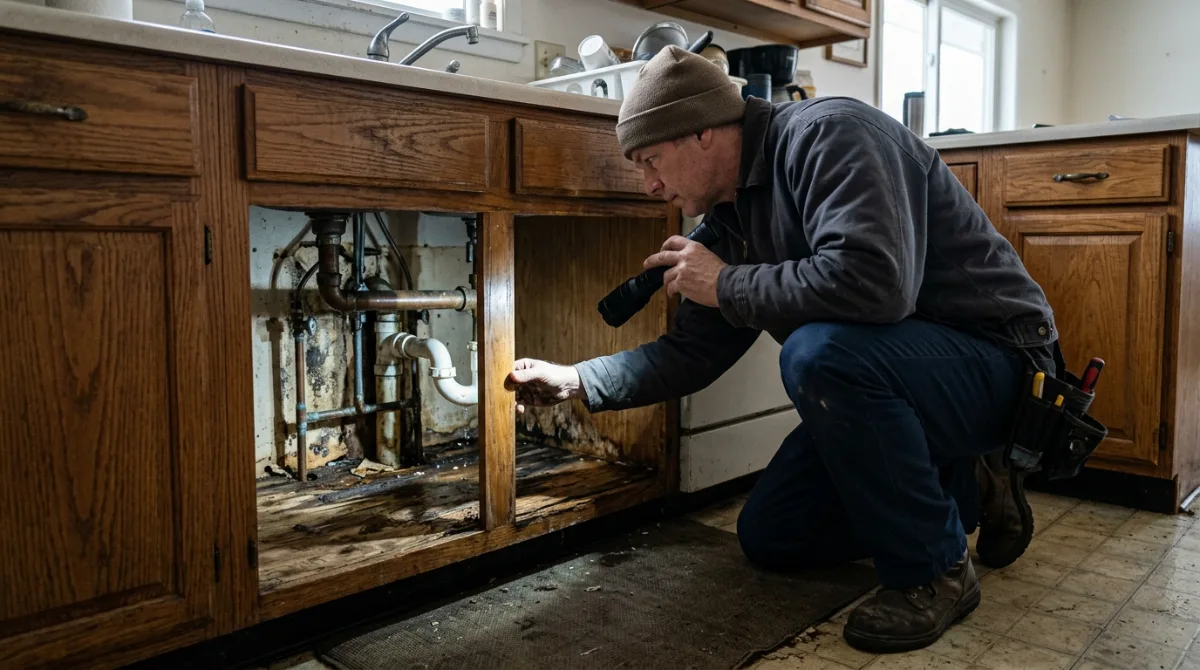
Slab leaks
Locate before cutting
A supply line failing under concrete. Acoustic and thermal location narrows it to a workable point, which is the difference between a patch the size of a dinner plate and an exploratory dig across a floor.
Fountain Valley, CA · slab-on-grade and copper supply
Slightly newer housing on the same sandy ground, where copper pinholes under concrete and misdiagnosed pressure complaints dominate the call mix.
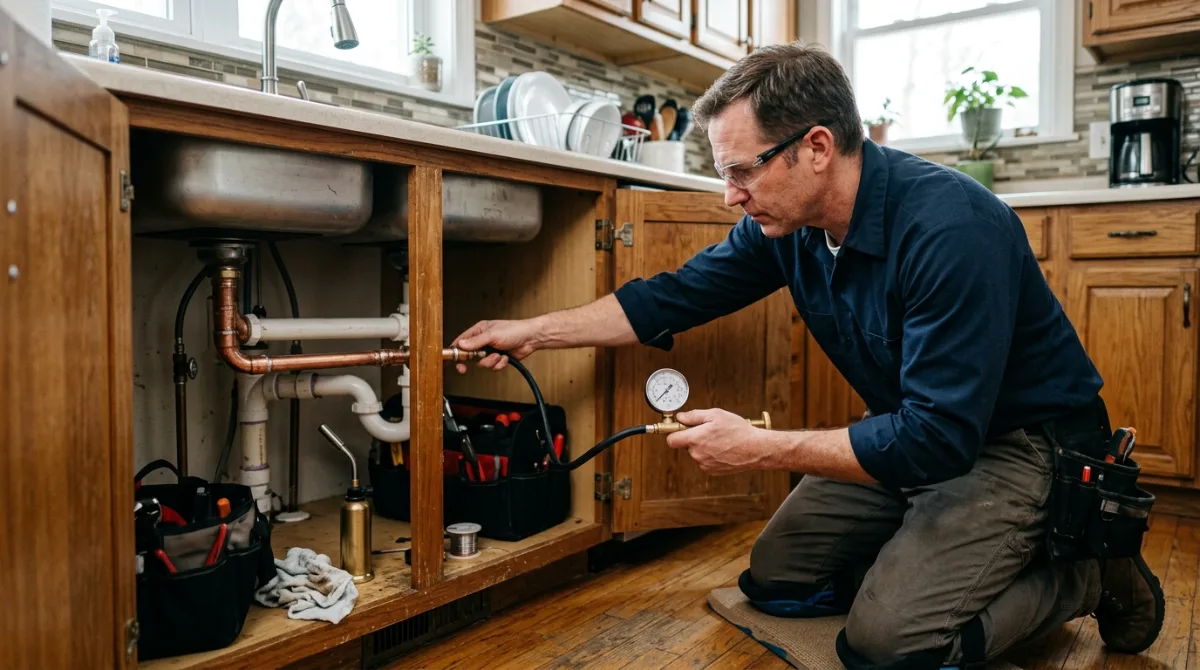
A different pipe, the same concrete
Fountain Valley developed a little later than Westminster, which shifts the housing stock toward the late sixties and seventies. The practical consequence is that copper supply is far more common here than the galvanized steel that defines older Westminster tracts, and that changes the conversation in a useful way.
Copper does not corrode inward and strangle pressure the way galvanized does. It fails differently: pitting and pinhole leaks, sometimes driven by water chemistry or flow velocity rather than age alone. A single pinhole is a straightforward repair. A cluster of them across a house behaves exactly like a failing galvanized system and deserves the same honest repiping conversation rather than a sequence of individual patches.
What has not changed is the slab. Slab-on-grade construction is near universal here, so a supply line failing under concrete is the defining expensive problem regardless of what the pipe is made of. The cost lives in the concrete and the finishes above it, not in the fitting, which is why precise location before anything is cut matters more than almost any other step, and why rerouting overhead is so often the better answer than opening a floor.
The other local pattern is misdiagnosed pressure. Because the supply pipe here is frequently sound, a pressure complaint is more likely to be a failing regulator or an expansion problem than internal restriction. That is genuinely good news, because those cost a fraction of a repipe, provided somebody puts a gauge on a hose bib before recommending one.
Meter still creeping with the house shut off? That one answer starts the whole diagnosis.
The local call mix
Copper, concrete and regulators.
Slab leaks
A supply line failing under concrete. Acoustic and thermal location narrows it to a workable point, which is the difference between a patch the size of a dinner plate and an exploratory dig across a floor.
Copper pinholes
Pitting failures that can be isolated or systemic. A cluster across the house behaves like end-of-life supply and warrants a repipe discussion rather than a rolling series of patches.
Reroute versus open
Where the failure is one of several, or under finished flooring or cabinetry, running new line overhead through the attic and abandoning the under-slab section is generally cheaper and leaves the pipe serviceable.
Regulator faults
Sound pipe plus poor pressure points at the regulator or expansion control far more often than at restriction. Ten minutes with a gauge prevents an expensive misdiagnosis.
Expansion damage
A closed system with no expansion tank spikes pressure every heater cycle, shortening the life of the heater, fixtures and hoses. It presents as unrelated small failures until someone measures.
Bellies, at a lower rate
Sandy soil and a shallow water table produce sagging laterals here too, if less often than the lowest parts of south Westminster. A recurring blockage still deserves a camera before another cleaning.
Mostly residential
Straight answers
Slightly, on average. Fountain Valley developed a little later, so a good share of the stock is late sixties into the seventies rather than late fifties. That often means copper supply instead of galvanized, which changes the repipe conversation substantially, but it does not change the slab underneath.
Because slab-on-grade construction is near universal and the supply lines are now old enough to fail. On copper, the failure mode is pitting and pinholes rather than the inward corrosion of galvanized, and a pinhole under concrete is exactly as expensive as any other slab leak. The concrete, not the pipe material, is what makes it costly.
Not necessarily. Copper of certain eras develops pitting and pinhole leaks, sometimes driven by water chemistry or velocity rather than age alone. One pinhole is a repair; a cluster across the house behaves exactly like failing galvanized and deserves the same repiping conversation.
The meter test first: shut the main at the house and watch the meter. If it still creeps, water is escaping downstream of the meter and upstream of that valve. Then a warm floor spot, unexplained damp, or the sound of running water with everything off narrows it, and acoustic and thermal location pins it down before any concrete is cut.
Both are legitimate and it depends on the specifics. A single located pinhole under an accessible area can be opened, repaired and patched. Where the run is long, the failure is one of several, or the location is under finished flooring or cabinetry, rerouting overhead through the attic and abandoning the under-slab section is usually cheaper and leaves the pipe serviceable.
Similar sandy alluvial soil, and a water table that is shallow though generally not quite as high as the lowest parts of south Westminster. So bellies and offsets in sewer laterals do occur here, just at a somewhat lower rate, and a camera run remains the right first step on a recurring blockage.
Yes, and often misdiagnosed. On this housing stock the supply pipe is frequently sound, which means poor pressure more often points at the regulator or an expansion problem than at internal restriction. A gauge on a hose bib settles it in ten minutes and prevents an expensive misdirected repair. See pressure and regulator service.
Yes, and response is quick given the shared border with south Westminster. If timing matters for something active, say so on the call and you will get a real arrival window.
Whether the meter moves with the house off, and whether you know the pipe material.
Nearby
Measure, locate, then spend
Slab leaks pinpointed, pinholes assessed honestly, pressure tested before anything is replaced.
Residential plumbing across Fountain Valley.