Serving Westminster, CA & west Orange County Open 24 hours · same-day and after-hours calls 24/7 dispatch · (657) 337-7905
Westminster CA Plumbing (657) 337-7905

Westminster, CA · Bolsa Avenue and Westminster Boulevard corridors

Restaurant and commercial plumbing, scheduled around your covers

Grease lines, interceptors, three-compartment sinks, shared laterals and backflow certification: worked after close, documented for inspection, and dispatched fast when it cannot wait.

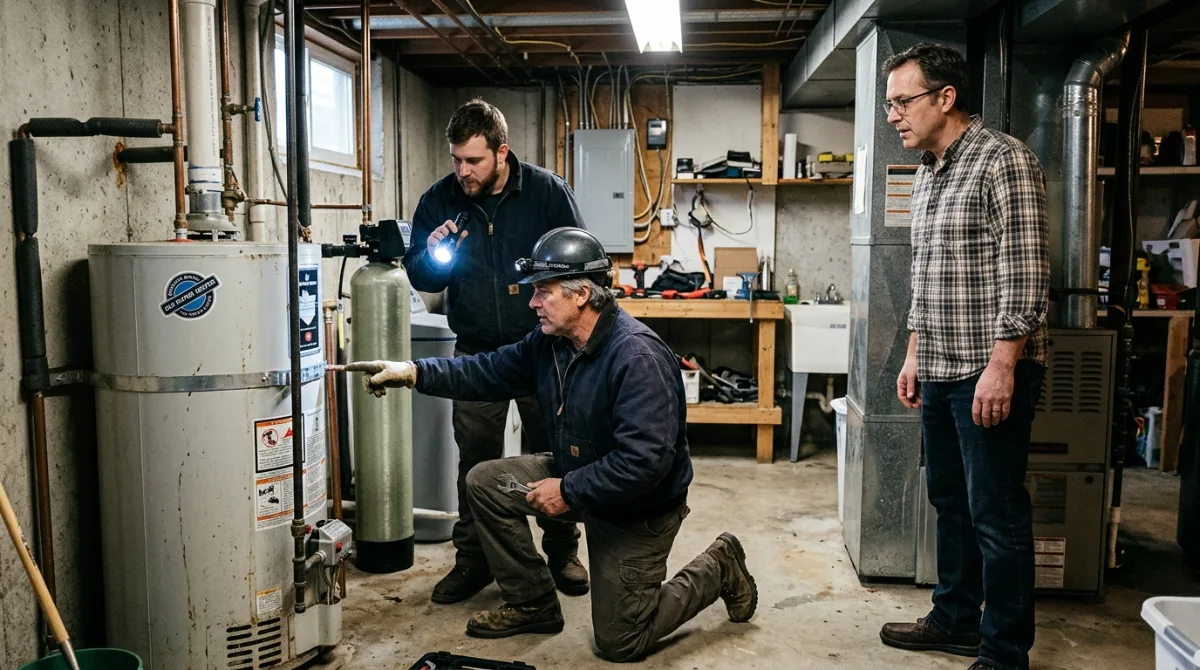
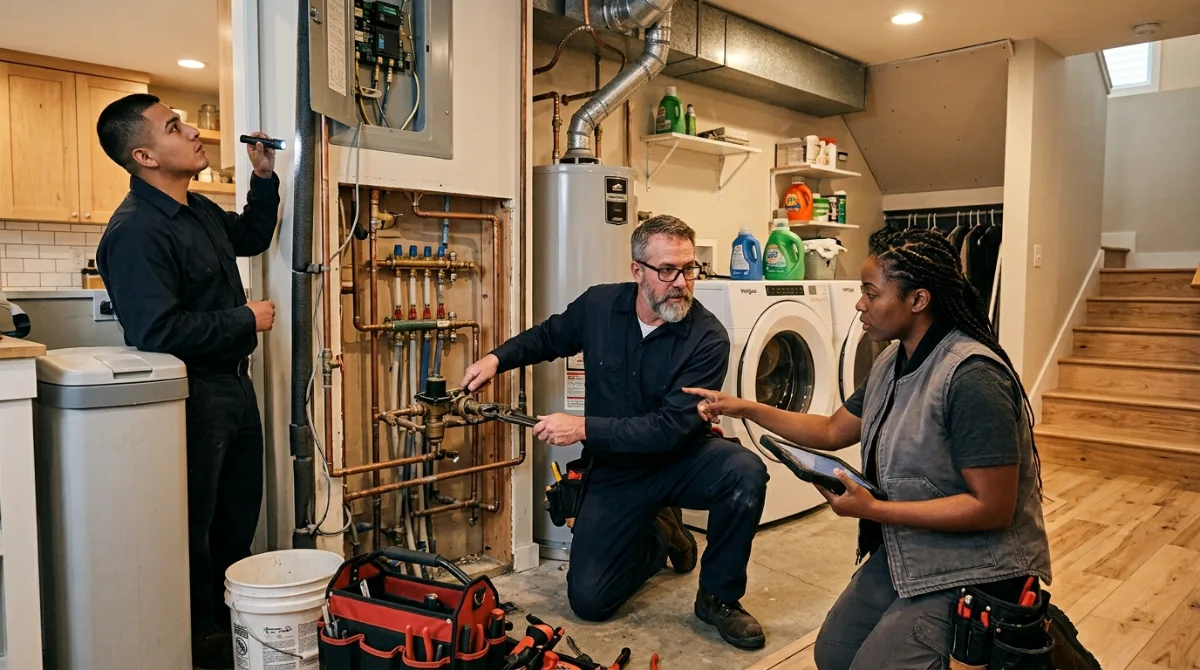
Technicians inspecting a manifold and water heater in a building utility room

The economics

A scheduled visit after close, or a Friday night closure

Westminster carries an unusually dense concentration of food business for a city its size. The Bolsa Avenue corridor alone runs several hundred businesses, a large share of them restaurants, markets, bakeries and food producers, with more along Westminster Boulevard and around the mall. Every one of those kitchens sends warm grease down a drain line where it cools, hardens and stays.

The commercial arithmetic is not subtle. A scheduled jetting visit after close is a known, modest, budgetable cost that appears on a calendar. An unscheduled grease line failure at half past seven on a Friday is lost covers, a possible closure, emergency labour rates, and a cleanup in a food preparation area with everything that implies. Operators who have experienced the second version rarely spend long debating the first.

So the work is organised around your trading rather than around convenience. Jetting and interceptor service happen after close or before opening. The two are coordinated so they are not working against each other, servicing an interceptor while the line downstream is still coated achieves half a job. And every visit is documented, because when an inspector asks how the grease management program is recorded, the useful answer is a file rather than a memory.

Shared laterals deserve their own mention. In multi-tenant buildings along these corridors, one line frequently serves several kitchens, and the question of whose grease caused the failure is answered entirely by whoever has camera footage. Building that history quietly over routine visits is the cheapest insurance available in a shared-plumbing building.
Ask About a Service Schedule

Tell us the kitchen type, roughly how many covers, and when you close. The schedule builds from that.

What gets covered

The parts of a commercial plumbing program

Priced as a known monthly cost rather than a series of surprises.

Grease line jetting

On an evidence-based interval

High-pressure scouring that takes the coating back to the pipe wall instead of punching a channel through it. The interval is set empirically, jet, then camera at the next visit and see what returned, rather than guessed from a calendar. See hydro jetting.

Interceptor service

Coordinated, not isolated

Grease trap and interceptor service scheduled alongside line jetting so the two work together, with correct sizing checked against the kitchen’s actual output. Servicing a trap while the downstream line stays coated is half a job at full price.

Camera documentation

The record that settles disputes

Routine camera runs that track line condition over time, catch developing defects early, and in a shared-lateral building establish which tenant’s branch does what. That history is worth more the longer it runs. See camera inspection.

Backflow certification

Tested, and repaired if it fails

Periodic testing of backflow prevention assemblies with the certification paperwork handled, and rebuild or repair where an assembly fails, because a failed test with nothing scheduled behind it is not a usable result.

Fixtures and fittings

The whole drainage picture

Three-compartment sinks, floor sinks and drains, pre-rinse assemblies, hand sinks, mop basins and water heaters. Commercial premises have many more drainage points than a house, and each is a route for the material that eventually coats the shared line.

Priority dispatch

For when scheduling fails anyway

Contract sites go to the front of the emergency queue, around the clock. Say on the call that you are open and affected. That single detail is what determines how the dispatch is prioritised. See emergency plumbing.

How a site gets set up

Survey, baseline, schedule

The first visit is about establishing what you actually have.

1

Survey the drainage and the trade pattern

Every fixture and drainage point mapped, the interceptor sized against real output, the shared-line arrangement understood, and your trading hours and closure windows recorded so scheduling is built around service rather than around us.

2

Baseline with a camera

Lines filmed and documented before any interval is proposed, so the schedule follows evidence. That footage is also the start of the record that matters in a shared building and at an inspection.

3

Set the interval and keep the file

Jetting and interceptor service scheduled together after close, each visit documented with footage and a written record, and the interval adjusted after two or three cycles once the real accumulation rate for your kitchen is known.

Book a Site Survey

Surveys happen outside trading hours too. Nothing about this needs to touch a service period.

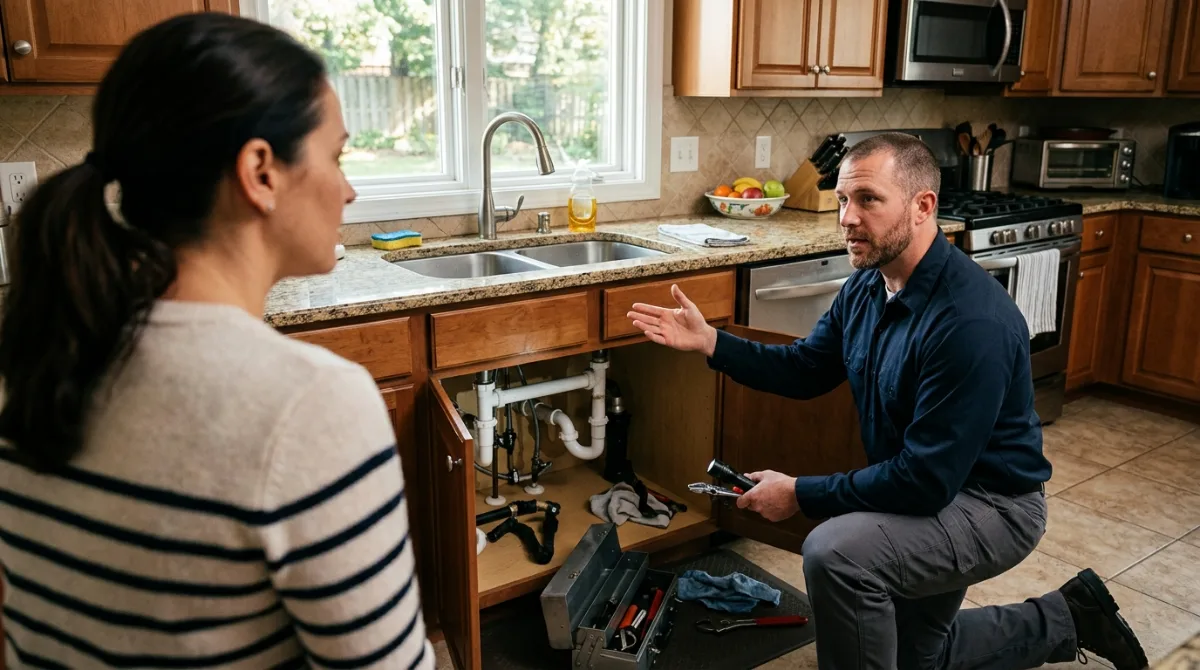
Technician explaining what he found under the sink to the owner

Local context

Shared laterals under sixty-year-old commercial frontage

The commercial corridors here combine two things that make plumbing more consequential than in a newer retail park: extremely high food-business density, and buildings old enough that the drainage was designed for a different tenancy pattern than the one it now serves. A row of units originally built for general retail now runs several kitchens into infrastructure that was never sized with that in mind.

Shared laterals are the practical result. One line, several tenants, and a failure that affects everyone regardless of whose grease caused it. That produces disputes with real money attached, and the only thing that resolves them is documentation, which is why routine camera work in these buildings is a commercial instrument as much as a technical one. Building the record before a dispute starts is considerably cheaper than trying to establish it afterwards.

The rest is scheduling discipline. Cast iron of this vintage has a rough internal wall that holds grease readily, so jetting rather than cabling is the correct tool and the interval matters. Work happens after close because that is when the line is empty, the results are best, and no hose crosses a floor a customer will walk on. And every visit leaves a record, because in a food business the paperwork is part of the job rather than an administrative afterthought.

Straight answers

Commercial plumbing questions

Can you work outside our trading hours?

That is the default rather than a favour. Kitchen and dining-room plumbing gets done after close or before opening, because hoses through a service area and an open cleanout do not belong near food preparation or customers. The only exception is an active failure that is already shutting you down, which is treated as an emergency whenever it happens.

How do we stay compliant on grease?

Three things, and the third is the one people miss: an interceptor sized correctly for the kitchen, serviced on a real interval; the grease line jetted rather than cabled, so the pipe wall is actually clean; and records of every visit kept. When an inspector asks how the grease program is documented, the answer needs to be paperwork rather than recollection. See grease trap service.

Our building has shared lines between tenants. Who pays when it blocks?

That argument is settled by whoever has documentation. Camera footage from each service visit builds a history of which branch does what, and a blockage that repeatedly originates from one tenant’s line stops being a matter of opinion. In a multi-tenant building with a shared lateral, the case for regular camera work is as much commercial as it is technical.

What does a maintenance contract actually cover?

Typically scheduled line jetting on an interval set from evidence rather than a calendar guess, interceptor service coordinated with it, backflow testing and certification where required, camera runs to track condition, and priority dispatch when something does go wrong. The point is converting unpredictable closures into a known monthly cost.

Do you handle backflow testing and certification?

Yes. Commercial premises with backflow prevention assemblies generally need periodic testing and certification, and failures need the assembly repaired or rebuilt rather than merely noted. Testing, paperwork and any remedial work are handled together, because a failed test with no repair scheduled is not a result anyone can use.

How fast can you get to us if a line fails mid-service?

Emergency dispatch runs around the clock and a failure that has stopped a business trading goes to the front of the queue. Say on the call that you are open and affected. That is the detail that determines priority. Sites on a maintenance contract get priority dispatch as part of the arrangement.

We have three-compartment sinks and a lot of floor drains. Is that different work?

Different fittings, same principles, more of them. Commercial kitchens have far more drainage points than a house, and each floor sink and compartment drain is a potential entry for the grease and solids that eventually coat the shared line. Service covers the whole drainage picture rather than whichever fixture complained, which is what stops the same blockage returning through a different route.

Is a scheduled interval really cheaper than fixing failures?

For a kitchen, almost always, and the comparison is not close. A scheduled after-hours jetting visit is a modest, budgetable, predictable cost. An unscheduled grease line failure during service is lost covers, possible closure, emergency labour rates and a cleanup in a food preparation area, plus whatever the health consequences of that cleanup turn out to be. Operators who have had the second one rarely need convincing about the first.

Ask About a Commercial Contract

Kitchen type, rough covers, whether the lateral is shared, and your closure window.

After close, documented, dispatched fast

Turn an unpredictable closure into a scheduled line item.

Grease lines, interceptors, backflow certification and camera records, on your trading calendar.

Book a Site Visit

Restaurants, markets, multi-tenant buildings and clinics across west Orange County.