When repair stops making sense
Three leaks in two years is not bad luck
Galvanized steel supply pipe was standard when most of this city was built, and it fails in a completely predictable way. Zinc coating depletes, steel corrodes, and the corrosion grows inward, so a three-quarter-inch line slowly becomes an effective half-inch, then less. Pressure falls off gradually enough that a household adjusts to it without noticing. Water runs rust-coloured on first draw. And eventually the wall thins enough somewhere that it opens up.
Repairing that is entirely reasonable the first time. The second repair, on a different run, is where the arithmetic starts to change, because you are now paying to fix individual symptoms of a system-wide condition. Every dollar goes into pipe you will replace anyway, and the next failure has no more reason to wait than the last one did. The tell is not any single leak but the pattern: multiple failures in different locations, plus falling pressure, plus discoloured water, plus original pipe of a known age.
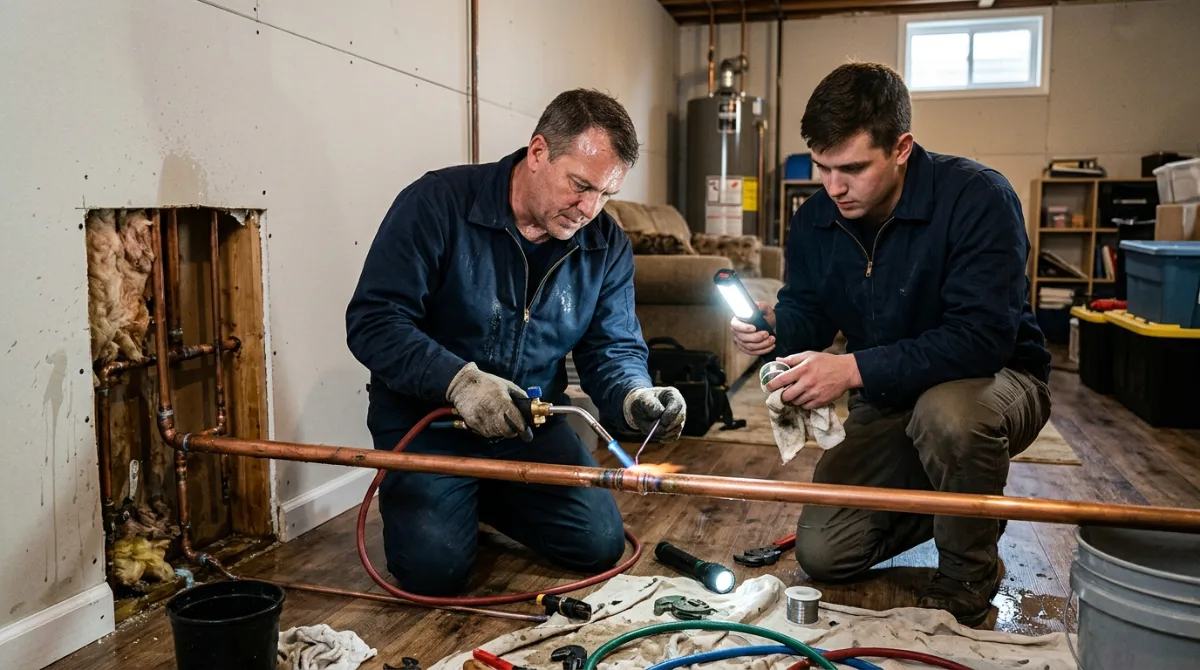
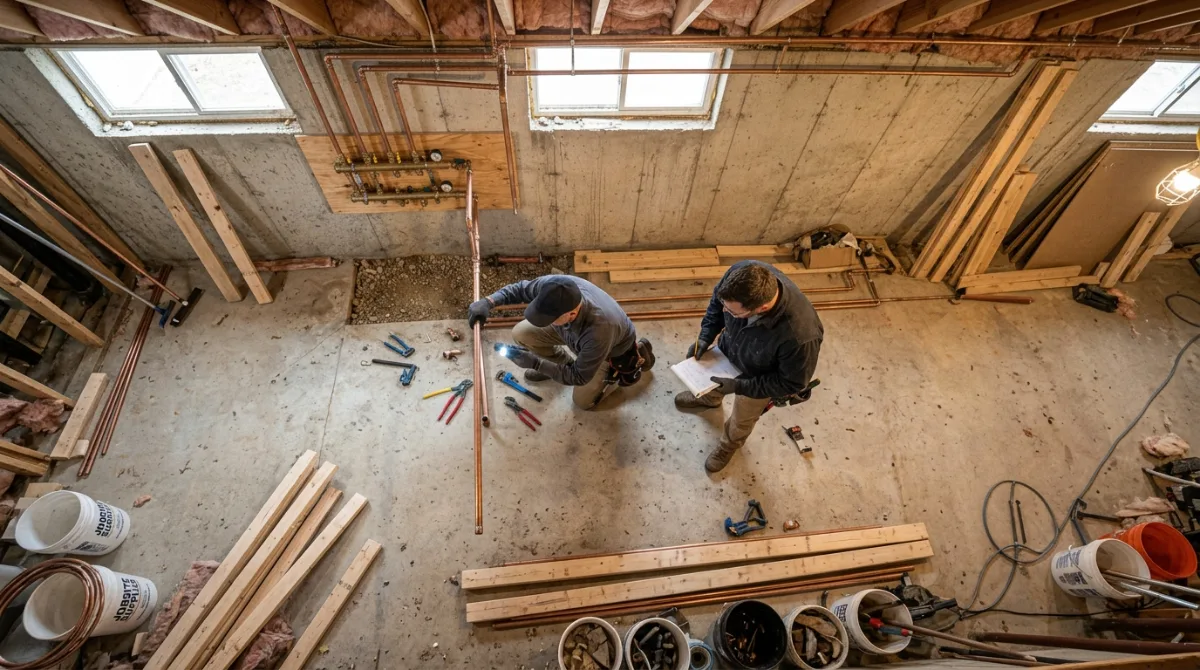
A repipe replaces all of it at once: hot and cold, from the point of entry to every fixture, with new shutoffs at each. Done in copper or PEX, permitted, pressure-tested and inspected. The immediate difference in a galvanized house is usually pressure: restoring full diameter transforms upstairs and end-of-run fixtures in a way people notice on the first shower.
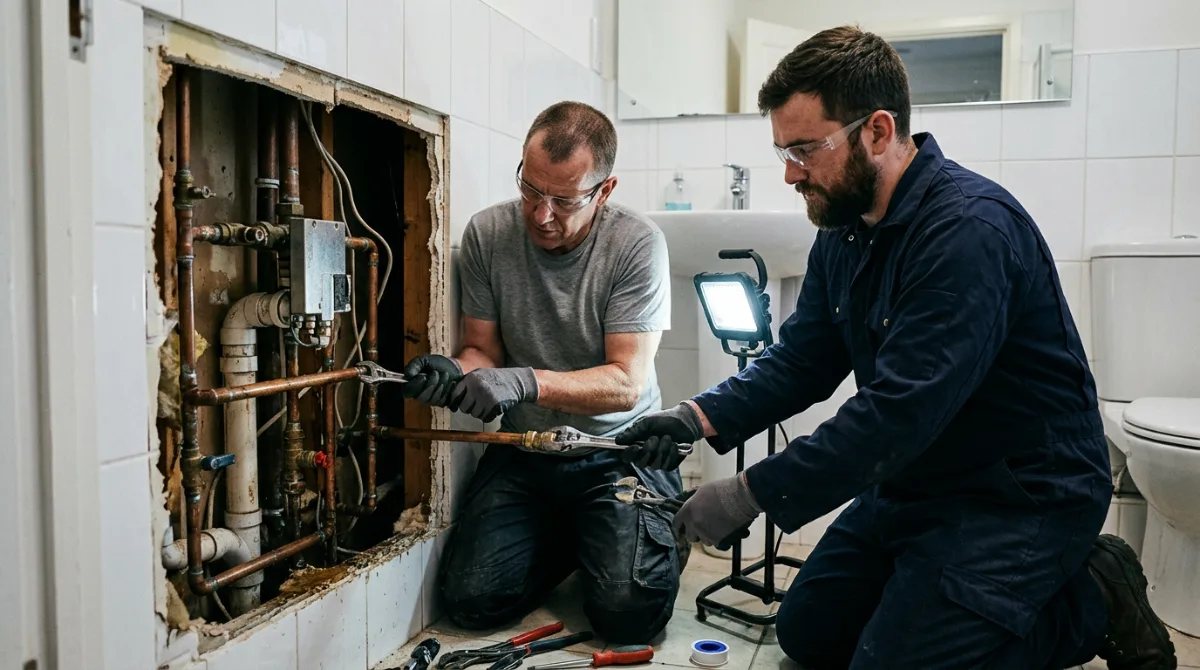
The part that decides cost is access, not pipe. Which is why the job is planned around routing through existing wall cavities and the attic, taking access only at strategic points, and why the access plan is something you see before work starts rather than after.
Talk Through a Repipe
Age of the house, how many leaks in the last two years, and whether the pipe is galvanized. That is the conversation.