Serving Westminster, CA & west Orange County Open 24 hours · same-day and after-hours calls 24/7 dispatch · (657) 337-7905
Westminster CA Plumbing (657) 337-7905

Westminster, CA · restaurant corridors and older tracts

Hydro jetting: back to the pipe wall, not through the blockage

High-pressure water and directional nozzles that strip grease, scale, sludge and root hair out of a line and flush it away. The difference between a drain that is open and a drain that is actually clean.

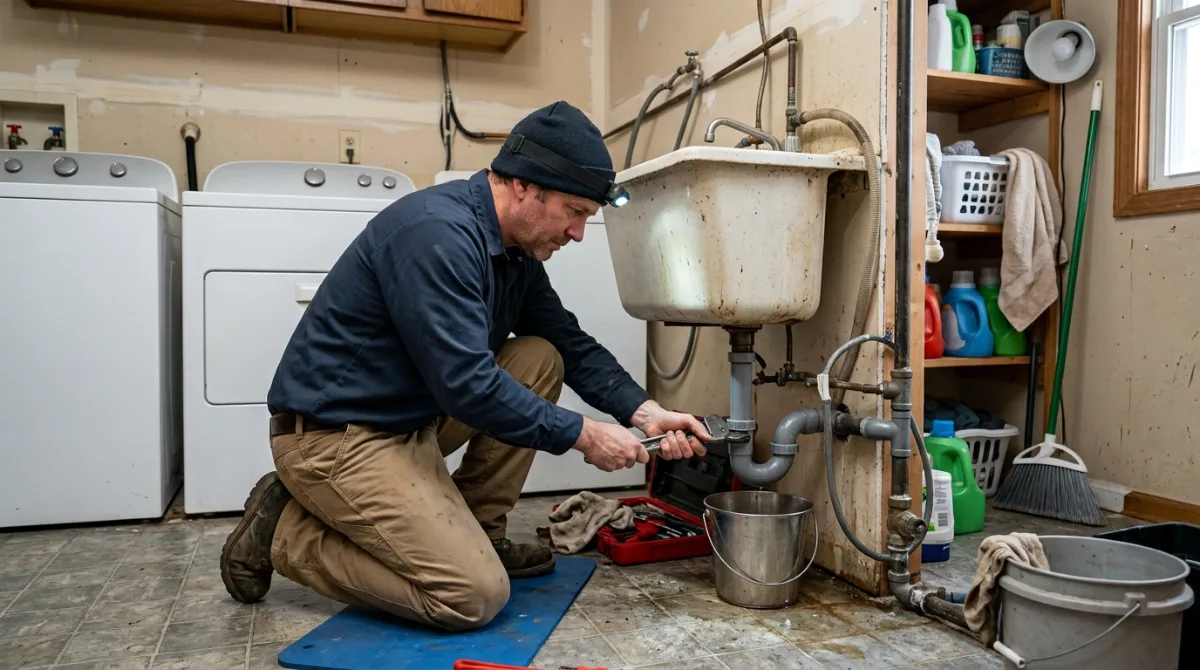
Technician opening the trap under a utility sink to clear a blocked line

Diameter, not just flow

Why a cleared line and a clean line are different animals

Picture a four-inch line with three quarters of an inch of hardened grease around the inside. A cable machine punches a channel through the plug at the narrowest point, water starts moving, and the sink drains. Nothing about that pipe has changed. The coating is still there, the effective diameter is still tiny, and the next few weeks of cooking rebuild the plug.

Jetting attacks the coating instead of the plug. Water leaves the nozzle at high pressure through rear-facing jets that both propel the head up the line and blast the wall as it travels, while the return flow carries the loosened material back to the cleanout where it can be removed from the system. When the nozzle comes back and a camera goes in, you are looking at pipe rather than at whatever has been living in it.

That distinction is why jetting has become standard in commercial kitchens and why it matters in older residential lines too. Cast iron that has been in the ground since the Eisenhower administration accumulates scale. Kitchen branches in houses that cook seriously every day accumulate fat. Laterals under mature parkway trees accumulate root hair and the sediment it traps. All three are coating problems, and coating problems need scouring.

The one thing jetting cannot do is change a pipe’s shape. It will not lift a bellied section, close a root-split joint or repair a crack. Which is exactly why the sequence is camera, jet, camera, so cleaning is never sold as a substitute for a repair that is actually needed.

Ask Whether Jetting Fits

If a line has blocked twice or more, mention that on the call. It usually points straight at jetting.
Choosing the tool

When to cable, when to jet

Both belong on the truck. Using the wrong one is how a problem becomes a subscription.

Cable machine

Best for solid obstructions and first response

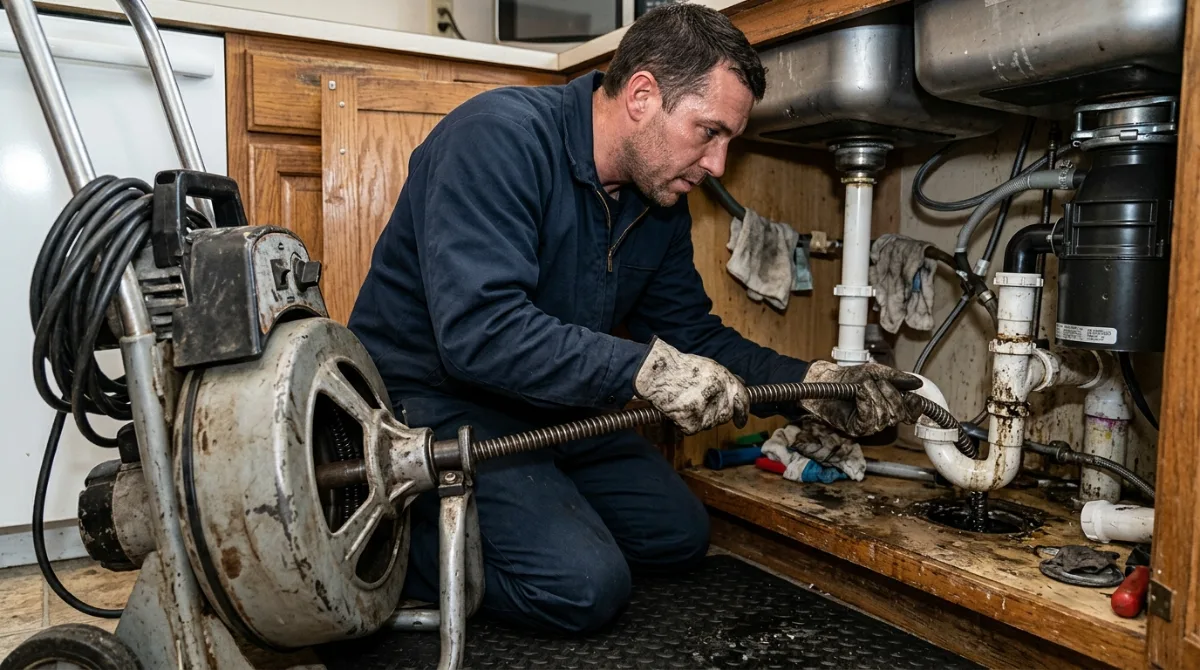
A rotating steel cable with a boring or cutting head is fast, works without a large water supply, handles objects, heavy root mass and paper plugs, and gets a property flowing again quickly in an emergency. It is the right first move on most single-event blockages, and often the only move needed. What it will not do is remove the film on the pipe wall that caused a recurring problem. It makes a hole, and a hole is enough until it is not.

Hydro jetter

Best for coatings, recurrence and maintenance

High-pressure water scours grease, soap, scale, sludge and fine root hair from the full circumference and flushes the debris out rather than leaving it in the line. It is the correct tool for commercial grease lines, repeat residential blockages, old cast iron and any line going onto a maintenance schedule. It needs decent access and a water supply, and it should follow a camera inspection on any pipe of unknown condition.

Sequence

Camera, jet, camera

Three steps, because the before-and-after is the proof and the plan.

1

Inspect before pressure goes in

A camera run establishes material, diameter, condition and what is actually in there. It also finds the things jetting must not be used on, cracks, offsets, crushed sections, before anyone starts.

2

Jet with a matched nozzle and pressure

Nozzle selection does the work: a penetrating head to open a plug, a flushing head to move sludge, a chain or root head where the situation calls for it. Pressure is set for the pipe, not for show.

3

Re-camera and set the interval

A second run shows bare pipe and any defect the coating was hiding. That footage sets the maintenance interval, or starts the repair conversation with evidence instead of opinion.

Set Up a Jetting Schedule

Kitchens can be put on a recurring interval with records kept for inspections.

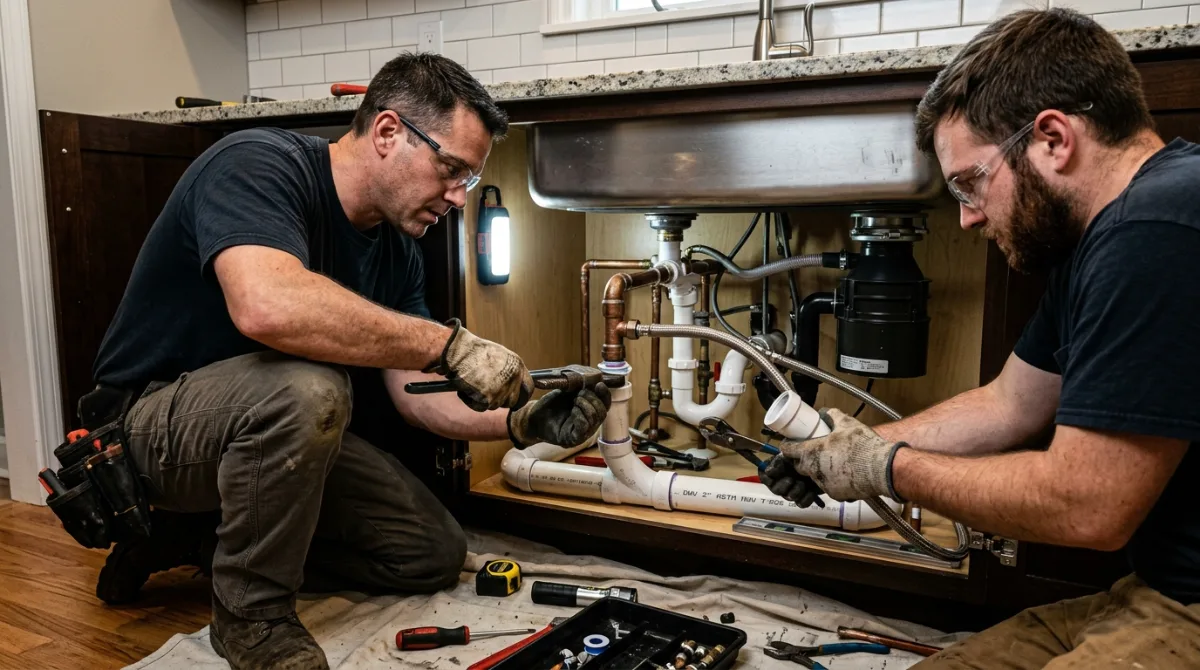
Two plumbers reassembling drain piping after clearing a kitchen line

The commercial case

One scheduled visit versus one Friday night closure

Grease does not sit in a line as a blockage you can punch a hole through. It plates onto the pipe wall in layers, narrowing the bore evenly until flow drops off, and a cable pushed through that only bores a channel the width of the head, which is why a cabled grease line backs up again within weeks. Jetting is the one method that scours the wall back to full diameter, and on a commercial kitchen line that is the difference between a service interval and a standing emergency.

The economics are not complicated. A scheduled jetting visit after close is a known, modest, budgetable cost. An unscheduled grease line failure at 7:30pm on a Friday is lost covers, a possible closure, emergency labour rates, and a cleanup in a food preparation area. Operators who have had the second one rarely argue about the first.

Scheduling here is built around trade rather than convenience for the plumber. Work happens after close or before opening. Interceptor service is coordinated with line jetting so the two are not fighting each other. Records of each visit are kept, which matters when a health inspector asks how the grease management program is documented. And where a building has shared laterals between tenants, camera footage from each visit quietly builds a history of whose line does what, which is the single most useful document to have when a dispute starts.

Straight answers

Hydro jetting questions from homeowners and operators

What is hydro jetting and how does it differ from cabling?

A jetter pushes water through a hose at high pressure and out through a directional nozzle. Rear-facing jets drive the nozzle up the line and simultaneously scour the pipe wall, carrying debris back toward the access point. A cable machine bores a channel through an obstruction; a jetter restores the pipe’s actual diameter and flushes what it removes out of the system. On grease, scale, sludge and fine root hair the difference is not subtle.

Will jetting damage my pipes?

Not when the line is assessed first and the pressure and nozzle are matched to it, which is why a camera inspection before jetting is good practice rather than an upsell. Sound cast iron, clay, ABS, PVC and properly bedded lines handle it routinely. A pipe that is already cracked, badly corroded, offset at a joint or crushed is a different matter, jetting will not have caused that damage, but it can reveal it. In those cases the honest recommendation is repair, not more cleaning.

How often should a commercial kitchen be jetted?

It depends on volume and what is cooked, but a quarterly interval is a common starting point for a busy kitchen, with high-volume fryer-heavy operations closer to every one or two months and low-volume sites moving to twice a year. The right way to set it is empirically: jet, then camera the line at the next visit and see how much has re-accumulated. Two or three cycles establishes the real interval for your kitchen instead of a guess.

Is jetting worth it for a house, or is it only commercial?

It is worth it for a house when the problem repeats. A one-off blockage from an object does not need it. A kitchen line that has been slowly coating with grease for decades, a main lateral with root hair regrowing through the joints, or an old cast-iron stack furred with scale all respond to jetting in a way cabling cannot match. In multi-generational households with heavy daily cooking, jetting a kitchen line every couple of years is genuinely preventative.

Do you need a cleanout to jet a line?

It is strongly preferable. A proper cleanout lets the hose enter in the direction of flow, gives the debris somewhere to be flushed to, and keeps the work outside the building. Where there is no accessible cleanout, access can sometimes be taken through a pulled toilet or a roof vent, but it is slower, messier and more limited. If your property has no cleanout or it has been paved over, installing one usually pays for itself within a couple of service visits.

What about roots? Does jetting deal with them?

Partly, and it is a question of stage. A cutter head on a cable machine or a specialist root nozzle removes the mass; jetting then scours the remaining hair and sediment from the pipe wall so there is less for the next root to grab onto. What neither does is close the joint the roots came through. If a camera shows repeated entry at the same point, cleaning is a maintenance strategy and repair or lining is the actual solution. See trenchless sewer repair.

How long does a jetting visit take?

A residential kitchen line or main lateral is often an hour to two hours including setup and a flow test. A commercial grease line, depending on length, access and how long it has been since the last service, typically runs two to four hours, and a first-time service on a badly neglected line takes longer because material has to be removed in stages. Scheduling after close means the timing rarely matters to your operation.

Can jetting be done while my business is open?

It can, but it is usually the wrong choice. The work involves hoses through service areas, an open cleanout and water, none of which belong near a dining room or a food prep area during trade. The standard approach here is to work after close or before opening, which is also when the line is empty and the results are best. If a blockage is actively shutting you down, that changes the calculation and it gets treated as an emergency.

Will jetting fix a bellied or broken pipe?

No, and any claim otherwise should end the conversation. A belly, a sagged section where the fall has been lost, will keep holding water and collecting solids no matter how clean it is. A cracked, offset or root-split pipe keeps letting material in. Jetting will make both of them flow better temporarily, which is worth having in an emergency, but the fix is a spot repair, a lining or a replacement section. A camera tells you which one you actually have.

Is there anything I should do to prepare?

Clear access to the cleanout and, in a kitchen, to the affected sinks and floor drains. Move vehicles if the cleanout is near a driveway. Avoid running water during the work. Commercially, let the plumber know where the interceptor is and when it was last serviced, and have any previous camera footage or service records handy, knowing what a line looked like six months ago makes the current picture far more useful.

Price a Jetting Job

Tell us pipe size, access and roughly when it was last serviced, and the quote gets a lot more accurate.

After close, before opening, or right now

Clean the pipe once instead of clearing it forever.

Camera first, jetting matched to the line, and an interval you can actually plan around.

Book Line Jetting

Kitchens, multi-tenant buildings and older residential laterals across west Orange County.