Serving Westminster, CA & west Orange County Open 24 hours · same-day and after-hours calls 24/7 dispatch · (657) 337-7905
Westminster CA Plumbing (657) 337-7905

Westminster, CA · garage and closet installations

Water heater repair, with a straight answer about the tank’s age

Pilots, thermocouples, elements, thermostats, valves and sediment: repaired same day where repair is the right call, and named as a replacement where it is not.

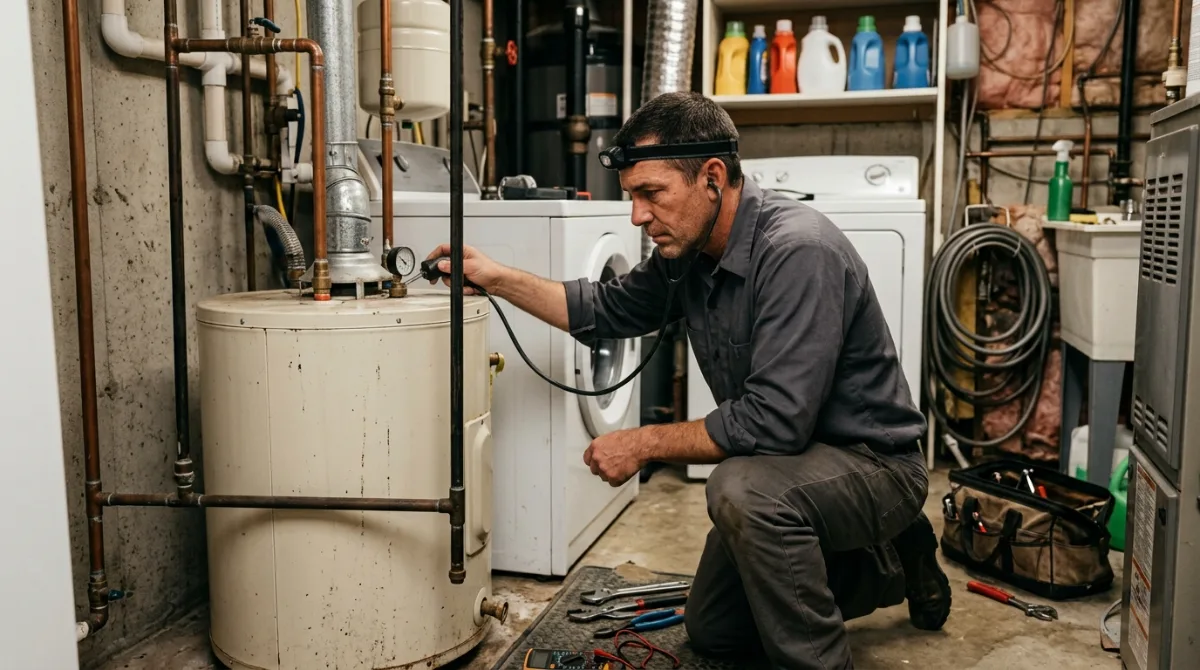
Technician servicing an older gas water heater in a laundry area

Diagnosis first

Most water heater faults are cheap. The expensive one is the tank itself.

Almost everything that fails on a water heater is a serviceable part bolted to a vessel that is otherwise fine. Thermocouples, igniters, gas valves, upper and lower elements, thermostats, dip tubes, drain valves, T&P valves, all ordinary parts, all replaceable in a single visit, and all worth doing on a tank with years left in it.

Exactly one failure is not repairable, and it is the one that matters: the tank. A water heater is a steel vessel with a glass lining, protected by a sacrificial anode rod. When the anode is consumed and the lining fails, the steel corrodes from the inside and eventually weeps. There is no patch for that, no fitting to swap, no honest way to extend it. It is a replacement, and the only question is whether it happens on your schedule or on the tank’s.

So the first job on any call is telling those two categories apart, which usually takes minutes. Where the water is coming from, what the burner or elements are actually doing, what the anode looks like on a tank old enough to check, and how much sediment is in the bottom. On a unit under eight years old the answer is nearly always a repair. On one over twelve, spending money on parts is renting time at a poor rate, and saying so is more useful than selling the part.

The middle years are where judgement matters, and it comes down to arithmetic rather than instinct: the cost of this specific repair, the realistic remaining life, and what a replacement would cost today. That comparison gets laid out plainly, along with the option of doing nothing yet, which is sometimes the right answer.

Describe the Symptom

Age of the tank, gas or electric, and what it is doing. That is usually enough to narrow it on the phone.
Reading the symptom

What each fault usually means

Six of the most common calls, and which side of the repair-or-replace line they normally land on.

No hot water

Usually a repair

On gas: pilot, thermocouple, igniter, gas valve or a tripped thermal switch. On electric: a failed upper element, tripped high-limit reset or a breaker. These are inexpensive parts and a same-visit fix on a tank worth keeping. A gas smell is the exception: leave the building and call the utility first.

Not enough hot water

Often sediment

Running out faster than it used to points at sediment occupying tank volume and insulating the burner, or at a broken dip tube mixing cold into the outlet. Both are addressable. If the tank is old and heavily fouled, flushing may recover less than you hope, which is information in itself.

Water on the floor

Depends on the source

Fittings, the drain valve and a weeping T&P valve are repairs. Water seeping from the bottom of the tank body is the lining and steel failing, which is a replacement, and one worth doing before it becomes a flood in a garage or an interior closet.

Rumbling or popping

A warning sign

Water flashing to steam under a hardened sediment layer. Not dangerous by itself, but a reliable indicator that the tank is heavily fouled. On a unit past ten years it is usually the honest start of the replacement conversation rather than a service item.

Rusty or smelly hot water

Anode or lining

Discoloured hot water suggests the anode rod is spent and the tank interior is corroding; a rotten-egg smell is usually a bacterial reaction with the anode. An anode replacement can fix the second and buy time on the first, if the tank is young enough for it to be worth doing.

Dripping T&P valve

Never ignore, never cap

The relief valve is discharging because temperature or pressure is too high, thermal expansion has nowhere to go, or the valve has failed. Each of those has a real fix, often an expansion tank or regulator issue. What it never gets is a plug.

How the visit runs

Test, price, decide together

Diagnosis before parts, and the replacement option priced honestly alongside the repair.

1

Diagnose rather than guess

Gas pressure, burner and igniter operation, element and thermostat continuity, valve function, sediment depth, anode condition, venting and connections. The fault gets identified before any part is fitted, and you get told what was actually tested.

2

Price the repair and the replacement

Both numbers, side by side, with the tank’s age and realistic remaining life beside them. If the repair is clearly the right call it gets recommended plainly. If it is renting time on a dying tank, that gets said out loud.

3

Repair, or plan the swap

Common parts are on the truck, so most repairs finish in the same visit. Where replacement is the answer, sizing, venting, code requirements and timing are worked out then: see water heater installation.

Book a Water Heater Visit

Same-day appointments. A leaking tank is treated as an emergency, not a maintenance item.

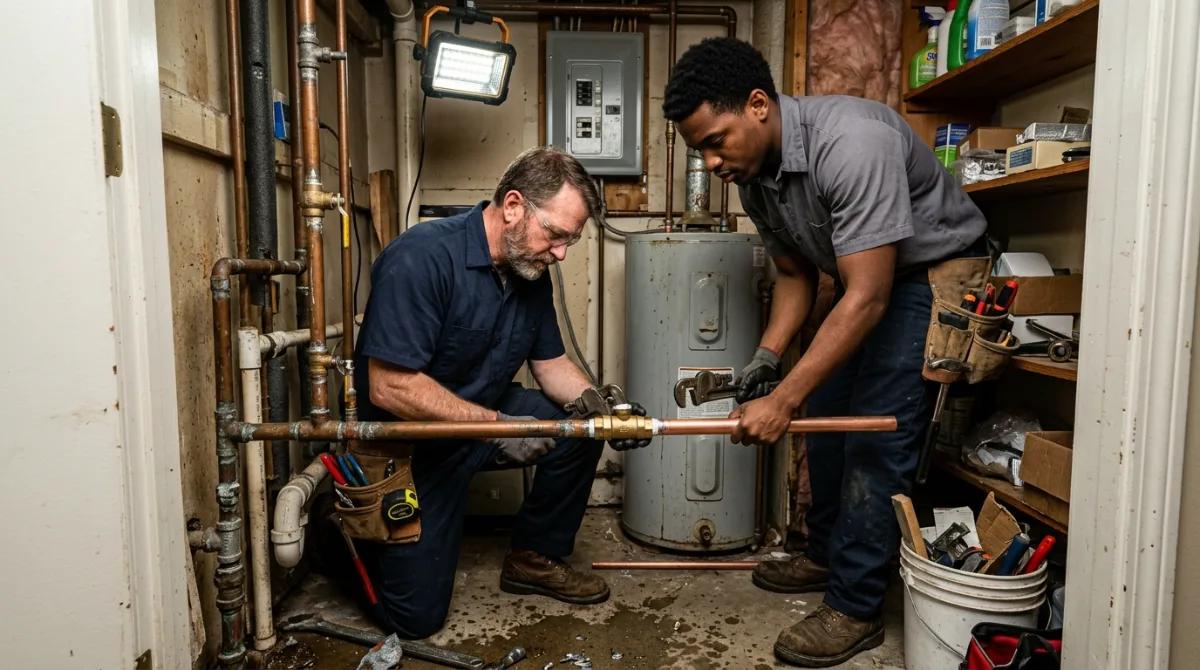
Two plumbers wrenching a threaded fitting on the supply line at a water heater

Local context

Hard water, garages and closets

Water in this part of Orange County is hard, and hard water is the enemy of a tank heater in two specific ways: minerals drop out and build as sediment in the bottom, and the sacrificial anode is consumed faster. Both shorten life, which is why local units tend to land in the lower half of the eight-to-twelve-year range rather than the upper half. Flushing and an anode check are the two pieces of maintenance that genuinely extend it, and almost nobody does either.

Where the heater sits shapes the repair too. Most homes here have it in the garage, which is convenient for access but means a slow leak runs across a concrete floor toward stored belongings and, in a converted garage, toward drywall and flooring. Interior closet installations are worse: tight working clearance, awkward venting, and a leak that finds a hallway before anyone notices it.

The other local factor is seismic. California requires water heaters to be strapped, and a surprising number of older installations here are either unstrapped, strapped with the wrong hardware, or strapped in a single band. That gets flagged on any visit and corrected on any replacement, alongside expansion control and correct venting: the three things most commonly wrong on an older install.

Straight answers

Water heater questions

Should I repair this water heater or replace it?

Age decides it more than the fault does. A tank under about eight years old with a failed thermocouple, element, thermostat or gas valve is usually worth repairing. Those are inexpensive parts on a vessel with life left in it. A tank over twelve is near the end of its design life regardless of how well the repair goes, and money spent on it is rent rather than investment. Between eight and twelve it is a judgement call about the cost of the specific repair against the remaining years.

I have no hot water at all. What is likely wrong?

On a gas heater, most commonly the pilot or thermocouple on older units, or the igniter, gas valve or a tripped thermal switch on newer ones. On electric, usually a failed upper element, a tripped high-limit reset, or a breaker. All of those are ordinary repairs. The one to take seriously is a gas smell, which means leave the building and call the gas utility before calling a plumber.

There is water under my heater. Is that repairable?

It depends entirely on where it is coming from, and that distinction is the whole conversation. A leaking fitting, a weeping T&P valve or a failed drain valve are repairs. Water seeping from the bottom of the tank itself means the glass lining has failed and the steel is rusting through, and no repair exists for that. It is a replacement, and it is worth doing before the tank opens up properly.

My hot water runs out much faster than it used to. Why?

Usually sediment. Minerals precipitate out of hard water and settle in the bottom of the tank, occupying volume that used to hold water and insulating the burner from it on gas units. The result is less hot water and worse efficiency. Flushing helps if it is caught early enough; a tank that has been accumulating for a decade has often hardened the deposit to the point where flushing achieves little.

What is the popping or rumbling noise from the tank?

That is sediment too. Water trapped underneath the deposit layer flashes to steam when the burner fires and forces its way up through it, which is the popping you hear. It is a reliable indicator of a heavily fouled tank, and on a unit of any age it is usually the first honest sign that replacement is closer than the thermostat suggests.

How long should a water heater last around here?

Eight to twelve years is the usual range for a standard tank, and local water chemistry pushes most units toward the lower half of it. Hard water accelerates both sediment build-up and anode consumption. A unit whose anode rod has been checked and replaced on schedule and which has been flushed regularly can beat that range comfortably; most units never get either.

What does the T&P valve do and why is mine dripping?

The temperature and pressure relief valve is the safety device that prevents a tank from becoming a pressure vessel. If it discharges, something is wrong: excessive temperature, excessive system pressure, thermal expansion with no expansion tank, or a valve that has failed. It is never a nuisance to be capped or plugged. It gets diagnosed, because the failure mode it protects against is genuinely dangerous.

Can you repair a tankless unit, or is that different work?

Different work, same visit. Tankless failures are typically scale in the heat exchanger, ignition faults, gas supply or venting issues, or flow sensor problems, and most units report a diagnostic code that narrows it quickly. Descaling is the routine maintenance those systems need and rarely get. See tankless water heater service.

Is it worth flushing an old tank that has never been flushed?

Sometimes, with realistic expectations. On a tank that has gone a decade without service the sediment is often compacted enough that flushing removes only part of it, and occasionally a heavily corroded drain valve will not reseal afterwards. It is still worth attempting on a unit you intend to keep, and the result tells you a lot about how much life is actually left.

How quickly can someone get out for no hot water?

Same day in most cases, and no hot water in a household with kids or an elderly resident is treated as urgent rather than routine. An active leak from a tank is an emergency: a failing water heater in a garage or interior closet does real damage to drywall and flooring while it waits, so shut the cold supply off and call.

Ask About a Water Heater

Gas or electric, roughly how old, and what it is doing. We can usually narrow it before arriving.

Same day, and honest about the tank

Fix what is worth fixing. Say so when it is not.

Diagnosis before parts, both numbers on the table, and a leaking tank treated as the emergency it is.

Call for Same-Day Repair

Gas, electric and tankless across Westminster and west Orange County.