What changes with shared buildings
In multi-family property, one failure is never one household
The district around the mall carries more multi-family and commercial property than the tract neighbourhoods that surround it, and that changes the nature of the work more than the age of the pipe does.
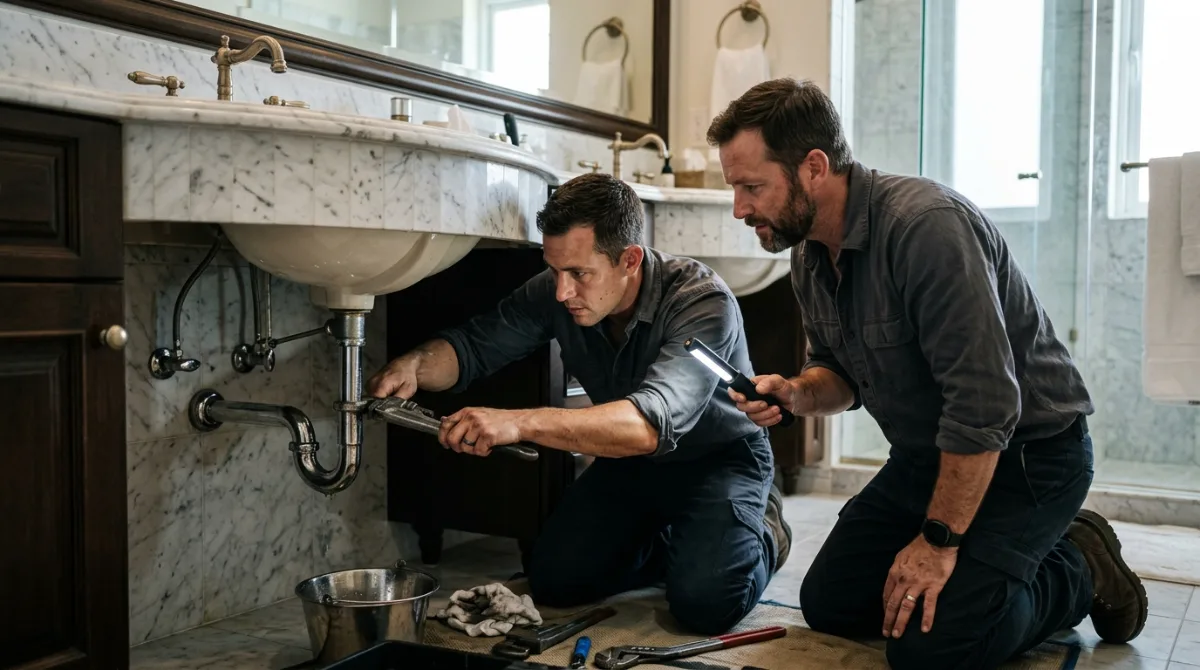
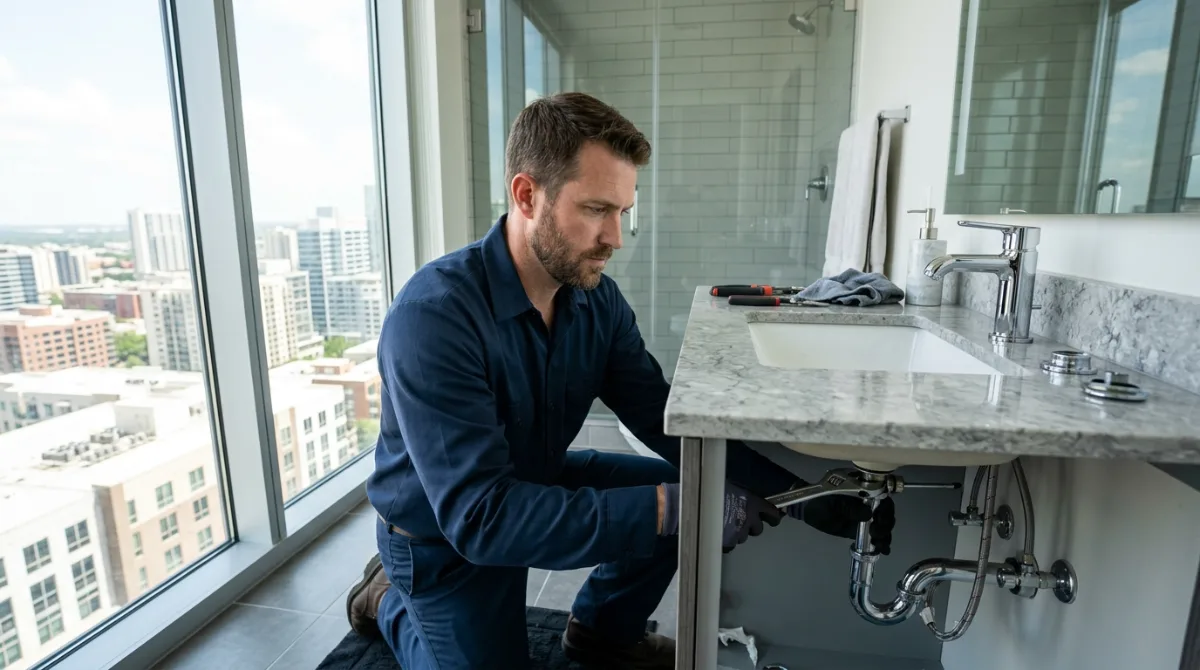
In a house, a failure is a household problem and a shut-off isolates a fixture. In an apartment or condo building, a supply failure may require isolating a riser that serves units above and below, drainage backing up in one stack affects everyone connected to it, and access needs notice rather than a knock. The plumbing itself is ordinary; the coordination is the part that has to be planned, and it is where most of the delay in multi-family repairs actually comes from.
Shared facilities generate their own steady call mix. Laundry rooms fail predictably: supply hoses reaching end of life, standpipes and traps struggling with modern machine discharge rates, and floor drains never intended to handle a burst hose. All three are inexpensive to address before they fail and genuinely expensive to discover afterwards.
On the commercial side, the constraint is trading hours. Retail and food-service tenants around a mall keep long days, so the practical service window is early morning or late evening, and it gets agreed at survey rather than negotiated on the day. Emergencies are the exception, and a tenant who has stopped trading or a building where several households have lost water goes to the front of the queue.