Serving Westminster, CA & west Orange County Open 24 hours · same-day and after-hours calls 24/7 dispatch · (657) 337-7905
Westminster CA Plumbing (657) 337-7905

Westminster, CA · 1950s–70s tracts and shared laterals

Sewer camera inspection: see the pipe before you spend on it

A camera down the line, a locator on the surface, and footage you keep. The difference between guessing at a sewer problem and knowing its material, depth and exact position.

Technician holding a sewer camera monitor showing the inside of the pipe at an open cleanout

Evidence, not opinion

The only way to stop guessing about a buried pipe

Everything about a sewer lateral is inference until someone looks inside it. Slow drains, gurgling, a smell in the side yard, a patch of grass greener than the rest. Those are symptoms consistent with a dozen different causes at a dozen different price points. Roots at one joint and a fully collapsed section produce the same backed-up toilet.

A camera collapses that uncertainty in about half an hour. The head goes in at the cleanout, travels the run, and puts the actual condition of the pipe on a monitor: what it is made of, how big it is, where the joints are, what is growing through them, whether it still has fall, and whether there is standing water sitting in a low spot. A locator picks up the transmitter in the head from above ground, so anything worth marking gets marked on the surface with a depth beside it.

That matters most in the moment before money is spent. A quote for a full lateral replacement and a quote for a two-foot spot repair are different by an order of magnitude, and the difference between them is knowledge. Footage also protects you in the other direction: plenty of inspections end with a pipe that is simply fine, which is a genuinely useful thing to have on record.

The footage stays yours. It is the baseline for the next inspection, the basis for a second opinion, the attachment on an insurance claim, and in a multi-tenant building the quiet record of whose line does what when a dispute eventually starts.

Ask What a Camera Would Show

If a line has blocked more than once, say so on the call. That detail usually decides whether a camera is worth it.
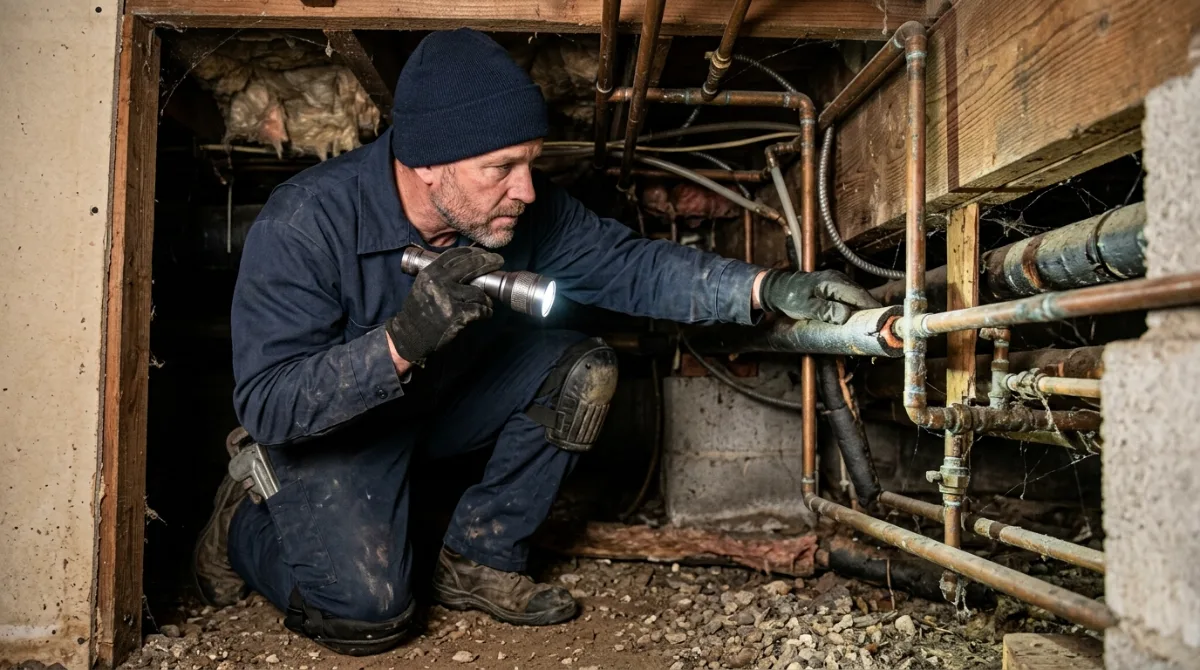
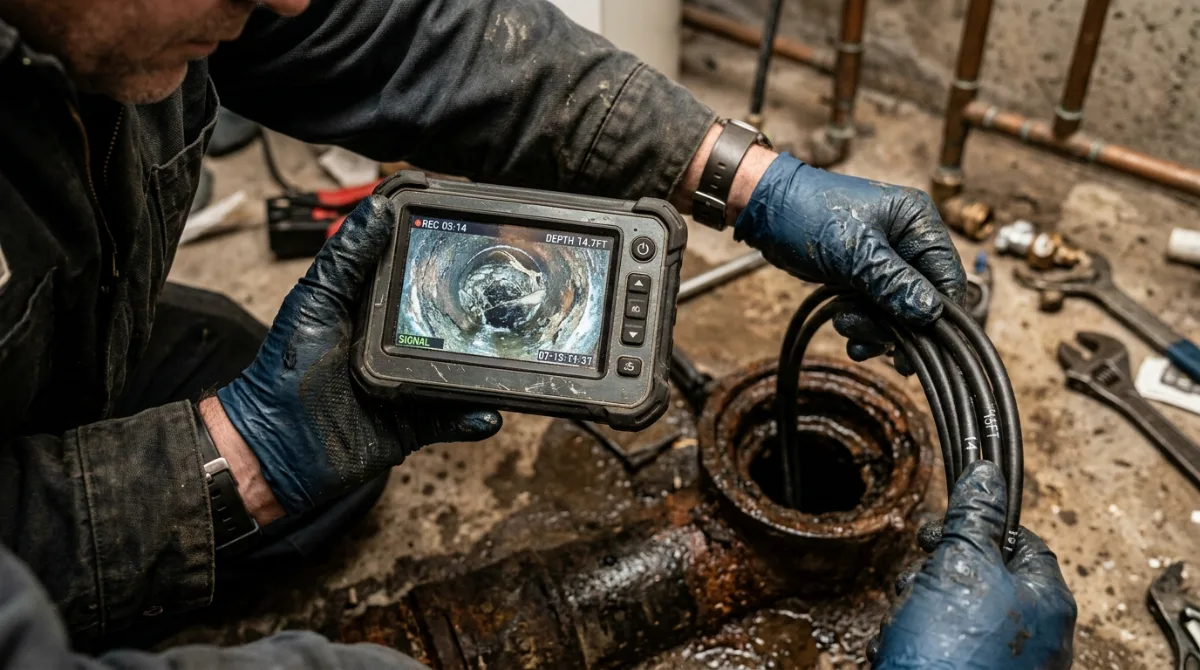
On the monitor

What a camera actually finds

Six things that show up repeatedly in west Orange County laterals, and what each one means for the repair conversation.

Roots

Intrusion at the joints

Fine hair entering at a clay joint or a cast-iron hub, thickening over years into a mass that catches paper and grease. Cleaning removes what is there; it does not close the opening the roots came through. Seeing repeated entry at the same station is what separates a maintenance plan from a repair.

Bellies

A section that lost its fall

A sag where the ground settled and the pipe now holds water permanently. Solids drop out in the low spot and build. It looks like a recurring blockage and behaves like one, and no amount of cleaning fixes it: the pipe has to be re-laid to grade. Only a camera distinguishes it from a simple stoppage.

Offsets

Joints that have shifted

One section sitting proud of the next, leaving a ledge that catches everything passing. Common in older clay runs on sandy soil that has moved. Severity decides the fix: minor offsets can be lined, badly displaced ones need the section replaced.

Scale

Corrosion inside cast iron

Tuberculation that narrows a four-inch pipe to an effective two and leaves a rough wall for grease to grab. Standard on cast iron of a certain age. Jetting restores the diameter; if the wall has gone thin or channelled underneath, the pipe is near the end of its life and the footage shows that too.

Grease

Coating from the kitchen side

A hardened layer around the full circumference, thickest in the run downstream of a kitchen. Diagnostic as much as anything: it tells you the problem is habitual rather than a one-off event, and it points at jetting rather than cabling.

Breaks

Cracks, fractures and collapse

From hairline longitudinal cracks in old clay to a section that has failed completely and is admitting soil. This is the finding that changes the budget, and it is precisely why you want it located to the foot before anyone opens the ground.

How the visit runs

Access, run, locate

Thirty to sixty minutes on a typical residential lateral, and you watch all of it.

1

Find and open the access point

A proper cleanout is ideal. Where one has been paved over, buried under landscaping or never installed, access is taken through the next best option, a pulled toilet or a roof vent, and the case for adding a cleanout gets made honestly, because it pays for itself over two or three service visits.

2

Drive the line and read it

The head travels the full run to the city connection where possible, filming continuously. Material changes, joints, defects and standing water are all called out as they appear. If the line is blocked, it is cleared first: a camera cannot see through a plug or through water.

3

Locate, mark and hand over the footage

Anything significant is located from the surface and marked with its depth, so a future excavation is a narrow trench rather than an exploratory dig. You leave with video, stills and a plain-language summary of what is sound, what is worth watching, and what needs work now.

Schedule an Inspection

Pre-purchase inspections can usually be fitted inside a standard contingency window.

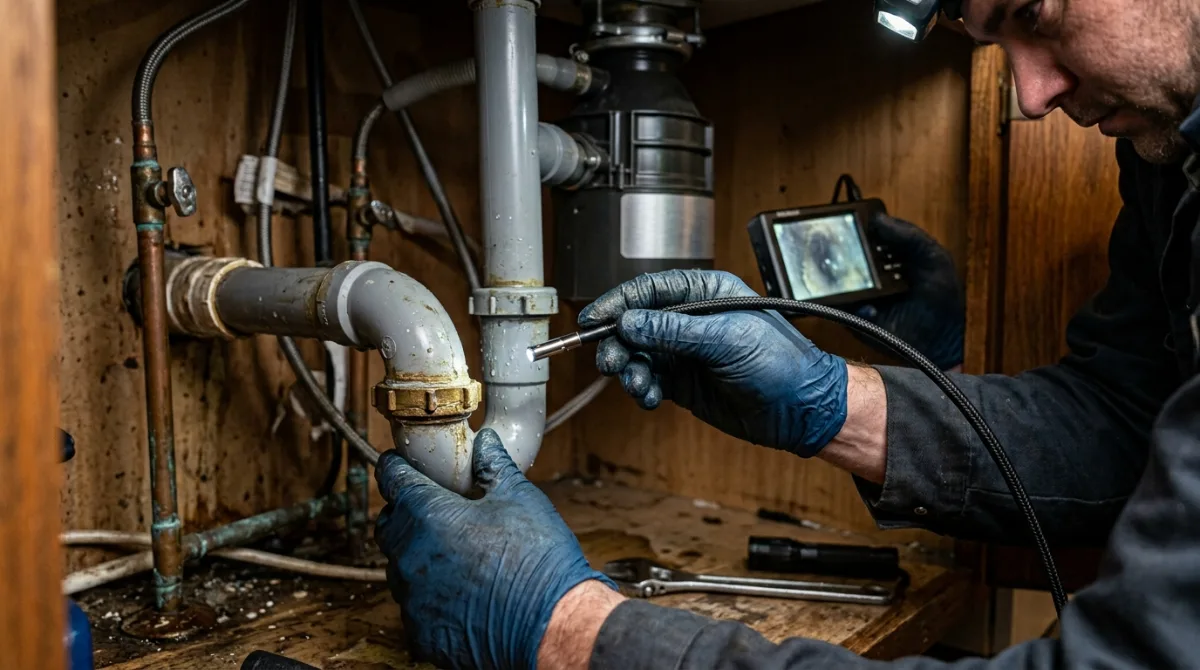
Technician feeding a small inspection camera into a drain line under a sink

Local context

Sixty-year-old clay under sixty-year-old trees

Westminster incorporated in 1957 and filled in fast through the sixties. That history is buried in the front yards: laterals of vitrified clay or cast iron, installed when the tracts went up, now well past the age at which joints start to open and cast iron starts to scale. Paired with the mature ficus and other thirsty street trees planted along the same parkways, root intrusion is close to a default condition rather than bad luck.

The soil does not help. This part of the county sits on sandy alluvial ground with a shallow water table, which moves more than clay does and takes joints out of alignment with it. Bellies and offsets turn up here at a rate that surprises people who have owned newer property elsewhere.

Two situations make an inspection especially worth booking. The first is a purchase: a lateral is a five-figure item that no general home inspection looks inside. The second is a shared line in a multi-tenant building along one of the commercial corridors, where a single lateral serves several kitchens and the argument about whose grease caused the failure is settled entirely by whoever has footage.

Straight answers

Camera inspection questions

What exactly is a sewer camera inspection?

A self-levelling camera head on a flexible push rod is fed into the line through a cleanout and driven the length of the run while you watch the feed on a monitor. A transmitter in the head lets its position and depth be located from the surface, so anything found can be marked on the ground rather than described vaguely. You get to see the actual inside of your pipe, material, joints, roots, cracks, standing water, foreign objects, instead of taking anyone’s word for it.

Why would I pay for an inspection instead of just getting the drain cleared?

If a line has blocked once and never again, you probably would not. Inspection earns its keep when the same line blocks repeatedly, when you are about to spend real money on a repair, when you are buying a house, or when a plumber has recommended something expensive and you want to see the evidence. Clearing a drain treats today. Looking in the pipe tells you whether there is a structural reason it will happen again next quarter.

Can you tell me exactly where the problem is?

Yes, within a foot or so. The camera head transmits a signal that a locator picks up from above ground, giving both horizontal position and depth. That is what turns “there is a break somewhere in the lateral” into a paint mark on the driveway at eleven feet down the left side, four feet deep. It is also what keeps excavation narrow, which is the single biggest cost variable in any dig.

I am buying a house in Westminster. Is a sewer inspection worth it?

On a house built before about 1975 it is one of the better inspection dollars you can spend. Much of Westminster went up between the mid-fifties and the early seventies, which means clay or cast-iron laterals now sixty to seventy years old, often under mature parkway trees. A general home inspection does not look inside that pipe. A lateral replacement is a five-figure item, and knowing about it before closing is very different from discovering it after.

What are you actually looking for?

Root intrusion at joints, cracks and fractures, offset joints where sections have shifted, bellies where the pipe has lost its fall and holds water, corrosion and scale in cast iron, grease and sludge coating, collapsed sections, intruding taps from a neighbouring property, and foreign objects. Also the good news: sound pipe, correct fall, clean joints. Documenting that a line is fine is a legitimate and useful result.

Does the line need to be clear before you can film it?

Usually, yes. A camera cannot see through standing water or a solid plug, so on a blocked line the sequence is clear first, film second. That is not an upsell. It is physics. The useful nuance is that filming immediately after clearing shows you what the blockage was hiding, which is exactly when a structural defect is most visible and most cheaply addressed.

Do I get a copy of the footage?

You should, and you do. Video and stills, with locate depths noted. That recording is worth keeping: it is the baseline against which the next inspection is compared, it is what you hand a second plumber for a competing quote, it is evidence for an insurance claim, and in a shared-lateral building it is the document that settles which tenant’s line caused what.

Can a camera go through every pipe in the house?

Not every pipe. Main lines, laterals and most branch drains of two inches and up are straightforward. Small-diameter fixture arms, tight double-bends and some old galvanized branches are too restrictive for a standard head, though a mini camera handles many of them. Pressurized supply lines cannot be filmed at all. Those are traced acoustically instead, which is a different service.

How long does an inspection take?

A straightforward residential lateral is typically thirty to sixty minutes on site, including setup, the run itself, locating anything found and reviewing the footage with you. A long commercial run, multiple branches, or a line that has to be cleared before it can be filmed takes longer. It is a same-day appointment either way, and the answers arrive while the plumber is still standing there.

What happens if the camera finds something serious?

You see it, on screen, at the same moment the plumber does. From there the conversation is about options with real numbers attached: a spot repair on an isolated break, trenchless lining or pipe bursting where the run is long and the surface matters, or a conventional replacement where the pipe has failed comprehensively. Nothing about the inspection obliges you to buy the repair from anyone.

Ask About an Inspection

Tell us the address, roughly when the house was built and whether there is a cleanout, and the answer gets specific fast.

Before the shovel, before the cheque

Look in the pipe first. Everything after that gets cheaper.

Camera, locate, footage in your hands, and no obligation to buy the repair from anyone.

Call to Scope the Line

Pre-purchase, recurring blockages, or a second opinion on a big quote.