Serving Westminster, CA & west Orange County Open 24 hours · same-day and after-hours calls 24/7 dispatch · (657) 337-7905
Westminster CA Plumbing (657) 337-7905

Westminster, CA · permitted, strapped, expansion-controlled

Water heater installation done to current code, not to the old one

Tank replacement with correct sizing, seismic strapping into structure, thermal expansion control, compliant venting and a permit, and the old unit taken away.

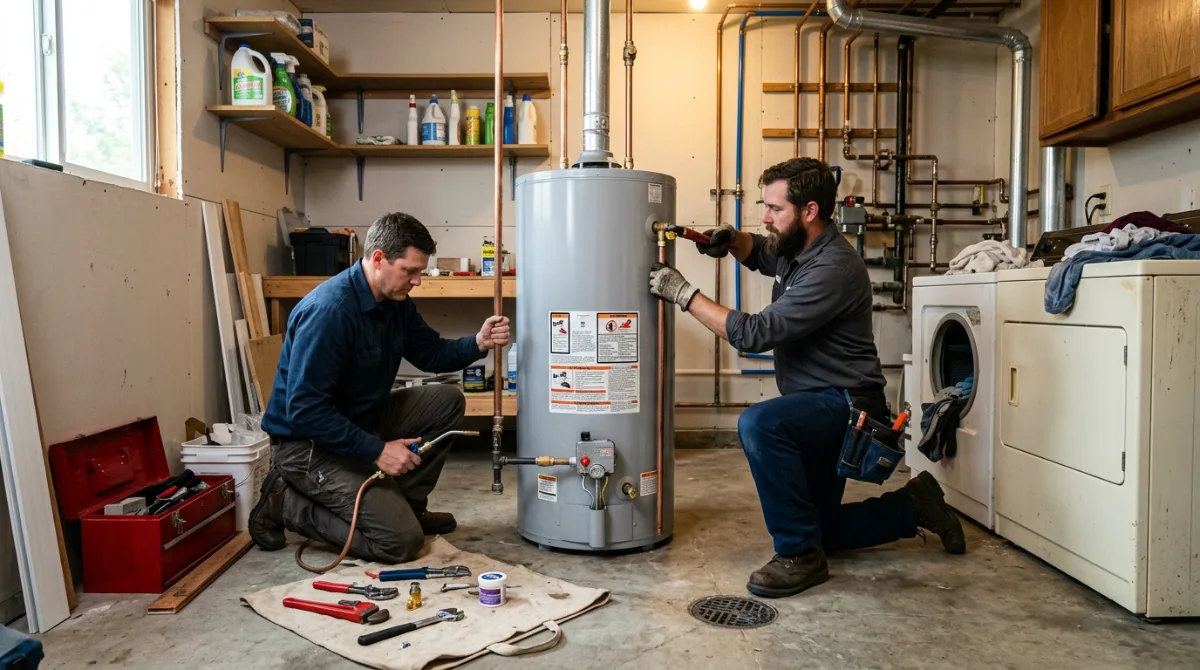
Two plumbers installing a new gas water heater in a laundry room

Sizing before selling

The most common mistake is a heater one size too big

A replacement is the one chance to correct whatever was wrong with the last installation, and the first thing worth correcting is usually capacity. Sizing should follow peak simultaneous demand, how many showers and appliances genuinely run at the same time, not the square footage of the house or whatever happened to be there before. An oversized tank costs standby heat loss every month for a decade, which is a small number multiplied by a large one.

The conversation takes two minutes. Household size, how mornings actually run, whether there is a big soaking tub, whether anyone works from home. For plenty of two-and-three-bedroom houses around here a 40-gallon tank with a good recovery rate outperforms the 50 it is replacing, and costs less to run. Where a household genuinely needs more, that is what gets fitted: the point is that it follows from the answer rather than the default.

Then there is everything around the tank, which is where most older installations fall short. Seismic strapping anchored into framing rather than drywall. A thermal expansion tank, because a house with a pressure regulator is a closed system and heated water has nowhere to expand. A T&P discharge routed to a legal termination. A drain pan with a real outlet wherever a leak would reach drywall or flooring. Correct venting and combustion air.

All of that is what the permit and inspection actually cover, and it is why the paperwork is worth having rather than avoiding. It is also the difference between a heater that is merely connected and one that is installed.
Get a Replacement Quote

Tell us the current size, fuel, where it sits, and how many people are in the house.

The details that get inspected

Six things that are wrong on most older installs

None of them are expensive on a new installation. All of them are on the inspector’s list.

Seismic strapping

Two straps, into structure

Upper and lower thirds of the tank, anchored into framing rather than drywall. California requires it and it is routinely found missing, halved or fixed into nothing. It is the cheapest item on this list and the one most likely to matter on a bad day.

Expansion control

A tank that absorbs the spike

Once a house has a pressure regulator it is a closed system, and heated water expanding with nowhere to go spikes pressure every cycle. That shortens the life of the heater, the fixtures and the pipework, and makes the T&P valve weep. A small expansion tank solves it permanently.

T&P discharge

Routed to a legal termination

The relief valve needs a full-size discharge line running downhill to an approved point of termination, without traps, without a threaded end and without reduction. A pipe that stops short inside a closet, or worse a capped valve, is a genuine safety defect rather than a paperwork one.

Venting and combustion air

Draft that actually works

A gas heater needs a correctly sized, correctly pitched vent with proper connections, and enough combustion air for the burner. Converted garages and enclosed closets are where this goes wrong, and backdrafting combustion products into a living space is not a defect anyone should discover slowly.

Drain pan and outlet

For where a leak would hurt

A pan is only useful if it drains somewhere. Any heater sitting where a slow leak would reach drywall, flooring or a finished space wants a pan with a piped outlet, which turns an expensive discovery into a puddle in the right place.

Connections and shutoffs

Serviceable, and correct materials

Dielectric unions where dissimilar metals meet, a proper cold-side shutoff you can actually reach, flexible connectors rated for the application, and sediment-trap detail on the gas side. Small things, but they decide whether the next service call is straightforward or an excavation.

How the day runs

Size, permit, install, inspect

Three to five hours for a straightforward garage swap, old unit gone with us.

1

Size it and pull the permit

Peak demand, fuel, location, venting and clearances are assessed and the unit specified against them. The permit is pulled and inspection scheduled as part of the job, so the finished install has a record attached to the address.

2

Remove the old, set the new

Old unit isolated, drained, disconnected and taken away. New tank set on a pan where appropriate, connected with correct materials, strapped into structure, expansion tank fitted, venting and T&P discharge brought up to current requirements.

3

Fill, purge, test, hand over

System filled and purged, temperature set sensibly, connections and draft tested, work area cleaned. You get shown the shutoff, the T&P valve, the anode access and what maintenance the unit actually wants, then the inspection closes it out.

Book an Installation

Failed tanks can usually be replaced same day or next; planned swaps get scheduled to suit you.

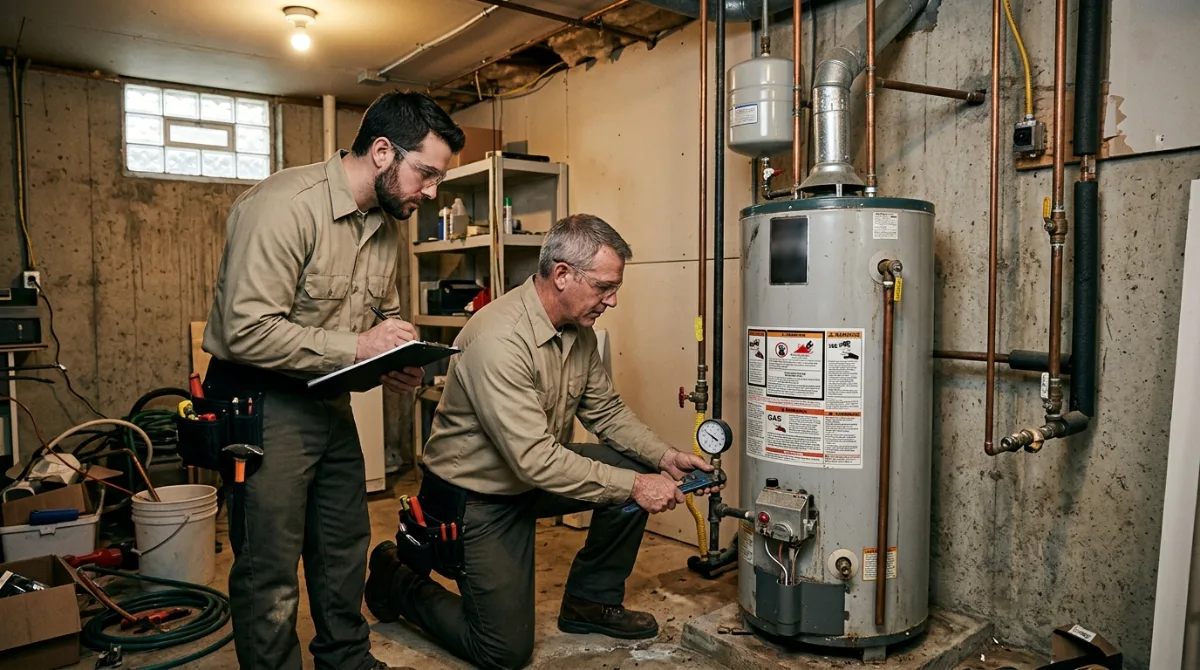
Two technicians checking the gauge and connections on a gas water heater

Local context

Hard water, converted garages and the anode nobody checks

Local water is hard, which means a new tank starts accumulating sediment from day one and consumes its anode rod faster than the brochure assumes. Two habits genuinely extend life here: an annual flush, and an anode inspection every few years with replacement when it is spent. A twenty-dollar rod replaced twice can add years to a tank; skipping it is how a twelve-year unit becomes an eight-year one.

Garage conversions are the other local pattern worth naming. A lot of homes in this city have gained a bedroom, an office or a rental unit where the garage used to be, and the water heater frequently ends up enclosed in finished space that was never designed around it: tight clearances, compromised combustion air, awkward venting, and a slow leak that now finds drywall and flooring instead of a concrete slab. Those installations need the pan, the routed discharge and the venting check taken seriously rather than treated as optional.

And because much of the housing stock dates from the late fifties to early seventies, a replacement is often the first time that location has been looked at against current requirements at all. Expansion tanks, correct strapping and legal discharge routing are commonly missing simply because they were not required when the house was built. Fixing them costs very little on the day the heater is being swapped anyway.

Straight answers

Installation questions

What size water heater do I need?

It depends on simultaneous demand rather than square footage, and most homes are sold one size too big. Peak draw is what matters: how many showers and appliances actually run at once, and how close together. A 40-gallon tank suits many two-to-three-bedroom households; a 50 suits larger families or homes with a big soaking tub. Oversizing costs you standby heat loss every month for the life of the unit, so it is worth a two-minute conversation rather than a default.

Should I switch to tankless while I am replacing it?

Sometimes, and it is worth pricing honestly rather than being sold. Tankless wins on endless hot water, standby losses and floor space, and it lasts longer. It costs more up front, and in a swap it frequently needs a larger gas line, new venting and a condensate path, which is where the real cost difference lives. For a household with steady moderate use, a tank is often still the better value. See tankless service.

Does a replacement need a permit?

Yes. A water heater replacement is permitted work in California, and the inspection covers the things that actually matter: seismic strapping, T&P discharge routing, expansion control, combustion air, venting and connections. Permits and inspection scheduling are handled as part of the job. An unpermitted heater is also the kind of thing that surfaces awkwardly during a future sale.

What is seismic strapping and does my heater need it?

Two straps, upper and lower thirds of the tank, anchored into structure, keeping the unit from walking off its connections in an earthquake. California requires it, and it is one of the most common defects found on older installations here, missing entirely, single-strapped, or fixed into drywall rather than framing. Any replacement gets it done correctly as standard.

What is a thermal expansion tank and why do I suddenly need one?

Heated water expands. In a closed system, which is what a house has once there is a pressure regulator or check valve on the supply, that expansion has nowhere to go, so pressure spikes every heating cycle. Those spikes shorten the life of the heater, the fixtures and the pipework, and make the T&P valve weep. A small expansion tank absorbs them. It is inexpensive, it is code, and it is missing on a great many older installs.

How long does an installation take?

A straightforward like-for-like tank swap in an accessible garage is typically three to five hours including draining the old unit, removing it, setting and connecting the new one, bringing strapping, expansion control and venting up to current requirements, filling, purging and testing. Tight closets, difficult access, a fuel change, a relocation or a tankless conversion take longer, often a full day.

Will you take the old heater away?

Yes, removal and responsible disposal of the old unit is part of the job rather than a line item you discover afterwards. The same goes for cleaning up: the space the new heater sits in should look better when we leave than it did when we arrived.

Can the heater be moved somewhere else?

Usually, and occasionally it is the right call, freeing a closet, getting the unit out of a converted garage, or shortening long runs to the fixtures that matter. It is a bigger job than a swap: supply and gas lines have to be extended, venting rerouted, the T&P discharge and drain pan addressed, and the new location has to satisfy combustion air and clearance requirements. Worth scoping properly before committing.

Gas or electric: can I switch?

Technically yes, practically it depends on what already exists. Going electric means adequate panel capacity and a dedicated circuit; going gas means a correctly sized gas line and a compliant vent path. Either conversion is a real project rather than an upgrade, and if the existing fuel is working the honest recommendation is usually to stay with it unless something else is driving the change. See gas line work.

What should be different about the new install versus the old one?

On an older home, typically four things: strapping done correctly into structure, a thermal expansion tank fitted, the T&P discharge routed to a legal termination rather than stopping short, and a drain pan with a proper outlet where the unit sits anywhere a leak would do damage. Those are the details an inspection looks for, and they are the ones most commonly missing on a heater installed decades ago.

Price a New Water Heater

Current size and fuel, where it sits, household size, and whether you are considering tankless.

Permitted, strapped, expansion-controlled

Replace the heater and fix what was wrong around it.

Sized to actual demand, installed to current code, old unit taken away, inspection closed out.

Call for a Sizing Quote

Tank and tankless installations across Westminster and west Orange County.