Heat
A warm patch on the floor
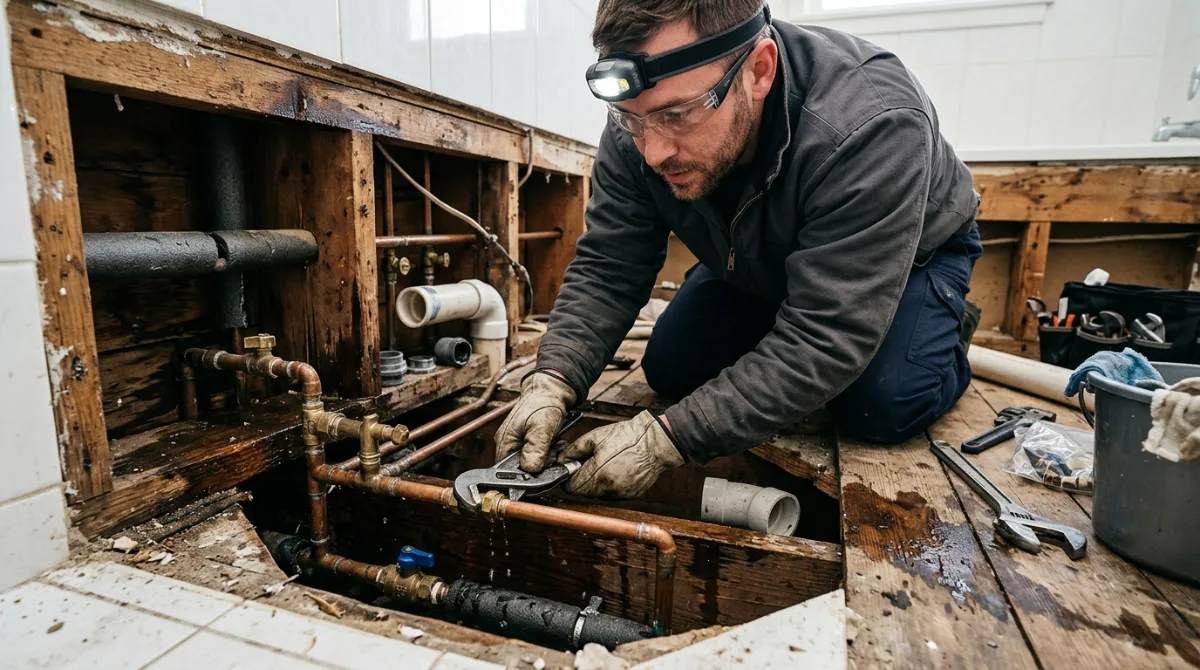
Walk the house barefoot in the morning. A localised warm or hot area on tile, vinyl or laminate, in a spot with no sun and no duct beneath it, is the signature symptom of a hot-side leak under the slab.
Westminster, CA · slab-on-grade specialists
Warm floors, a meter that never stops, a bill that climbed for no reason. In a city built almost entirely on slab-on-grade after 1957, this is one of the most common calls we take, and one where the diagnosis matters more than the digging.
One city, one construction era
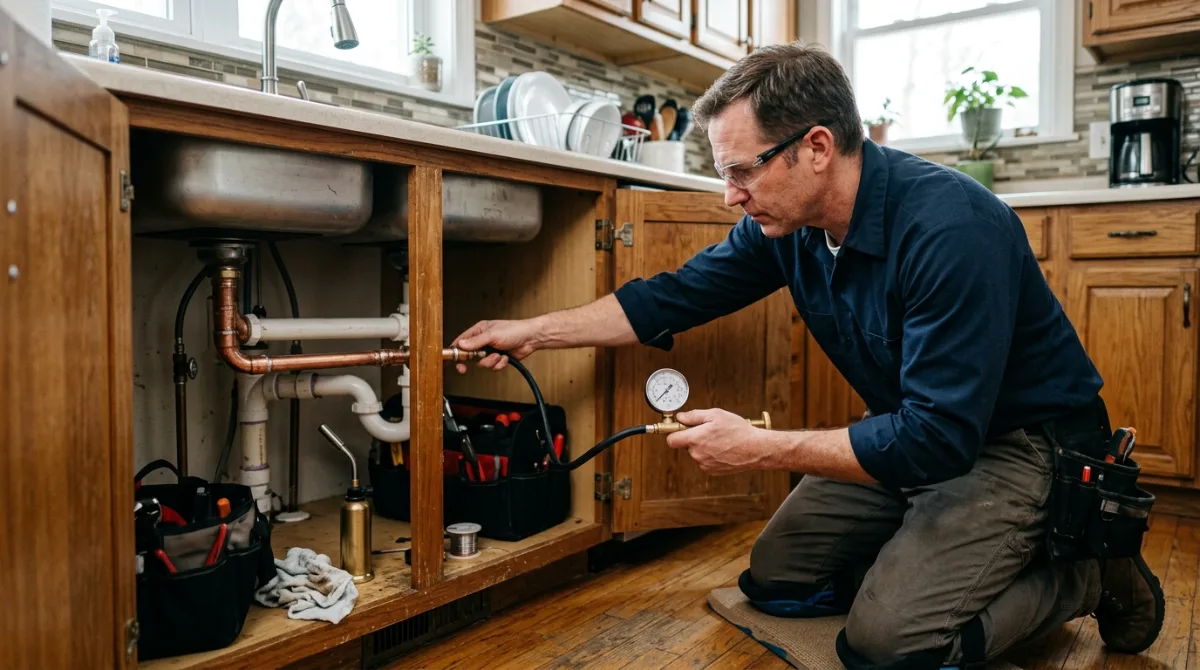
Westminster incorporated in 1957, and the housing stock reflects that almost perfectly: single-story tract homes, poured slabs, copper supply lines run beneath the concrete. Built to the same specification, in the same years, using the same materials, which means they age on the same schedule. A plumber who works these streets does not treat a warm floor as a mystery. It is the fourth one that week.
Three forces do the damage. Hard imported water leaves scale and chemically works on copper from the inside. Thermal cycling expands and contracts the hot line thousands of times a year against rigid concrete, abrading it where it passes through. And soil movement puts stress on a pipe that has nowhere to flex. The hot line fails first and most often, which is exactly why the tell-tale symptom is a warm patch underfoot rather than a cold one.
None of that means a slab leak is a catastrophe. Found early, it is a contained repair with a predictable price. Left running for a year, it erodes soil, runs your water heater continuously and turns into a flooring, cabinetry and possibly foundation conversation. The single biggest variable in what a slab leak costs is how long it ran.
Tell us what you feel, hear and see on the bill. Those three details usually identify it before anyone arrives.
Read your own house
Any one of these justifies a diagnostic visit. Two together make it likely.
Heat
Walk the house barefoot in the morning. A localised warm or hot area on tile, vinyl or laminate, in a spot with no sun and no duct beneath it, is the signature symptom of a hot-side leak under the slab.
Sound
Close every tap, turn off the irrigation, then listen at floor level in a quiet house. A continuous hiss or rush that you cannot trace to a fixture is escaping water, and it is coming from somewhere.
Meter
With all water off, the low-flow indicator in the meter box should be still. If it turns at all, the property is losing water. It is the cheapest test available and it takes two minutes.
Damp
Damp carpet at one edge, a baseboard that has swollen, a persistent mildew odour in a room that is otherwise dry, or discolouration creeping up from the floor line. Water under a slab finds its way up.
Bills
No houseguests, no new landscaping, no change in habits, but the water bill is up noticeably. Continuous small losses show up on the bill long before they show up on the floor.
Movement
Fresh slab or stucco cracking, a floor that has developed a dip, or interior doors that suddenly will not latch. These are late signs, and they mean the leak has been working on the soil for a while.
Diagnosis first
Concrete is expensive to open and expensive to restore. Precision is the whole point.
The system is pressure-isolated to prove there is a leak, establish whether it is hot or cold, and rule out irrigation, a pool line or a running toilet before anyone talks about concrete.
Acoustic amplification picks up the escape noise transmitted through the concrete, and correlation between listening points narrows it. Thermal imaging maps the heat plume of a hot-side leak from above.
You get a marked location on your own floor, plus spot repair, reroute and repipe options with the cost and disruption of each. Then you choose, before any tool touches the slab.
Locating is a defined job with a defined price. It is not an open-ended search of your foundation.
Three routes
Option A
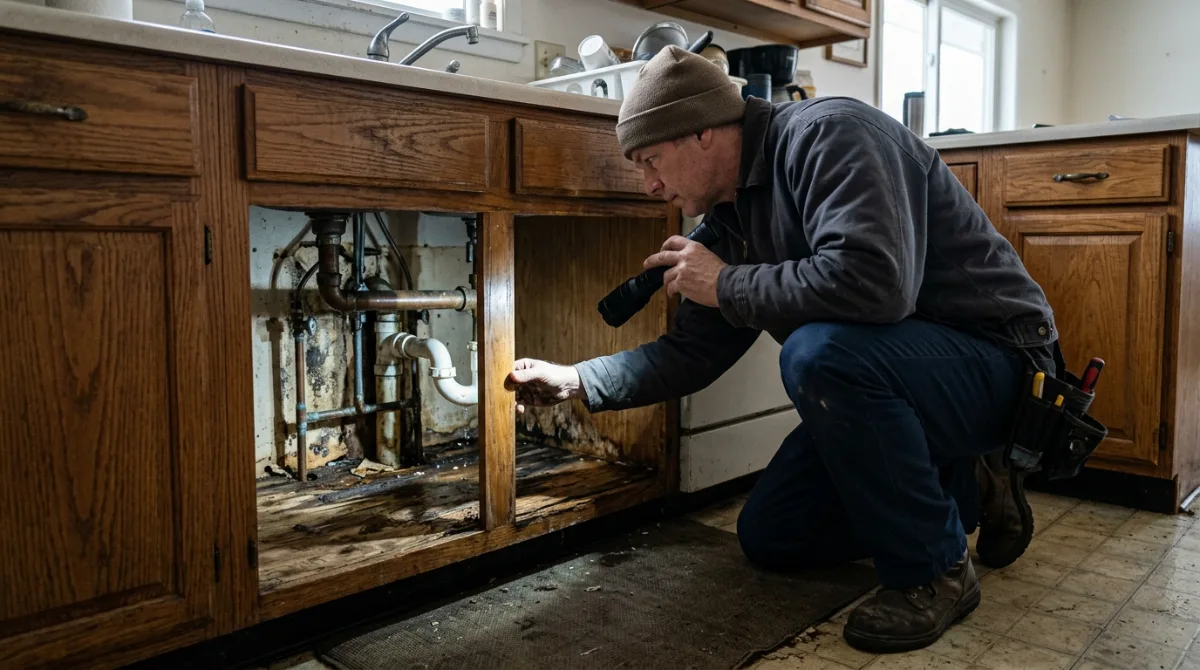
A small opening is cut over the marked leak, the failed section is replaced, and the concrete is patched. Best where flooring is easy to restore, access is simple and the rest of the piping is sound. Usually the lowest cost, and correct more often than the internet suggests.
Option B
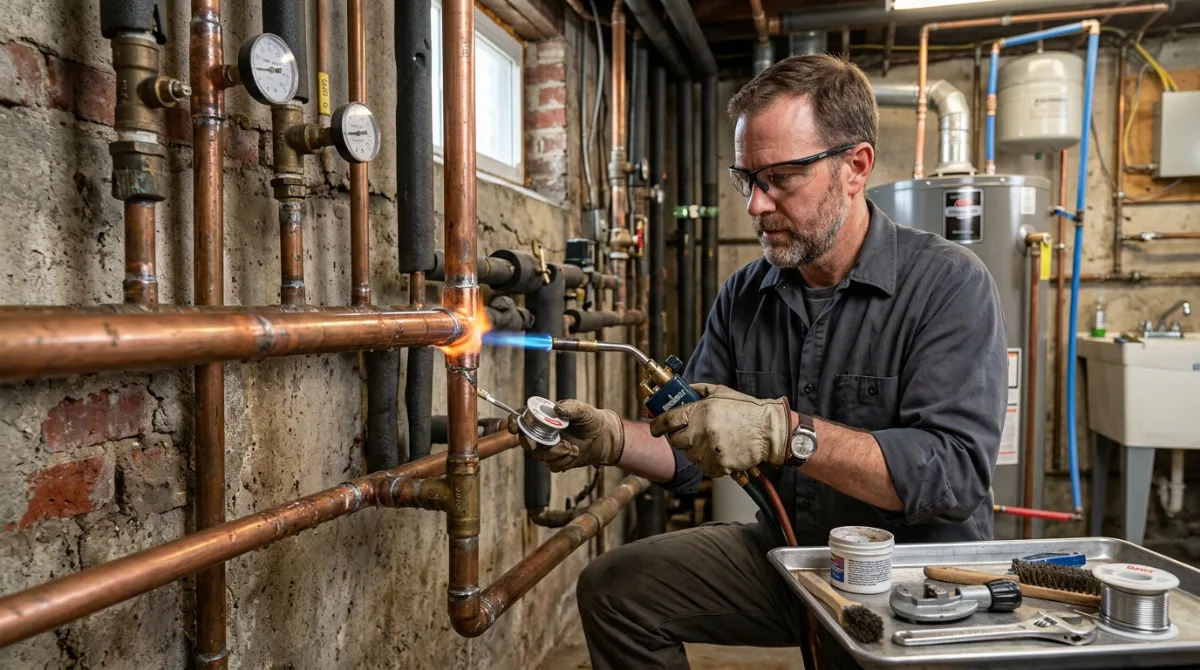
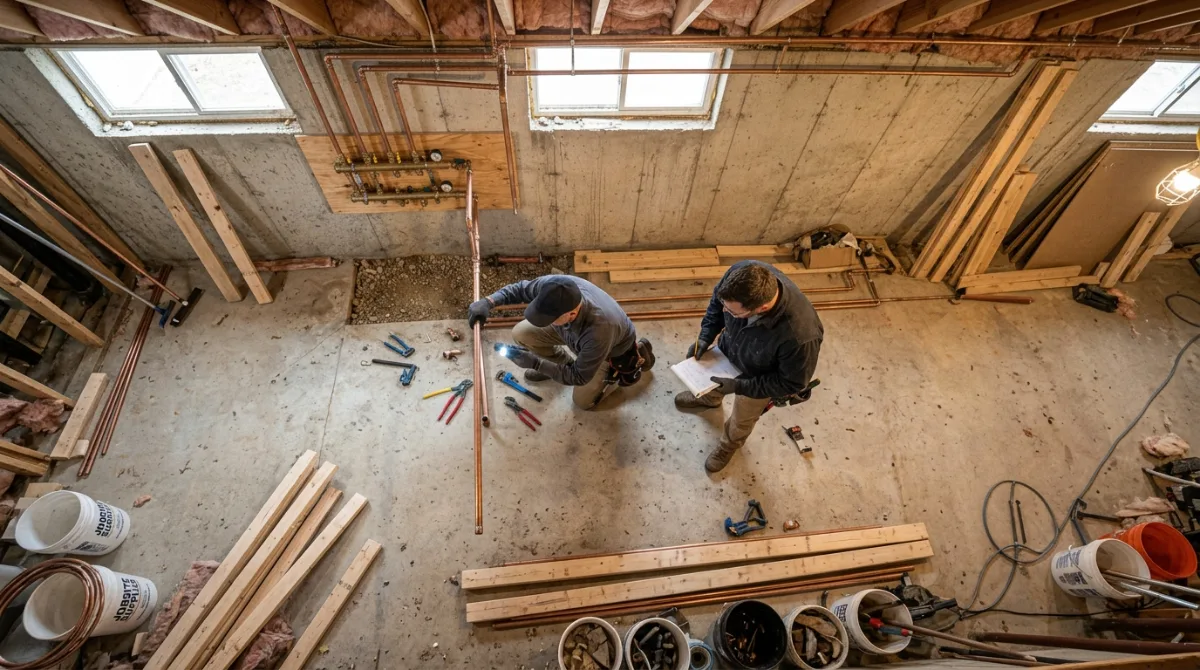
The under-slab run is abandoned and replaced with new pipe through the attic and down inside walls. No jackhammer, no floor to restore, and the new line stays accessible for the rest of the building’s life. The usual choice under tile, islands and finished floors.
Option C
When leaks are recurring, the pipe material is at the end of its service life or pressure has been damaging the whole system, replacing it beats paying for the next three repairs. Staged room by room so the house keeps working. See whole-home repiping.
Ask for both numbers. A plumber who will only quote one of the three has already decided for you.
Straight answers
A warm or hot patch on a tile or vinyl floor is the classic one, because most slab leaks are on the hot side. Alongside it: a water bill that climbed with no change in habits, the sound of running water when every fixture is off, a water heater that cycles more than it used to, damp or musty carpet at an edge or in one spot, mildew smell with no visible source, hairline cracking that appears or widens in the slab, or a drop in pressure at fixtures on one side of the house.
With sound and pressure, not guesswork. The system is isolated section by section to establish whether the loss is hot or cold and which run is involved. Acoustic listening equipment amplifies the escape noise through the slab, electronic amplification and correlation narrow it to a small area, and a thermal camera reads the heat plume of a hot-side leak through the floor. Tracer gas is available for the difficult ones. Only then does anyone consider making an opening. See leak detection.
Timing and construction. The city incorporated in 1957 and the bulk of its housing went up in the compressed boom around and after that date, almost all of it single-story slab-on-grade. That means an entire city’s worth of under-slab copper of roughly the same age, installed to roughly the same standards, reaching the same failure window at roughly the same time. Add hard imported water, decades of thermal cycling on the hot line and soil movement, and the pattern stops looking like bad luck.
Three, and each fits a different situation. A spot repair opens the slab at the leak, replaces the failed section and restores the concrete: cheapest when the pipe is otherwise sound and access is easy. A reroute abandons the under-slab run entirely and replaces it with new pipe through the attic and down the walls, no jackhammering, and the new line is accessible forever. A full repipe replaces the system when leaks are recurring. Any competent quote gives you the trade-offs, not just a number.
Usually, but not always. Rerouting wins when the leak is under a kitchen island, a tiled bathroom or a finished floor you do not want to lose, when the same line has leaked before, or when the piping is old enough that a second failure is likely. Opening the slab wins when the leak is in an accessible spot with easy flooring, when the run is short, and when the rest of the system has decades of life left. The tie-breaker is honest: how much of your floor is at risk if this happens again?
A located spot repair is often a one-day job, with the concrete patch curing afterwards. A reroute of one or two lines typically runs one to two days, and you generally keep water for most of it because work is staged line by line. A full repipe is longer. Dust control, floor protection and containment matter as much as the plumbing on an occupied job, and the plumber should tell you at quoting time which rooms will be affected and for how long.
It varies enormously by policy and by carrier, and that decision is theirs rather than ours. What generally helps: reporting promptly, documenting the discovery with photographs and dates, keeping the plumber’s written diagnosis and invoice, and being able to show it was sudden rather than a long-known problem left to run. Many policies treat the resulting water damage differently from the pipe repair itself, so ask your carrier specifically about both.
A small one usually will not, but time and volume change the answer. Water escaping under concrete carries fine soil away and can create voids, and saturated expansive soil moves. That is the mechanism behind differential settlement, new cracking, doors that stop latching and floors that develop a slope. It is a slow process and not a reason to panic. It is a reason not to leave a known leak running for a year while you decide.
Yes. A warm patch on a floor with no leak noise and no bill increase can be a small hot-side pinhole that has not yet built volume, and small is exactly when it is cheapest to fix. It can also be something benign, like a heating duct beneath the slab or sun exposure through a window, and finding that out is worth the call too. A short diagnostic visit answers it definitively rather than leaving you watching a floor for months.
Constantly, and the stakes are different. Restaurants, markets and multi-tenant retail along the Bolsa Avenue and Westminster Boulevard corridors sit on the same era of slab construction, but with higher water use, longer hours and continuous hot-water demand. A slab leak under a kitchen or a shared restroom block affects trade, not just comfort, and the repair has to be scheduled around opening hours. Overhead rerouting is often the preferred answer commercially because it avoids breaking a working floor.
Related work
Westminster, CA · slab-on-grade country
One call gets it located, priced and explained, including the option that does not involve breaking your floor.
Residential and commercial, across Westminster and west Orange County.