Serving Westminster, CA & west Orange County Open 24 hours · same-day and after-hours calls 24/7 dispatch · (657) 337-7905
Westminster CA Plumbing (657) 337-7905

Westminster, CA · scheduled around your covers

Grease trap and grease line service for kitchens that cannot close

Trap and interceptor service, grease line jetting, camera records and a maintenance interval you can budget for: timed for after close, documented for inspections, and priced before the work starts.

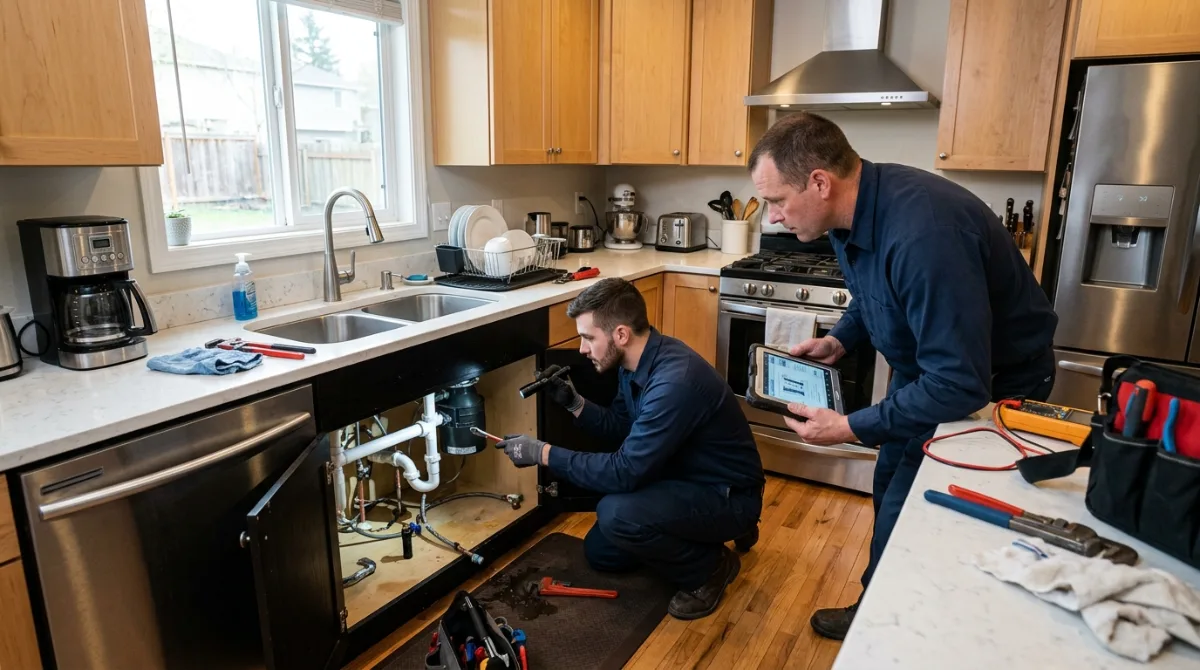
Two plumbers diagnosing grease-blocked drain plumbing under a kitchen sink

Two jobs, one problem

The tank and the pipe both need attention

Kitchen drainage fails in a specific, predictable way. Warm water carries dissolved fats away from a sink perfectly well. Twenty feet down the line the water has cooled, the fat comes out of suspension, and it sticks to the pipe wall along with fine food solids. Layer by layer, month by month, the effective diameter shrinks until a normal Friday overwhelms it.

A grease trap or interceptor is designed to intercept most of that before it gets into the line. It works by giving wastewater time to sit so grease floats and solids settle, and it works well: right up to the point where the accumulated layer gets deep enough that new discharge carries straight through. That is why the standard trigger for service is the layer reaching roughly a quarter of the liquid depth, not a date on a wall calendar.

Here is the part that catches out well-run kitchens: having the interceptor pumped religiously does nothing about what is already coating the pipe between your fixtures and that tank. Pumping and jetting are separate jobs on separate schedules. A kitchen that does only the first can be fully compliant on paper and still surcharge a floor drain mid-service.

A real program covers both, keeps a written record of each visit, and uses a camera occasionally so decisions rest on what the inside of the pipe looks like rather than on how long it has been since someone thought about it.

Discuss a Service Interval

Tell us your fixture count, fryer volume and when the interceptor was last pumped, and we can outline a realistic schedule.

Scope

What gets serviced, and why each piece matters

Six elements. Skipping any one of them is where the next emergency comes from.

01

Under-sink and on-floor traps

Small units serving a prep sink, a wok range or a dish area fill fast and are the most frequently neglected. Cleaned, baffles checked, gaskets inspected, and the interval matched to how hard that fixture actually works.

02

In-ground and exterior interceptors

Access opened safely, depth of the grease cap and solids layer measured and recorded, contents removed by permitted hauling, tank inspected inside for baffle damage and structural condition, then documented.

03

Grease line jetting

The run between fixtures and the interceptor scoured back to bare pipe with matched nozzles, so the diameter is restored instead of a channel being punched through the deposit. See hydro jetting.

04

Floor sinks, floor drains and mop basins

The fixtures that flood first, and the ones nobody thinks about until they do. Strainers, traps and branch lines cleared, plus a check that the floor sink is receiving what it is supposed to receive.

05

Camera inspection of the run

Periodic footage showing what is on the pipe wall, whether the fall is correct, and whether an old cast-iron section is failing. It sets the interval and settles shared-line questions. See camera inspection.

06

Records for inspections

Dated service reports, measured layer depths, hauling manifests and jetting dates, left with you each visit. A maintenance history answers a health or wastewater inspector far better than a single invoice.

How a visit is run

In after close, out before prep

1

Walk the kitchen first

Fixtures, floor sinks, trap locations, interceptor access and the route the hose will take, agreed with whoever is closing. No surprises about where equipment has to move.

2

Service, then clean the line

Traps and interceptor handled and measured, then the line jetted so the two are working together rather than one hiding the other. Debris leaves the site instead of moving downstream.

3

Leave it ready to cook in

Surfaces and floors rinsed down, access covers secured, report and measurements handed over, and the next interval agreed based on what was actually found in the tank and the pipe.

Request a Kitchen Assessment

Multi-site operators and property managers can arrange one schedule across several addresses.

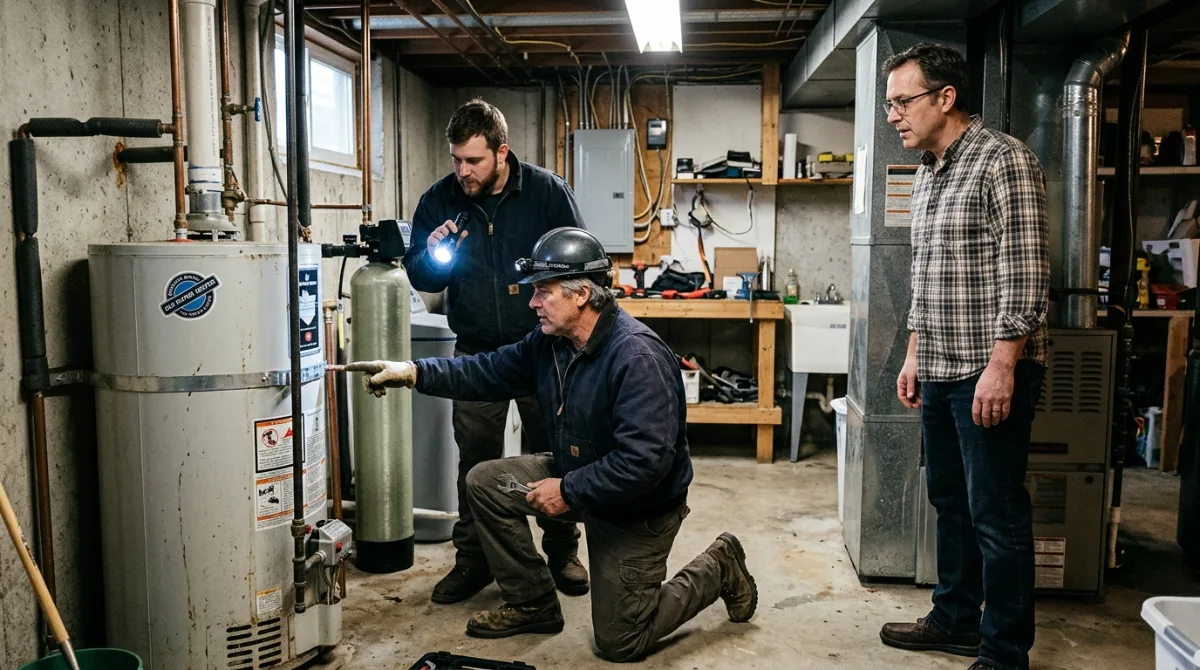
Technicians reviewing drain and water connections in a utility room

Where these kitchens are

A city with an unusual amount of cooking in it

Westminster has more commercial kitchens per square mile than most cities its size. The Bolsa Avenue corridor carries several hundred businesses, a large share of them restaurants, markets, bakeries and food producers, and the Westminster Boulevard corridor and mall area add many more. Little Saigon, centred here, is one of the most significant concentrations of Vietnamese-American business anywhere, and food is a substantial part of it: family restaurants, noodle houses, bakeries, delis inside markets, and producers supplying other businesses.

That variety matters practically. A pho kitchen running stock pots all day, a bakery, a butchery counter, a hot-food deli inside a market and a bubble tea shop all discharge different things at different rates, and their traps and lines behave differently. Interval and equipment should follow the actual cooking rather than a generic template.

The buildings add a second layer. A lot of these operations occupy older strip-mall units and converted spaces whose plumbing was never designed for food production: original cast iron, shared laterals, floor sinks added later, interceptors sized for a previous tenant. That is worth knowing before a first service visit, not during it.

Where language matters, say so when you call. It is a reasonable thing to ask for, and it is better to arrange it in advance than to have a technician and a closing manager working around each other at eleven at night.
Straight answers

Grease management questions operators ask

What is the difference between a grease trap and a grease interceptor?

In everyday use the terms get swapped freely, but the distinction is size and location. A grease trap is the smaller under-sink or on-floor unit serving one or two fixtures, typically rated in the tens of pounds, and it needs frequent attention because its capacity is small. An interceptor is the larger in-ground or exterior tank serving the whole kitchen, often several hundred to a few thousand gallons, pumped on a schedule by a permitted hauler. Many kitchens have both, and they fail differently.

How often does a trap or interceptor need servicing?

The practical rule most jurisdictions work from is that service is due before the accumulated grease and solids reach about a quarter of the unit’s liquid depth, which for a busy kitchen with a small under-sink trap can mean weekly or fortnightly, and for a properly sized exterior interceptor commonly every one to three months. Frying volume drives it more than covers do. The reliable way to set the interval is to measure the layer at each visit and adjust.

My interceptor is serviced regularly but the line still backs up. Why?

Because pumping the tank and cleaning the pipe are two different jobs. A hauler removes what has collected in the interceptor. It does nothing to the grease that has already cooled and hardened on the inside of the pipe run between your fixtures and that tank, and that is where most kitchen backups actually originate. The complete program is interceptor service plus periodic line jetting. Doing only the first is the most common reason a well-maintained kitchen still floods.

What does a grease line failure actually look like on a busy night?

It builds and then it goes all at once. First the floor sink near the dish area drains a little slower. Then the three-compartment sink holds water. Then wastewater surfaces at the lowest opening in the kitchen, which is usually a floor drain in the middle of the workspace, during service. At that point you have a sanitation problem in a food preparation area and a decision about whether you can keep serving. Almost every one of these is preventable on a schedule.

Can the work be done without closing?

Yes, and that is the normal expectation. Grease line jetting and trap service are scheduled after close or before opening: hoses through a service area, an open cleanout and standing water do not belong in an operating kitchen. Larger interceptor pumping is coordinated for the same window. If a line has already failed and you are actively shutting down, it becomes an emergency call and the timing question changes, but planned work should never cost you covers.

What paperwork should I keep?

Keep dated records of every trap and interceptor service, the volume removed, the hauler’s manifests, and the dates of any line jetting or camera inspection. Health and wastewater authorities want to see a maintenance program rather than a single receipt, and if a discharge issue is ever raised, a consistent log is the difference between a conversation and a citation. Any plumber servicing your kitchen should be leaving you documentation without being asked twice.

Do the enzyme and bacteria additives work?

They have a limited, specific role and they are not a substitute for physical removal. Biological products can help control odour and break down some residual film in a line that is already being cleaned mechanically. What they cannot do is dissolve an accumulated deposit, empty an interceptor, or replace jetting. Be particularly cautious with anything that emulsifies grease so it passes through the trap. That moves the problem to the public sewer, which is precisely what the regulations exist to prevent.

Who is responsible in a shared strip-mall building?

It depends on the lease and on where the fault sits, which are two separate questions. The lease sets out whether the tenant or the landlord maintains the interceptor and the branch lines; the physical location of a blockage determines whose branch failed or whether it is in shared infrastructure. This is where a camera inspection earns its cost several times over: a recording of where the obstruction sat resolves the question with evidence instead of two opinions and a lawyer. See restaurant and commercial plumbing.

Is my interceptor big enough?

Undersizing is common, particularly where a space has changed hands and the current menu is heavier than whatever the original tenant cooked. The signals are an interceptor that needs pumping far more often than its rating suggests, grease carrying past it into the line, and repeat blockages downstream. Flow rate from the fixtures, the number of compartments and cooking volume all feed the calculation. Sometimes the answer is a bigger unit; often it is better fixture-level trapping plus a tighter service interval.

We are a market or food producer, not a restaurant. Does this apply?

Yes, and it is frequently overlooked. Butchery, seafood counters, hot-food and deli operations inside markets, bakeries, noodle and tofu producers and central kitchens all discharge fats, oils and fine solids, and their lines coat exactly the way a restaurant’s do. Westminster has a great many of these businesses, and quite a few operate in buildings whose plumbing was never intended for food production. The same program applies: fixture-level trapping, interceptor service and periodic jetting.

What is the fastest way to reduce how often this happens?

Four things, in order of impact. Dry-wipe and scrape pans and plates before they reach a sink so fat goes into the waste stream, not the drain. Collect used fryer oil for the recycler rather than pouring anything down a drain. Fit and actually clean the strainers on every fixture. And keep the service interval short enough that the layer never gets near the point where grease carries past the trap. Those four cut emergency callouts more than any product on the market.

Get a Grease Line Quote

Emergency backup during service? Say so first. That goes to the front of the queue, day or night.

Bolsa Avenue · Westminster Blvd · mall area

Keep the grease out of the line and the line out of your evening.

A documented interval, work after close, and one number when something goes wrong mid-service.

Speak With Commercial Dispatch

Single sites, multi-tenant buildings and multi-location operators.