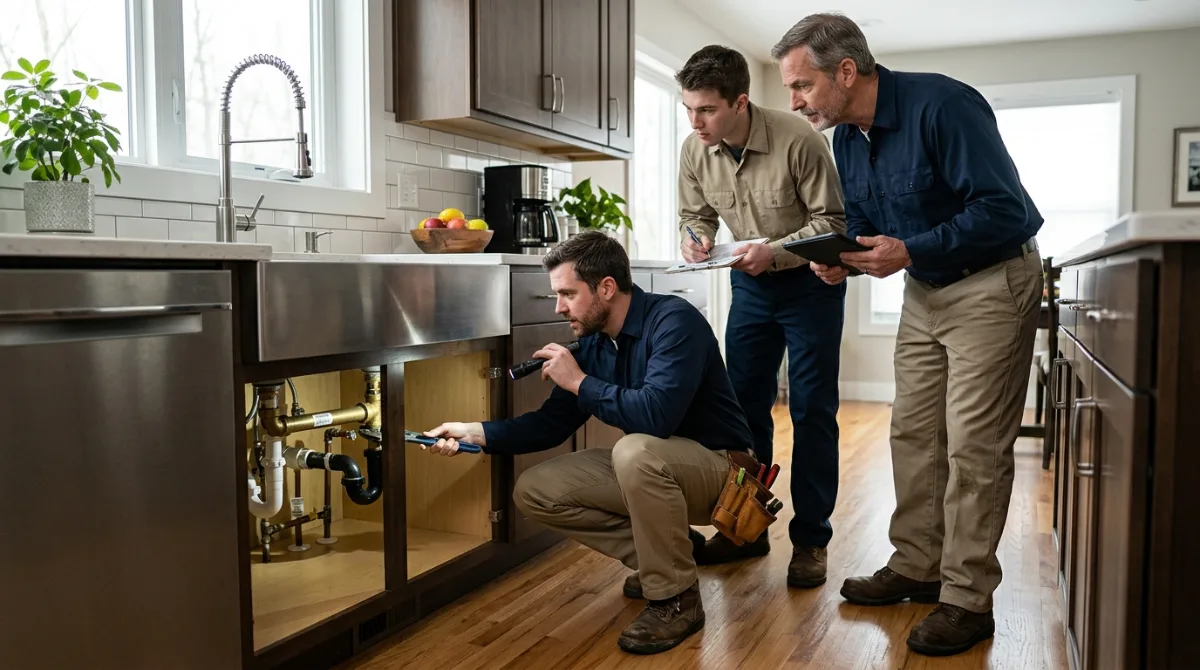
Backflow certification
Test, repair, certify
Periodic testing of prevention assemblies with the paperwork handled, and rebuild where an assembly fails. Done as one job rather than a test now and a repair scheduled separately later.
Westminster, CA · civic, school and office property
Backflow certification, documented maintenance, high-traffic restrooms and scheduled after-hours access, alongside the same sixties residential stock as the rest of the city.
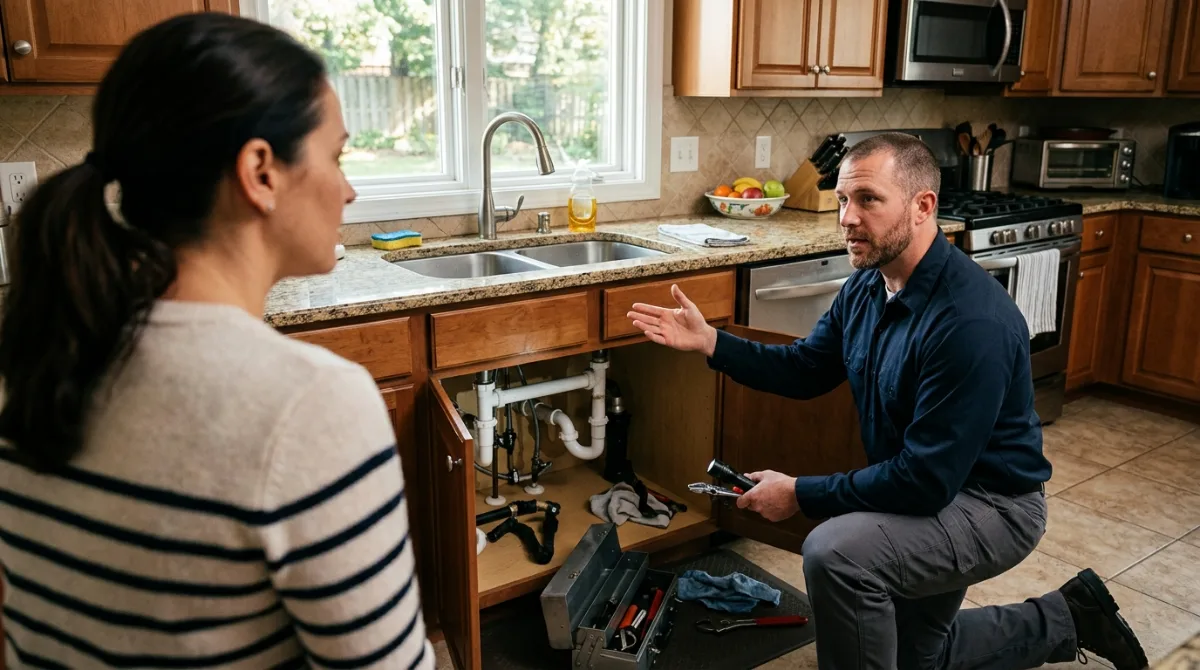
Two kinds of property, one district
The civic centre district holds a mix that is unusual for Westminster: civic buildings, schools, offices and clinics sitting directly alongside ordinary late-fifties residential streets. Those two categories need genuinely different service, and the difference is mostly procedural rather than technical.
On the institutional side the work is defined by documentation and access. Backflow prevention assemblies need periodic testing and certification, with failures rebuilt rather than noted. Maintenance needs a written record, because an auditor’s question deserves a file rather than a recollection. And access has to be scheduled around public opening, school hours or office use, which means the calendar is agreed at survey stage rather than renegotiated every visit.
High-traffic public restrooms are their own discipline. Volume, hard use and aggressive cleaning chemicals shorten the life of flush valves, cartridges and supply stops well below residential expectations, and the honest way to reduce the recurring cost is usually to specify better fittings rather than to keep repairing the ones that were installed.
The residential streets here, meanwhile, look like the rest of Westminster: clay and cast-iron laterals at sixty years and beyond, galvanized supply corroding inward, slab foundations, and mature parkway trees over the sewer line. The same diagnoses apply, with the same argument for filming a line before quoting a repair on it.
Building type, what needs certifying, and your access windows. The schedule builds from that.
What the district needs
Institutional requirements, plus the ordinary residential mix behind them.
Backflow certification
Periodic testing of prevention assemblies with the paperwork handled, and rebuild where an assembly fails. Done as one job rather than a test now and a repair scheduled separately later.
Documented maintenance
Written records for each visit and camera footage where lines were filmed, so compliance questions have a documented answer. Treated as part of the deliverable rather than an add-on.
Public restrooms
Flush valves, cartridges and stops under heavy use and harsh cleaning products. Where the same fitting keeps failing, upgrading the specification usually costs less over two years than continuing to repair it.
After-hours access
Jetting, camera runs and repairs scheduled outside public opening, school hours or office use, with the windows agreed at survey rather than negotiated each time.
Commercial water heaters
Larger units, venting, expansion control and seismic requirements handled properly. Anything genuinely in boiler territory gets referred honestly instead of attempted. See water heater installation.
The residential streets
Sixties tracts with clay laterals, galvanized supply and slab foundations. Root intrusion, repiping and slab leaks, scoped from a camera run like anywhere else in Westminster.
Institutional and residential
Straight answers
Yes: civic buildings, schools, offices and clinics around the civic centre are a normal part of the work. The differences from residential are procedural rather than technical: backflow certification requirements, documented maintenance, scheduled access windows, and coordination with facilities staff rather than a single homeowner.
Periodic testing of the prevention assembly, certification paperwork, and repair or rebuild where an assembly fails. Institutional and commercial premises generally carry the requirement, and a failed test with nothing scheduled behind it is not a usable result, so testing and remediation are handled as one job.
That is the normal arrangement. Line jetting, camera runs, fixture work and most repairs happen outside operating hours, and the schedule is built around your calendar at survey stage rather than negotiated visit by visit.
Yes, and they fail differently from residential fixtures. Volume, abuse and cleaning chemicals shorten the life of flush valves, cartridges and supply stops, and the recurring costs are usually reduced more by specifying better fittings than by repairing the ones installed. That gets said plainly rather than quietly billed each time.
Broadly yes. The streets around the civic centre are the same late-fifties and sixties tracts as elsewhere in Westminster, with the same clay laterals, galvanized supply and slab foundations. So the residential call mix here looks like the rest of the city; it is the institutional property that gives the district its own character.
Yes, and it is treated as part of the deliverable rather than an extra. Written records of each visit, camera footage where lines were filmed, and certification paperwork where testing applies. When an inspector or an auditor asks how something is documented, the answer should be a file.
Water heater work, including larger commercial units, venting, expansion control and seismic requirements, is standard. Anything genuinely in boiler territory gets referred honestly rather than attempted, which is a distinction worth having made up front.
Around the clock, and a failure that has closed a public facility or a school is prioritised the same way a trading business is. Say on the call what is affected and what has had to close. That determines the dispatch order.
Property type, certification requirements, and when the building is available.
Nearby
Documented, compliant, scheduled
Backflow certification, recorded maintenance and after-hours access across civic property.
Institutional, commercial and residential plumbing near the Westminster civic centre.