Local
One fixture only
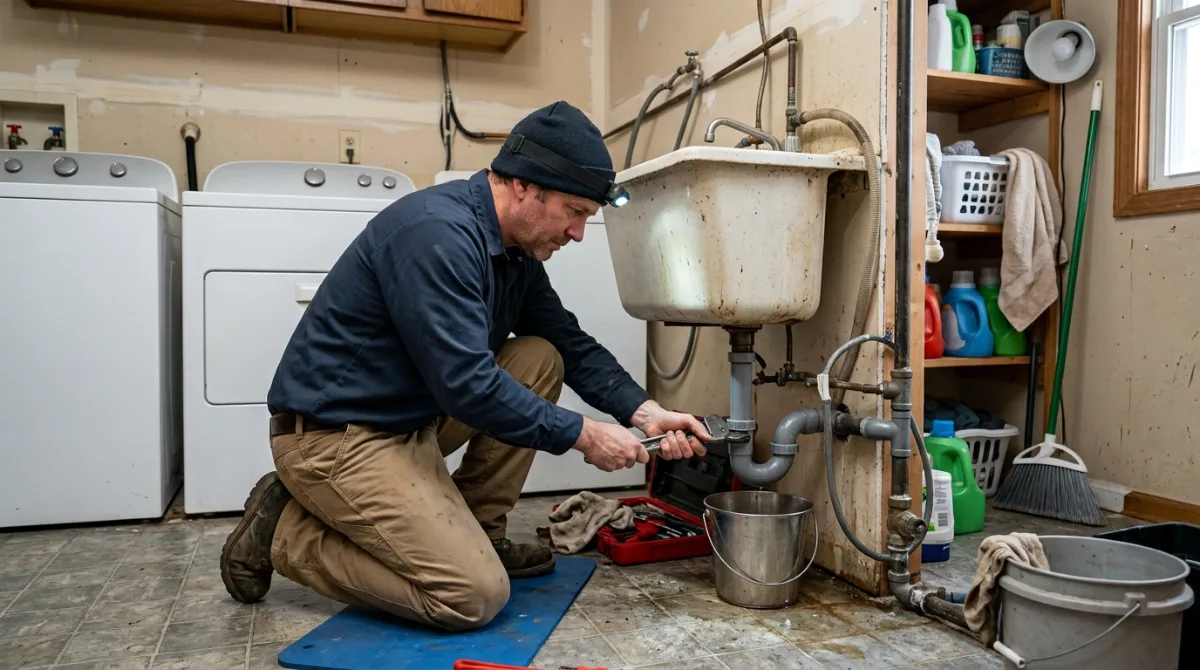
A single slow sink, tub or shower with everything else normal is a trap or branch problem: hair, soap, grease or an object. Quick to clear, and no cause for alarm about the rest of the system.
Westminster, CA · homes and kitchens
Kitchen sinks, tubs, laundry standpipes, floor drains and main lines cleared with cable and jetting equipment, and then a straight explanation of whether it was a one-off or a pipe that is going to do this again.
Two different jobs
Any competent plumber can get a blocked line flowing again. That is the easy half, and if the blockage was a one-off, a child’s toy, a season of hair, a tray of fat poured down a sink, it is also the whole job. Cleared, tested, done.
The other half is the one that saves money. A drain that has blocked before will block again, and the reason is almost always structural: roots in the joints of an old clay lateral, a bellied section holding standing water, scale narrowing sixty-year-old cast iron, a fitting installed backwards during a 1980s remodel. Cabling those lines works. It also works again in four months, at full price, indefinitely.
So the useful question after any main-line clear in an older Westminster property is simple: is this pipe in good condition or not? A camera answers it in fifteen minutes with a recording you can keep. If the line is sound, you have peace of mind and a maintenance interval. If it is not, you can plan a repair on your own schedule rather than during the next backup on a Sunday evening.
That is the difference between drain service and drain maintenance, and it is worth insisting on the distinction.
Tell us which fixtures are affected and what you hear. That alone usually identifies whether it is a branch or the main.
Read the symptom
The set of fixtures behaving badly is a map of where the blockage sits.
Local
A single slow sink, tub or shower with everything else normal is a trap or branch problem: hair, soap, grease or an object. Quick to clear, and no cause for alarm about the rest of the system.
Branch
A bathroom group or the kitchen and laundry sharing a slow drain points at the branch line serving them, usually where several fixtures tie into one run before it reaches the main.
Main
Toilets that bubble, a tub that fills when the washer empties, waste appearing at the lowest drain in the property. That is the main line out to the sewer, and it needs attention now, not next week.
Air
Noise and smell mean air is being pulled through a water seal because the line or the vent is partially restricted. It is an early stage of the same problem, and the cheapest moment to deal with it.
Repeat
Every spring, every few months, always the same fixture. That is a condition problem, and no amount of cabling changes it. Camera first, then a decision about jetting or repair.
Outside
Soggy ground over the sewer route, sunken soil, or an unusually green stripe of lawn suggests the lateral is leaking as well as blocking. See sewer line repair.
Method
Fixtures are tested to establish whether the problem is a trap, a branch or the main, and the right access point is chosen: a cleanout wherever possible, a pulled toilet or a roof vent only when there is no alternative.
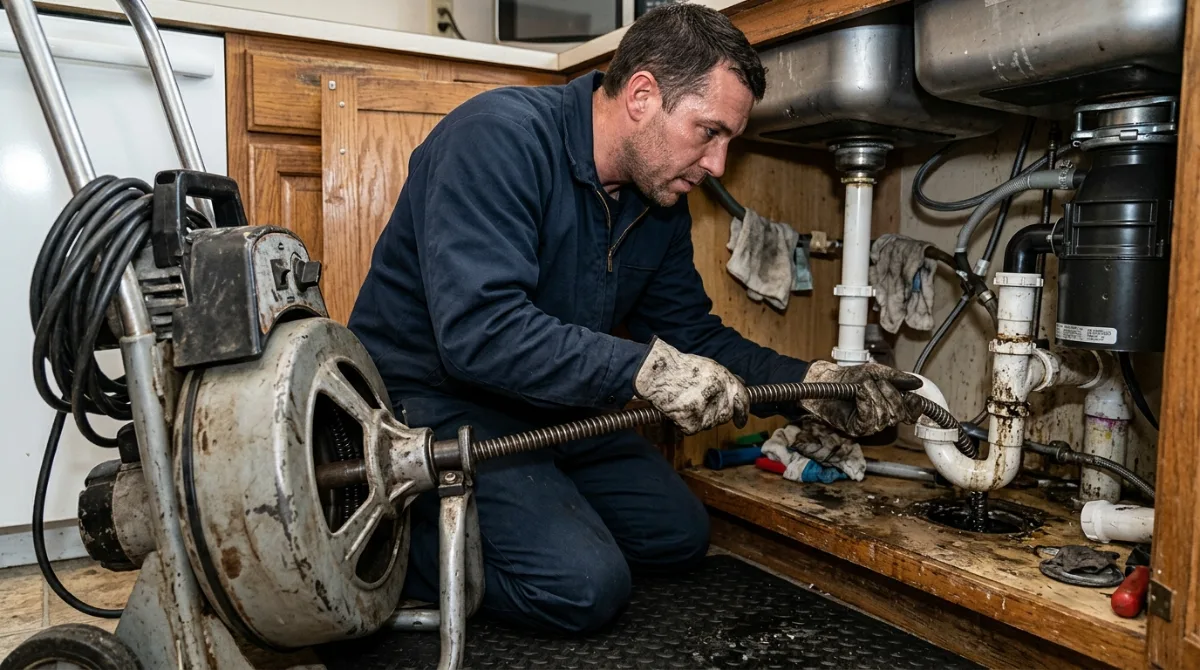
Cable and head are matched to the line: a small drum machine for a bathroom branch, a sectional machine and cutter for a root-invaded main. Then the line is run with water to confirm real flow, not a trickle through a hole.
On repeat blockages, a camera goes in after the clear. You see what the plumber sees, and you get a maintenance interval or a repair option rather than a shrug and an invoice.
Ask for the camera at booking if the line has blocked before. It is cheaper done in the same visit.
Two kinds of customer, one city
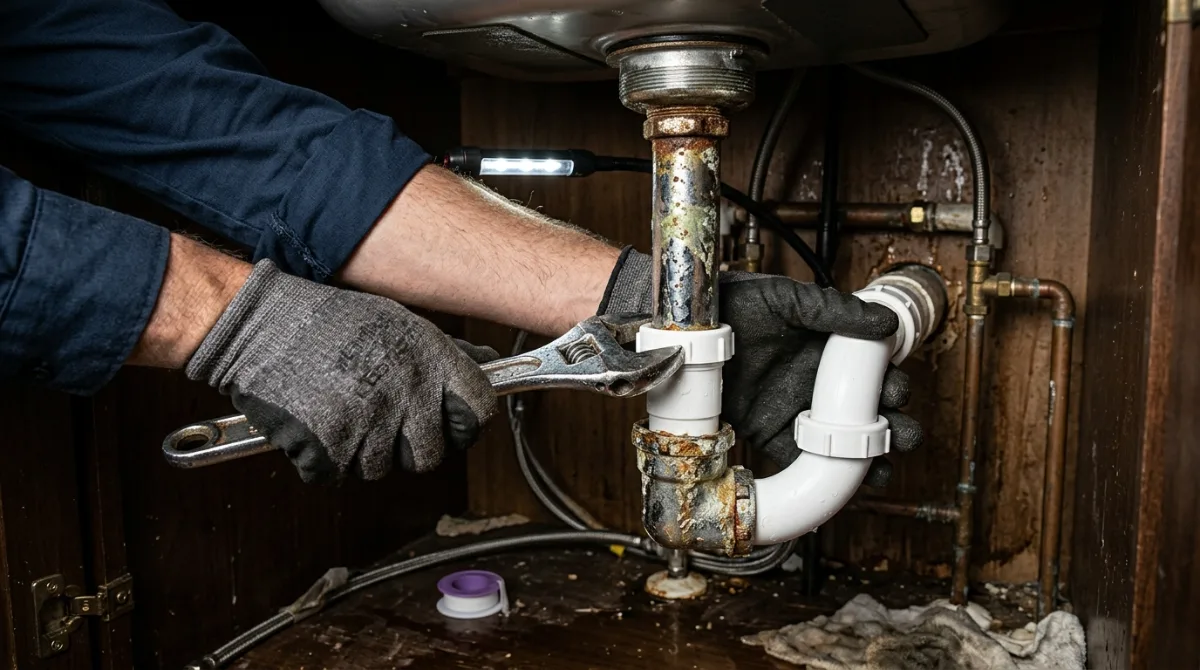
Drain work in Westminster splits neatly into two worlds. The residential side is dominated by 1950s and 1960s systems doing more work than they were designed for. Multi-generational households are common here, and more people under one roof means more fixture cycles, more hot water, more solids and considerably more cooking going through a kitchen branch that was sized for a smaller household. That is not a criticism of anyone’s cooking. It is a maintenance interval question.
The commercial side is a different animal entirely. Along Bolsa Avenue, Westminster Boulevard and the mall area there are hundreds of restaurants, markets, bakeries and food producers, and their drains carry grease all day, every day. Grease does not block a line so much as coat it, reducing the diameter month by month until a Friday night becomes a shutdown. The fix is not a bigger cable; it is jetting on a schedule plus proper interceptor service.
Both worlds benefit from the same thing: knowing the condition of the pipe rather than reacting to the next backup. For a home that means a camera after a repeat blockage. For a kitchen it means a jetting interval written into the calendar and a record of it for the health inspection.
Straight answers
Because it is not really a blockage problem, it is a pipe-condition problem. A line that backs up on a schedule has something permanent narrowing it: roots working through the joints of a clay or cast-iron lateral, a section that has sagged into a belly and holds water and solids, scale build-up on old cast iron, or a bad transition left behind by an earlier repair. Cabling restores flow and buys months. A camera inspection tells you which of those it is, and only then can it actually be solved.
A cable machine, snaking or rootering, pushes a rotating steel cable through the line with a head that bores or cuts. It is fast, effective on solid obstructions and roots, and it restores flow. It does not clean the pipe wall. Hydro jetting uses high-pressure water through directional nozzles to scour grease, scale and root hair back to the bare pipe and flush the debris out. Cabling opens a channel; jetting restores the diameter. Most jobs start with cabling; recurring ones need jetting.
You can, but it rarely helps and often makes things worse. Caustic products work on hair and soap in a short trap run; they do almost nothing to grease, roots or a solid obstruction further down. What they do is sit in the line as a hazard for whoever opens it next, damage older cast iron and rubber gaskets, and burn skin and eyes. If a plunger and a hand auger have not fixed it, the answer is mechanical, not chemical.
Completely different, and the distinction tells you where the problem is. One slow fixture with everything else fine means a local blockage in that trap or branch. Several fixtures on the same side of the house means the branch line serving them. Every fixture slow, gurgling toilets, a tub that backs up when the washer drains, or waste appearing at the lowest opening means the main line out of the property. The last one is urgent, the first one usually is not.
Air. A drain needs to vent properly so water can flow and air can move behind it. When a line is partially blocked or a vent is obstructed, the flowing water pulls air through the nearest water seal instead, which is the gurgle you hear and sometimes a smell you notice. It is an early warning of a partial main-line restriction, and it is much cheaper to deal with at the gurgle stage than at the overflow stage.
It is the capped access fitting that lets a plumber get a cable or a jetter into the main line properly. On Westminster properties it is usually outside, near the building line on the sewer side, sometimes in a small box at ground level, occasionally hidden under decades of planting or a patio extension. Having a usable cleanout makes drain work faster and cheaper. If your property has none, or it has been paved over, installing one is a worthwhile small job.
They get into joints, not through sound pipe walls. Older laterals are clay or cast iron in short sections with jointed connections, and every joint is a potential entry point for a root that senses moisture. Westminster streets are lined with mature parkway trees whose roots reach a long way under a small front yard. Once inside, root hair catches paper and grease and builds a mat. Cutting it out works; keeping it out means jetting on a schedule or repairing the pipe.
More than most people think. A disposal turns food into fine solids that combine beautifully with cooking fats to line the inside of a pipe. Rice, pasta, coffee grounds, fibrous vegetables and anything starchy are the usual suspects. In households cooking large family meals daily, very common across this city, the kitchen branch takes far more load than a builder assumed in 1960. Scraping into the bin and keeping fats out of the sink matters more than any product you can pour down it.
No, and treating a commercial kitchen like a house is how a repeat problem gets created. Commercial lines carry grease continuously, so the pipe wall coats rather than clogs, and the fix is jetting plus interceptor service on a rhythm rather than a one-off clear. Floor drains, three-compartment sinks, prep sinks and mop basins each behave differently. Work is scheduled after close. See grease trap and grease line service.
Warranty terms are set by the independent plumber who does the work, and you should ask for them in writing before starting, particularly on main lines, where a guarantee often depends on whether the line is in sound condition. That is not a dodge: a plumber cannot reasonably guarantee a pipe that is cracked, root-invaded or bellied, and a camera inspection is what distinguishes a clean line that should stay clear from a failing one that will not.
If it has blocked more than once, say so when you call. It changes what we bring.
Related work
24/7 · Westminster and west OC
Cleared properly, then a straight answer about the pipe it came out of.
Residential branches, main lines and commercial kitchen drains.