Serving Westminster, CA & west Orange County Open 24 hours · same-day and after-hours calls 24/7 dispatch · (657) 337-7905
Westminster CA Plumbing (657) 337-7905

Westminster, CA · the original core

Sigler Park and Old Westminster: the city’s first plumbing, still in service

Clay laterals under mature parkway trees, galvanized supply, slab foundations and driveways poured over the sewer line. Camera work first, then lining, repiping or a reroute.

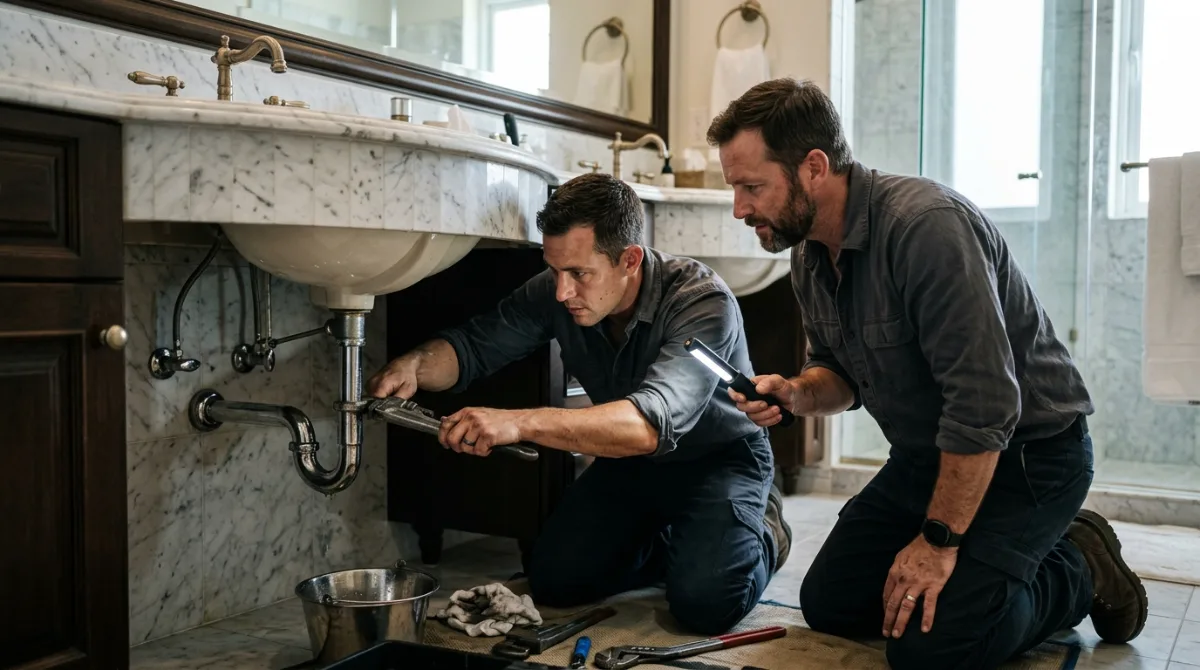
Two plumbers repairing the drain trap under a bathroom vanity

A cohort, not a coincidence

When a whole street was plumbed in the same year, it ages that way too

Westminster incorporated in 1957, and the streets around Sigler Park represent the oldest part of what it grew from. The plumbing here was installed when the city was first taking shape, which puts it at or past the end of its designed service life rather than merely old.

That produces a pattern homeowners notice and find alarming: everybody’s sewer seems to be failing at once. It is not an epidemic. It is a cohort: identical jointed clay laterals of identical age, under identically mature street trees, in the same shifting sandy soil, arriving at the same failure mode within a few years of each other.

The useful consequence is predictability. Root intrusion at open clay joints, cast iron scaled rough inside, galvanized supply corroded until pressure fades, offsets and bellies where the ground has moved, and a slab underneath it all. When symptoms and vintage line up this cleanly, a camera run tends to confirm rather than surprise, which makes scoping a repair honest work rather than guesswork.

The other local reality is what got built on top. Six decades of driveway widening, paver walkways and decorative concrete mean the lateral very often runs under something expensive, and the parkway trees are now large enough that cutting a root plate is both a cost and a permission problem. That is exactly the situation trenchless methods exist for.
Ask About an Older Home

Build era, what is on the surface above the line, and whether it has blocked before.

What we find here

Six findings that repeat across the old core

Same vintage, same soil, same trees: same list.

Open clay joints

The root entry point

Roots do not drill through sound pipe; they enter where a joint has already opened. Cutting removes the mass and leaves the door open, which is why lining, a jointless pipe cured inside the old one, is the fix that actually ends it.

Bellies

Lost fall, permanent water

Ground movement has left sections sagging and holding water. It presents exactly like a recurring blockage, cleaning never resolves it, and neither lining nor bursting corrects it. Only excavating and re-laying to grade does, worth being blunt about.

Galvanized supply

Fading pressure

Corrosion narrowing the bore for years before any leak. Rusty first draw and weak upstairs fixtures are the early report. Two leaks in different runs is the point at which repiping becomes the cheaper path.

Paved-over cleanouts

Access decides cost

Cleanouts buried under landscaping or lost to a driveway widening make every future drain visit longer and more invasive. Adding one properly usually pays for itself within two or three service calls.

Raised floor levels

Flanges below finish

Flooring layered over flooring for sixty years has left many closet flanges sitting under the finished floor, which is the single most common reason a toilet reset weeps within a year. Fixed properly with an extension rather than stacked wax.

Concrete over the line

Where trenchless pays

Full-width driveways and decorative hardscape directly above the lateral. Pits at each end rather than a trench down the middle usually costs less overall once restoration is counted honestly.

Straight answers

Old Westminster plumbing questions

What makes this the oldest plumbing in the city?

Sigler Park sits in the original core, on streets that predate the late-fifties tract expansion. That means laterals and supply lines installed when the city was first taking shape, vitrified clay, cast iron, galvanized steel, and now at or beyond the end of their service lives rather than merely middle-aged.

Every house on my street seems to have sewer trouble. Why?

Because they share a vintage, a pipe material and a row of mature street trees. Jointed clay laterals of the same age under the same trees, in the same shifting sandy soil, fail in the same way at roughly the same time. It looks like an epidemic and it is really a cohort reaching end of life together.

Should I line the lateral or replace it?

Camera footage decides it. Lining seals every joint at once and needs a host pipe that still holds its shape and its fall, which makes it excellent on root-infested but structurally sound clay. A collapsed section or a belly cannot be lined: a belly is lost fall, and a lined belly still holds water. See trenchless sewer repair.

My driveway covers the sewer line. Does that mean demolition?

Usually not. Trenchless methods need only entry and exit pits, so everything between them, driveway, walkway, decorative concrete, the mature parkway tree you cannot cut, stays in place. On these lots the trenchless premium is frequently less than the cost of putting the concrete back.

Is the water pressure problem the city or my pipe?

A gauge on a hose bib settles it in ten minutes. Good pressure arriving with a poor shower upstairs means restriction inside the house, which on this vintage is corroded galvanized supply. Poor pressure arriving means the regulator or the service line. Those are very different bills, so the test comes first. See pressure and regulator service.

Are the original bathrooms a problem to work on?

Not a problem, but they have quirks worth knowing. Tight clearances mean fixture selection matters, and sixty years of flooring added over flooring has left many closet flanges below finished floor level, which is the most common reason a toilet reset fails a year later. Both are fixable properly rather than worked around.

How disruptive is a repipe in a house this old?

Less than people fear, because the building pattern cooperates. Single storey, slab on grade, accessible attic above: new lines route overhead and drop down interior walls, with access taken at a manageable number of points rather than by opening runs of wall. Two to four days of pipework, and you stay living there.

Do these houses have cleanouts?

Frequently not where you would want one, or paved over during a driveway widening decades ago. That matters because access determines how straightforward every future drain visit is. Adding a proper cleanout usually pays for itself across two or three service calls, and it is worth doing while something else is already open.

Ask About Your Street

Build era, surface above the line, and whether neighbours have had the same trouble.

Predictable pipe, honest options

The whole street is the same age. Your quote should say why that matters.

Camera first, then lining, repiping or a reroute, with the driveway left alone where possible.

Call for Sigler Park Service

Residential plumbing across Sigler Park and Old Westminster.