Serving Westminster, CA & west Orange County Open 24 hours · same-day and after-hours calls 24/7 dispatch · (657) 337-7905
Westminster CA Plumbing (657) 337-7905

Westminster, CA · kitchens that cook every day

Garbage disposal repair: jams, hums, leaks and undersized units

Freed jams and reset faults the same visit, flange and connection leaks resealed, and an honest answer about whether the unit was ever big enough for the kitchen.

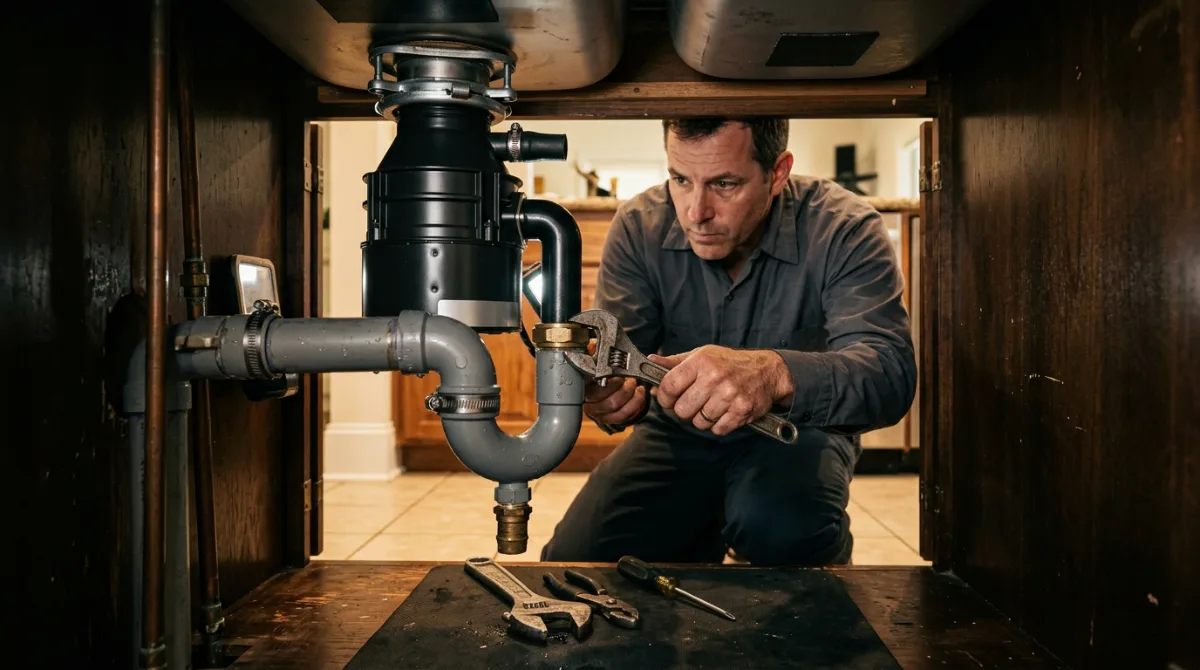
Plumber wrenching the discharge and trap below a garbage disposal unit

Cheap fixes first

Half of disposal calls end with a reset button

Two of the most common disposal complaints have fixes that cost nothing. A unit that hums without turning is jammed, the motor is energised and the plate cannot move, and the fix is to cut the power, free the obstruction and reset. A unit that does nothing at all has usually tripped its own overload after exactly that kind of jam, and the reset button on the underside brings it back. Both are worth trying before anyone is called, and neither should be persisted with while the motor hums, because that is how a jam becomes a burnt-out motor.

Leaks are where the repair-or-replace line falls. A leak at the sink flange is a reseal. A leak at the dishwasher inlet or the discharge tube is a gasket or a connection. Both are ordinary repairs at any age of unit. A leak from the body of the housing itself is different: the casing has corroded through, there is no repair, and the honest answer is a replacement.

The complaint worth reframing is the sink that backs up when the disposal runs. That usually means the disposal is doing its job and the drain downstream cannot take the flow, which is a partial blockage in the branch or the main line rather than an appliance fault. Replacing the disposal in that situation buys a new appliance and the same problem, so the line gets checked before the unit is condemned.

And then there is sizing, which is the quiet reason a lot of disposals disappoint. Builder-grade half-horsepower units are fine for light use and struggle badly in a kitchen that does serious vegetable prep every day. If a disposal has always seemed weak rather than having recently failed, it may never have been the right unit for the kitchen it was fitted in.

Ask About a Disposal

Try the reset button on the underside first. It genuinely solves a good share of calls.
Reading the fault

Six things a disposal does, and what each means

Four are repairs. One is a replacement. One is not the disposal at all.

Hums, will not turn

Jammed

Power off, obstruction freed, plate turned manually, unit reset. Fibrous vegetable waste and small hard objects are the usual culprits. Do not keep switching it on while it hums. That is what turns a five-minute job into a new unit.

Completely dead

Overload or supply

Reset button first, then the breaker and the switch. A tripped overload after a jam is common and costs nothing to clear. Silence after both usually means the motor or switch has failed, which on an older unit means replacement.

Leaking at the flange

A reseal

Water appearing at the sink where the unit mounts is a failed flange seal, worth resealing properly rather than tightening hopefully. Straightforward at any age, and it stops the slow damage to the cabinet floor below.

Leaking from the body

End of life

A leak coming from the housing itself means corrosion has gone through the casing. There is no repair for that, and replacement is the answer. Worth doing promptly since the leak only goes one direction from here.

Grinds poorly

Blades, or the wrong unit

Worn impellers and a scaled chamber account for some of it. But a disposal that has always struggled in a busy kitchen was probably undersized on the day it was fitted, and a larger motor is the real fix rather than another repair.

Sink backs up

Look downstream

If the sink fills while the unit runs, the disposal is working and the drain cannot take the flow. That is a branch or main line blockage, often grease, and replacing the appliance changes nothing at all.

How the visit runs

Clear, test, or replace

Most disposal work is under an hour, including a replacement.

1

Isolate and diagnose

Power isolated before anything else. Then the actual fault: jam, tripped overload, failed motor or switch, flange leak, connection leak or housing corrosion. The drain downstream is checked too, because that is where a surprising number of “disposal problems” live.

2

Repair where it is a repair

Jams cleared, overloads reset, flange reseals and connection gaskets fitted, discharge and dishwasher inlet connections corrected. Common parts on the truck so the visit finishes the job.

3

Replace with the right size

Where the unit has failed, the replacement is sized to how the kitchen is actually used rather than to what was there. Fitted with a proper flange seal, correct discharge alignment and the dishwasher inlet connected properly, then run and tested under water.

Book a Disposal Visit

Leaking into the cabinet? Turn the unit off at the switch and call. That damage compounds.

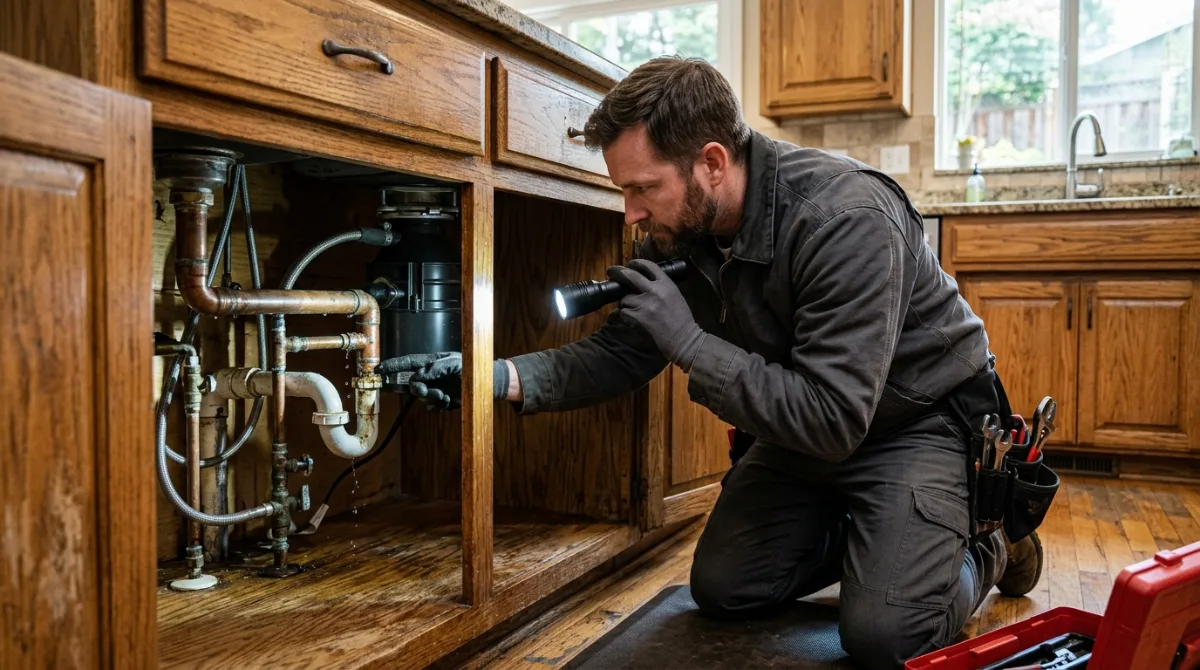
Plumber inspecting a garbage disposal and trap under a kitchen sink with a flashlight

Local context

Serious cooking, undersized units, greased lines

Kitchens across this city do a lot of genuine cooking, and a great deal of it involves substantial daily vegetable preparation and multi-generational household volumes. That is a heavier duty cycle than a builder-grade half-horsepower disposal was designed for, which is why undersized units are such a common finding here, not failed, exactly, just permanently outmatched by the kitchen they were fitted in.

The downstream consequence is the one that costs more. Fats and oils going down a kitchen line cool, harden and coat the pipe, and in this housing stock the branch lines running to sixty-year-old cast iron are already rough enough to hold onto them. A disposal grinding well into a coated line produces exactly the sink that backs up when the unit runs: an appliance behaving correctly and a pipe that cannot cope. Jetting the line is the fix, and replacing the disposal is not.

Hard water plays its usual part, scaling the grinding chamber and shortening unit life at the lower end of the eight-to-fifteen-year range. The practical advice that actually helps: run cold water generously while the unit works and for a while afterwards, keep fibrous waste, coffee grounds and fats out of it entirely, and if the kitchen genuinely works hard, fit a unit sized for that rather than the cheapest one that fits the flange.

Straight answers

Garbage disposal questions

My disposal just hums. What does that mean?

The motor is energised but the grinding plate cannot turn, which means something is jammed. It is the most common disposal fault and often the easiest fix: cut the power, free the obstruction, and reset the unit. Leaving it humming will trip the overload and can burn the motor out, so switch it off rather than persisting with it.

It does nothing at all. Is it dead?

Not necessarily. Check the reset button on the underside of the unit first, then the breaker or the switch. A disposal that has tripped its own overload after a jam will do nothing until reset, and that costs nothing to try. If it is still silent after both, the motor or the switch has failed and replacement is usually the economic answer.

Water is leaking from the disposal. Can that be repaired?

It depends where. A leak at the sink flange is usually a reseal, and a leak at the dishwasher inlet or the discharge tube is normally a gasket or connection. A leak from the body of the unit itself means the housing has corroded through, and there is no repair for that. It is a replacement.

How long should a disposal last?

Eight to fifteen years, with usage and water hardness deciding where in that range. What shortens it most is not age but what has gone through it: fibrous vegetable waste, coffee grounds, fats and bones, plus the habit of running it with too little water. A unit that has been fed sensibly and flushed properly comfortably outlives one that has not.

Was my unit big enough for how we cook?

This is worth asking, because undersizing is the most common reason a disposal disappoints. The builder-grade half-horsepower units fitted as standard are adequate for light use and struggle in a kitchen that cooks substantially every day. In a household preparing large family meals with a lot of vegetable prep, a larger motor with better grinding is the difference between a working disposal and a recurring service call.

What should never go down a disposal?

Fibrous material like celery, corn husks and artichoke leaves, which wrap the plate rather than grinding. Coffee grounds and eggshells, which accumulate as a sludge downstream. Starchy waste in quantity, especially rice and pasta, which swells. Fats and oils, which coat the pipe and are the main cause of a greased kitchen line. And bones, which are simply harder than the unit.

My sink backs up when I run the disposal. Is the disposal at fault?

Usually not. If the sink fills when the unit runs, the disposal is grinding correctly and the drain downstream cannot take the flow, which points at a partial blockage in the branch or main line rather than at the appliance. Replacing the disposal in that situation changes nothing. The line needs clearing. See drain cleaning.

Repair or replace?

Jams, reset trips, flange leaks and connection leaks are all repairs and worth doing at any age. A failed motor, a seized bearing or a corroded housing on a unit approaching a decade is a replacement, because the labour is much the same and a new unit comes with a warranty. Where the old unit was undersized for the kitchen, replacement is also the chance to fix that.

Ask a Disposal Question

What it is doing, humming, silent, leaking, or backing the sink up. Each points somewhere different.

Reset button first, honest sizing second

Free the jam, or fit the unit the kitchen actually needed.

Repairs where it is a repair, replacement sized to real use, and the drain checked either way.

Talk to a Disposal Plumber

Residential and light commercial kitchens across west Orange County.