The upgrade worth having
If a flushing toilet changes your shower temperature, the valve is the problem
Older shower valves mix hot and cold by position alone. When cold demand drops somewhere else in the house, a toilet refilling, a washing machine finishing, the balance at the shower shifts and the water runs hot. In a house full of adults that is an annoyance. With children or an elderly resident in the household it is a scald risk, and it is entirely fixable.
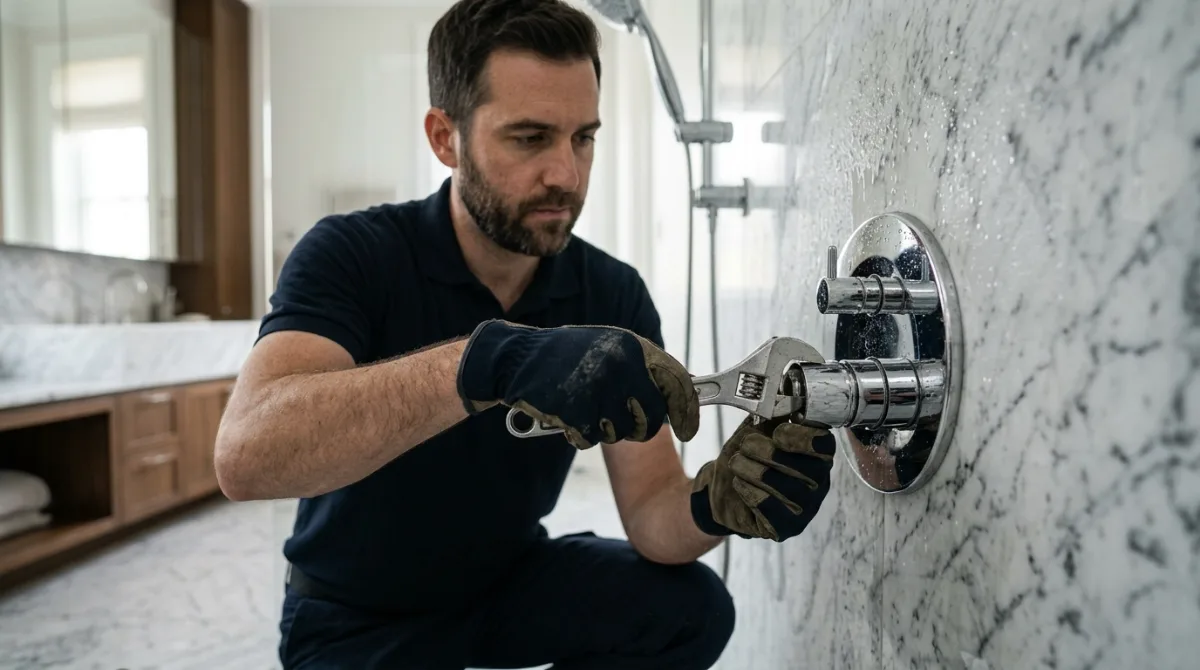
A pressure-balancing or thermostatic valve holds the mix regardless of what the rest of the house is doing. It is the single most worthwhile shower upgrade in an older home, and it is frequently done as part of a repair that was going to happen anyway, because the moment a valve is being worked on is the cheapest time to change what it is.
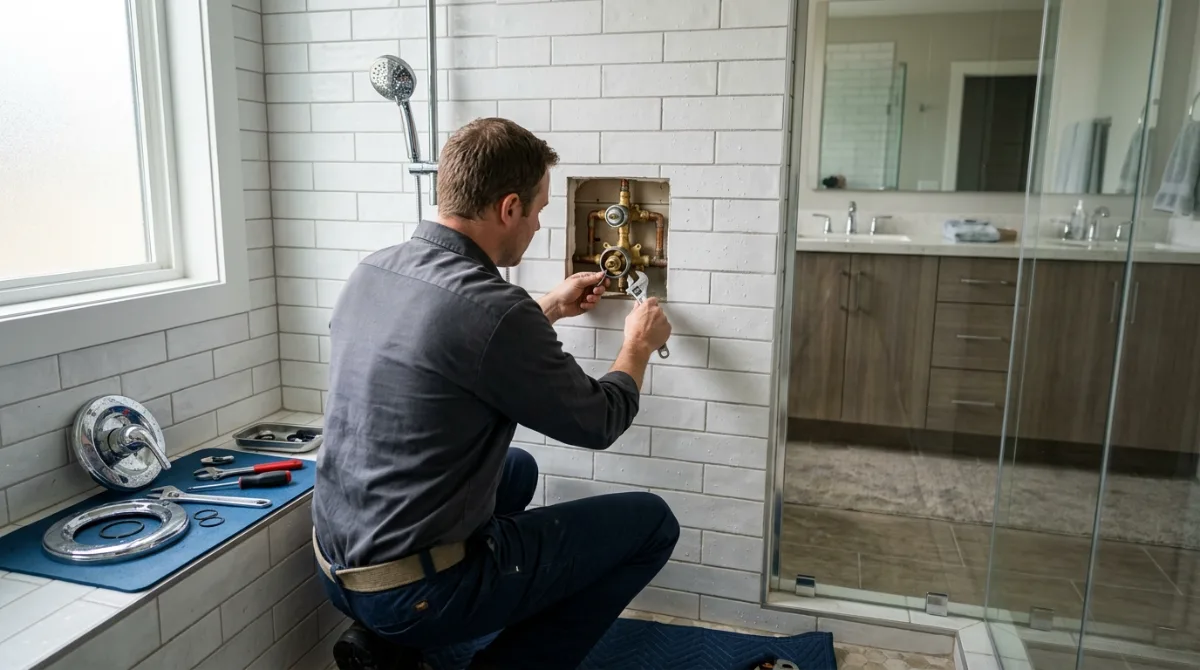
The routine work is simpler than people expect. Most drips are a worn cartridge or seat, and on a sound valve body those are replaceable from the front without opening tile at all. Diverters that will not switch cleanly between spout and head, handles that have stiffened with scale, and shower heads that have lost flow are all similar in scale. The message worth repeating is that a stiffening handle should be dealt with before it seizes, because a seized cartridge is the thing most likely to turn a front-access repair into wall work.
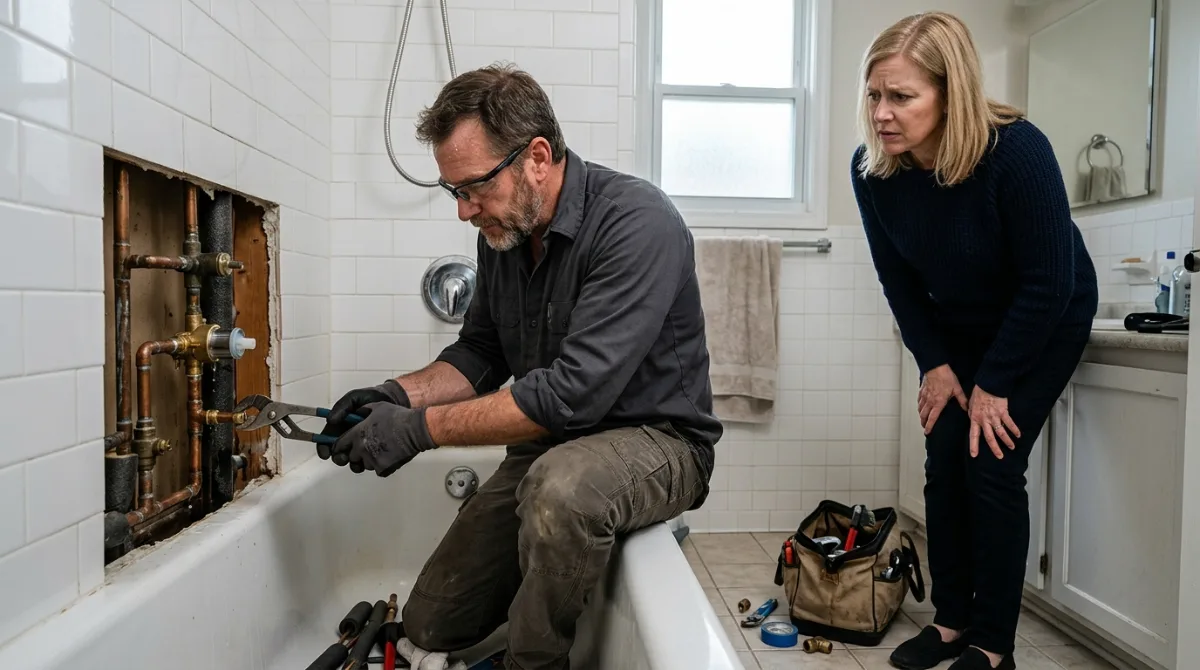
And where the wall does have to be opened, the goal is the smallest opening that does the job, often from an adjacent closet or the back of the wall rather than through the tiled face. It is worth asking about the access route before assuming a valve change means a bathroom renovation.