Serving Westminster, CA & west Orange County Open 24 hours · same-day and after-hours calls 24/7 dispatch · (657) 337-7905
Westminster CA Plumbing (657) 337-7905

Westminster, CA · driveways, hardscape and mature parkway trees

Trenchless sewer repair: renew the line, keep the surface

Cured-in-place lining and pipe bursting replace a failing lateral through entry and exit pits, leaving the driveway, the walkway and the sixty-year-old street tree above it undisturbed.

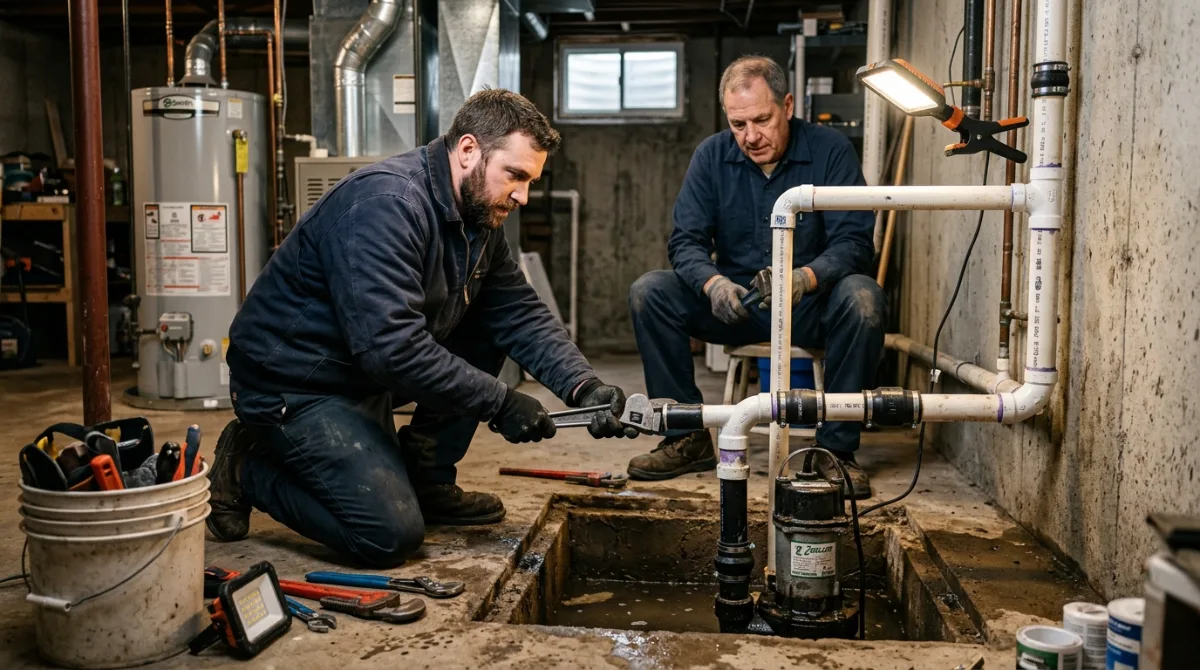
Two plumbers working on below-grade drainage piping at an open pit

What it changes

Most of a sewer job’s cost is above the pipe

Ask what a lateral replacement costs and the honest answer starts with a question about the surface. Pipe is pipe. What varies by a factor of several is what has to be removed to reach it and rebuilt afterwards: a strip of lawn, or a full-width concrete driveway, or a paver courtyard, or the root plate of a mature parkway tree that the city would rather you did not cut.

Trenchless methods attack that half of the bill. Instead of opening the ground along the whole run, the work happens through a pit at each end, and everything between them stays where it is. On a straightforward front-yard lateral under turf, that saving is modest and an open trench may well be the better value. On the many properties around here with concrete sitting directly over the line, the trenchless premium is often less than the cost of putting the driveway back.

There is a schedule argument too. A trenchless lateral is frequently a one-day job, against two to four days of excavation, backfill and compaction, followed by surface restoration on its own timeline. For an occupied home that is a real difference, and for a business on a commercial corridor it can be the difference between staying open and not.

What trenchless is not is universal. It needs the right host pipe, the right ground, workable access at both ends and clearance from other utilities. That eligibility question gets settled by camera footage before any method is recommended, which is why the first appointment is an inspection rather than a quote.
Check Trenchless Eligibility

Tell us what sits on top of the line: concrete, pavers, planting, a big tree. That is half the answer already.

Two methods

Lining and bursting do different jobs

They get discussed together and they are not interchangeable. The footage decides which one your line can actually take.

CIPP lining

A jointless pipe cured inside the old one

A resin-saturated liner is inverted through the existing pipe and cured, bonding into a continuous jointless pipe with a smooth bore. Because it has no joints, the root entry points that cause most clay-lateral failures are simply gone. It is the strongest option on root-infested but structurally intact clay, works through existing cleanouts, and needs a host pipe that still holds its shape and its fall.

Pipe bursting

Full replacement without a full trench

A bursting head towed through the old line fractures it outward into the surrounding soil while pulling new pipe in behind it. It replaces rather than renews, so it handles pipe too deteriorated to line and can increase diameter on the way through. It needs soil that will accept the fragments, sensible clearance from adjacent utilities, and pits at both ends, and it leaves the run between them untouched.

Where neither works

The honest exclusions

A belly cannot be fixed by either method, because both follow the existing alignment and a sagging pipe stays sagging. A fully collapsed run with no continuous path leaves nothing to work through. Alignment or size changes, and some depth and utility-congestion situations, also rule them out. In those cases open-trench replacement is not the fallback, it is the correct answer.

How eligibility is decided

Footage, not preference

A camera run establishes material, diameter, condition, fall and every defect with a located depth. That is the document that decides between lining, bursting and excavation, and it is the same document that lets you take a competing quote elsewhere. Any method recommendation made without it is a guess wearing a quote’s clothing. Start with a camera inspection.

How the day runs

Inspect, prepare, install, verify

One day on a typical residential lateral, with the surface intact at the end of it.

1

Camera, locate, decide the method

The line is filmed end to end, defects located with depths, and fall assessed. That determines whether lining, bursting or excavation is appropriate, and the reasoning is shown to you on screen rather than summarised afterwards.

2

Clean the host and set the pits

The pipe is cleaned, usually jetted, so the liner bonds to pipe rather than to scale and grease, or so the bursting head runs cleanly. Entry and exit pits are dug only where they are needed, and existing cleanouts are used wherever they can be.

3

Install, cure and re-film

The liner is inverted and cured, or the new pipe is pulled through behind the bursting head. Connections and reinstatements are made, the inspector signs off, and a closing camera run gives you documented proof of the finished line.

Book an Eligibility Inspection

Permits and inspection scheduling are part of the job, not homework left with you.

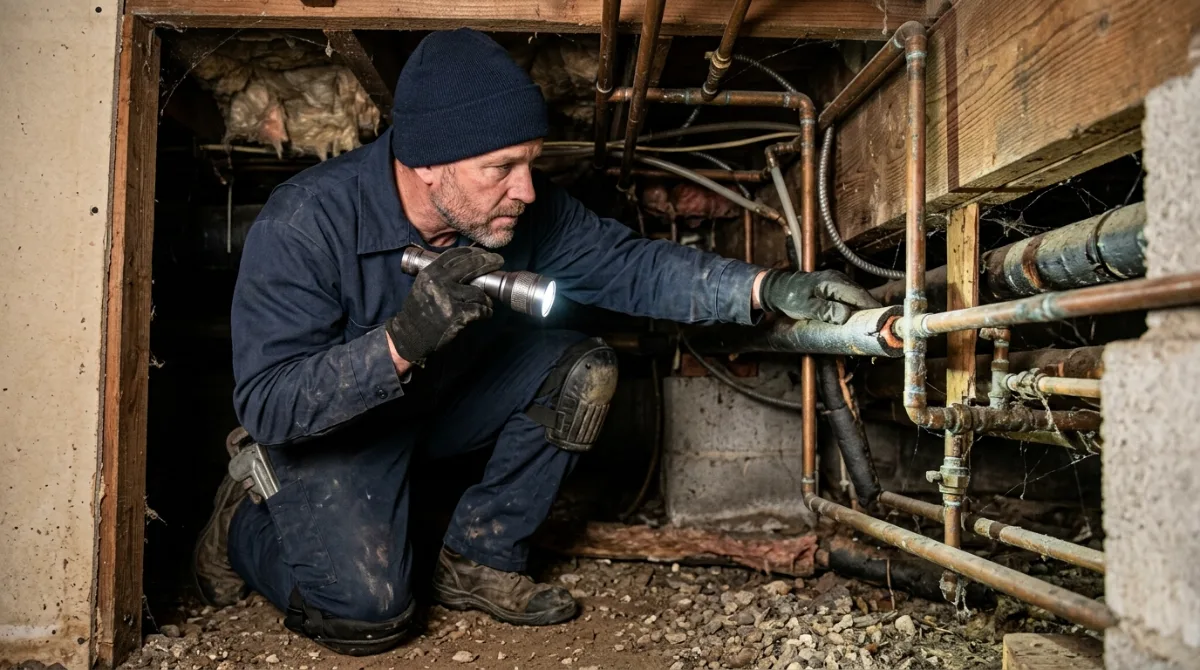
Plumber inspecting under-floor drain and supply piping in a crawl space

Local context

Why this comes up so often in Westminster

The tracts here went in between the late fifties and early seventies with clay and cast-iron laterals, which are now at exactly the age where joints open and roots find them. That alone makes lateral renewal a common conversation in this city rather than an unusual one.

What makes it a trenchless conversation is what got built on top afterwards. Six decades of driveway widening, paver walkways, decorative concrete, converted front lawns and irrigation means the pipe is very often under something expensive. The parkway trees planted with the original tracts are mature now too, and cutting the root plate of one is both a cost and a permission problem.

Ground conditions here are generally cooperative: sandy alluvial soil at residential lateral depths accepts pipe bursting well, and runs from house to main are usually short enough that a single pull covers them. That combination is why the trenchless option is worth pricing on most properties around here before anyone agrees to an open trench, and why a camera inspection is the cheapest first step in the whole sequence.

Straight answers

Trenchless questions, answered plainly

What does trenchless actually mean?

It means the new pipe is installed through the path of the old one instead of by digging the old one out. Two methods dominate: cured-in-place lining, where a resin-saturated sleeve is inverted into the existing pipe and hardened to form a jointless pipe inside it; and pipe bursting, where a head is pulled through the old line, fracturing it outward while towing new pipe in behind. Both need only entry and exit pits rather than a trench along the whole run.

Is my line a candidate for lining?

Lining needs a host pipe that still holds its shape and still has correct fall, because the liner takes the form of whatever it cures inside. Root-infested clay with open joints is close to the ideal case: the liner seals every joint at once. A collapsed section, a severe offset or a belly is not a candidate, because you would be curing a new pipe into a bad shape. Camera footage answers this in minutes.

What about pipe bursting? Is that different?

Meaningfully, yes. Lining renews the inside of a pipe you keep; bursting destroys the old pipe and replaces it. That makes bursting the option when the host is too deteriorated to line, when the diameter needs to increase, or when the pipe has partially collapsed. It needs enough soil around the line to accept the fragments and reasonable clearance from other utilities, both of which get checked before it is offered.

Will my driveway survive?

That is usually the whole reason for the conversation. With entry and exit pits at either end of the run, everything between them, the driveway, the walkway, the decorative hardscape, the mature parkway tree with roots you cannot cut, stays where it is. Plenty of Westminster properties have full-width concrete over the lateral, and on those the trenchless premium is frequently less than the concrete replacement it avoids.

Is a lined pipe as good as a new one?

For the failure modes that matter here, it is arguably better. A cured liner is jointless, so the root entry points that caused the problem no longer exist. Its bore is smooth, which improves flow over corroded cast iron. Design life is measured in decades. The one real trade-off is a small reduction in internal diameter, which the improved smoothness offsets in most residential runs.

How long does trenchless work take?

A typical residential lateral is often a single day for the pipe work itself, sometimes two where access is awkward or the run is long. Lining adds cure time, which is hours rather than days. Compare that with two to four days for an open-trench replacement of the same run, plus separate surface restoration afterwards, and the schedule difference is usually as persuasive as the cost.

Do I need permits for trenchless work?

Yes, the same as for conventional replacement. Sewer lateral work is permitted and inspected, and any work approaching the connection in the public right-of-way may need an encroachment permit as well. That is handled as part of the job. The paperwork is worth having. It is what proves the line was renewed to code when you sell.

Is trenchless more expensive?

The pipe work itself often costs more per foot; the finished job frequently costs less. The comparison people forget is restoration. An open trench through a concrete driveway is a trench plus a driveway, and the second half of that is not cheap. Where the surface is turf and the run is short, open-trench can genuinely win. Both get priced honestly, and the footage decides which methods are even eligible.

Can trenchless fix a belly?

No, and this is the most important limitation to be clear about. A belly is lost fall: the pipe sags and holds water. Lining it produces a smooth, jointless, still-sagging pipe that still holds water. Bursting follows the existing alignment, so it does not correct grade either. Re-establishing fall means excavating that section and re-laying it on compacted bedding. If a quote offers lining as a cure for a belly, ask more questions.

How do I know the finished job is sound?

The same way the problem was diagnosed: a camera run afterwards, which you see. On a lining job that shows a continuous jointless wall with no intrusion; on a burst it shows new pipe on correct alignment. Combined with the inspector’s sign-off and the before-footage, that gives you a documented start and end condition for a repair that is otherwise entirely invisible.

Price a Trenchless Repair

Rough run length, what is on the surface, and any footage you already have. That gets you a real comparison.

Pits at each end, not a trench down the middle

Renew the lateral. Keep the driveway and the tree.

Camera first, method chosen from the footage, permits handled, closing video in your hands.

Talk Through Trenchless

Lining and pipe bursting across Westminster and west Orange County.