A cheap test that prevents expensive guessing
High pressure does its damage quietly, then all at once
Water pressure is the most consequential number in a house that nobody knows. Healthy residential pressure sits somewhere around 50 to 70 psi. Municipal supply can run considerably above that, which is why houses have a regulator, and why a failed regulator matters more than its size suggests.
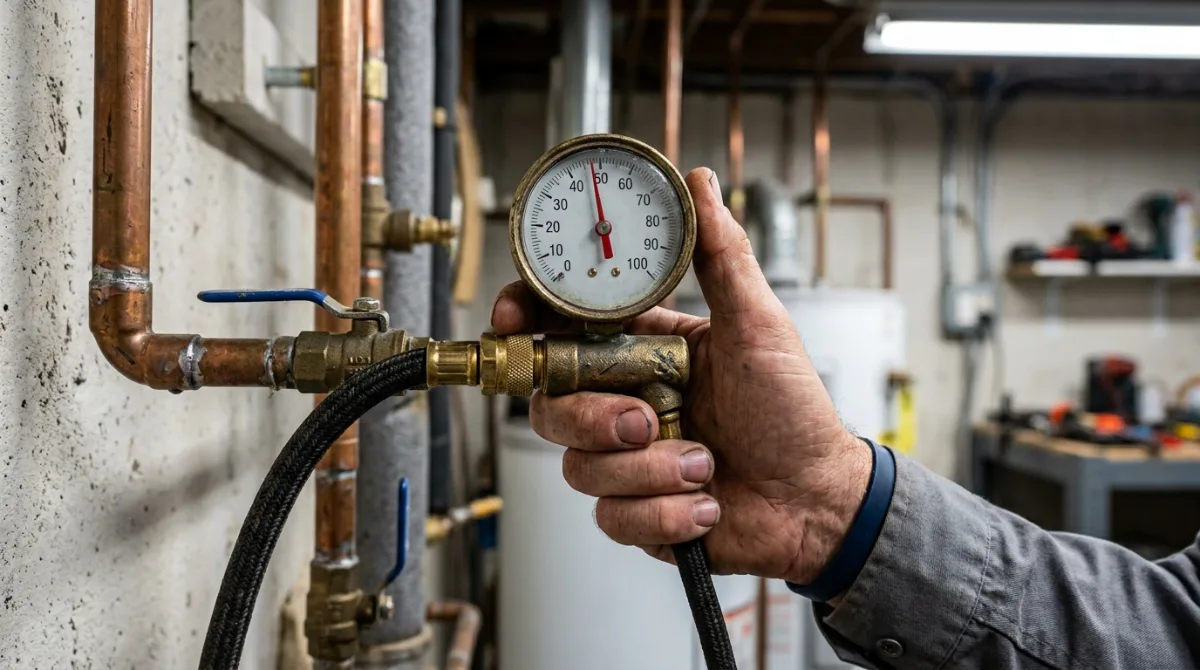
Above roughly 80 psi, everything downstream ages faster: the water heater and its relief valve, fixture cartridges, toilet fill valves, appliance supply hoses, solder joints and threaded fittings. None of that fails loudly on day one. It fails as a series of small repeat repairs, another cartridge, another running toilet, another weeping heater valve, another burst washing machine hose, that look unrelated until someone puts a gauge on a hose bib and finds 95 psi.
The opposite failure is just as common and easier to misdiagnose. A regulator that has drifted down or failed closed throttles the whole house, and it feels exactly like corroded supply pipe or a service line problem. Those cost dramatically different amounts to fix, and the gauge distinguishes them in minutes: pressure at the hose bib tells you what is arriving, pressure behaviour under flow tells you where it is being lost.
The related item is expansion control. Once a house has a regulator it is a closed system, and heated water has nowhere to expand, so pressure spikes every time the heater fires. That is what makes a relief valve weep and what wears the system down invisibly. A small expansion tank fixes it permanently and is missing from a great many older installations here.
Book a Pressure Check
A gauge on the hose bib takes ten minutes and settles arguments that otherwise cost thousands.